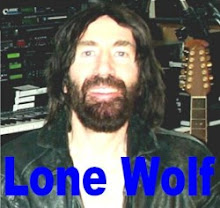
Lone Wolf Sullivan is a writer, songwriter, and studio musician.

Monday, July 27, 2009

Meet the Applegates (1990) * * ¾


The Applegates look like a typical suburban Ohio family. Richard "Dick" P. Applegate (Ed Begley, Jr.) and Jane (Stockard Channing) have two kids and a dog named Spot. Like most families, they also have secrets: Dick has an affair with his secretary while Jane has an affair with credit cards, their son Johnny (Robert Jayne) has a drug problem, and their daughter Sally (Camille Cooper) is pregnant. The Applegates, however, are hiding a much bigger secret: They are actually advanced Amazonian insects who are masters of disguise with the ability to mimic the appearance of other species. They may seem as American as apple pie, but these Brazilian bugs have a taste for human flesh and are on a mission: They plan to blow up the nuclear power station where Dick works in protest of the industrialization of their homeland, which threatens their existence.

The movie starts in a forest with a family being attacked by a family of huge Brazilian Cocorada bugs. The insects find a "Dick and Jane" book dropped by fleeing teachers. Not long after, the group of Cocoradas camouflage themselves as an ordinary human family and set up house in the well-off suburban neighborhood of Median, Ohio. They take on human form and meet every "normality" standard from the magazine Family Bazaar. Their neighbor is an exterminator as well as a bigot, and he frightens them. Dick gets a job at a nuclear power plant. He works there to one day cause an explosion as a warning against destruction of the Brazilian rain forest, and to rid the world of humans and let bugs rule. Like cockroaches, these bugs can survive anything, including radiation.

But after a while the family drifts from its normalities. The temptations of Western civilization prove to be too much for them, and the American way begins to make converts of them. Johnny, a drug free student, begins listening to Heavy metal music and becomes a bratty junkie. The husband and wife drift away from each other, and Sally becomes a cold pregnant militant lesbian feminist after being raped by a jock from the high school. They each show their true bug form at least once in the film. Johnny does while smoking marijuana with his metalhead buddies, and Sally while being raped by Vince Sampson (Adam Biesk). Her experience seems an appropriate punishment as the cute blonde morphs into a giant insect during the sex act. When one of the Applegates gets teed off, he can revert to his original insect self and stun the offending party into unconsciousness, trapping him in a giant cocoon. Soon, the house is filling up with mummified victims. Sexually frustrated Dick disappears into the washroom with a spread of insect photos in Scientific American and drools over bug pictures the way another man might look at Playboy. When her family congratulates her on the tastiness of their supper, Jane says, "I happened to find some rancid trash in a dumpster behind the 7-Eleven."

As they drift away from normality, and nearly are discovered by the neighbors, their Aunt Bea (Dabney Coleman) is sent to help. She becomes a nuisance and they decide she should be taken care of. Dick decides to not blow up the nuclear power plant, due to his growing fondness of life, and kills Aunt Bea. At the end of the movie they return to their lives in Brazil, and are visited by the townspeople who grew to love them. Although the plant did not blow up, enough radiation was released to remove the hair from much of the population of the town.

MEET THE APPLEGATES is a 1991 black comedy film directed by Michael Lehmann. It was filmed in 1989, but not released until 1991. The movie takes a dark, satirical look at the end of the world, nuclear holocausts, alienism and terrorism. This was Lehmann's followup to HEATHERS (1989). While not nearly as popular or memorable, THE APPLEGATES is still quite an entertaining film, and its current "Out of Print in any format, anywhere in the world" status is baffling. A surreal ecological and suburban satire, laden with weird, silly and wonderful gags, this film parodies suburban family life much as HEATHERS focused on the darker side of high school.

The movie is clever, funny, intelligent, poignant, and surprisingly shocking. It represents an old style of cinema and engulfs our social problems, idiosyncratic ways, and our hidden flaws with a flair that cannot be found in today's films. THE APPLEGATES has a good cast, a powerful blend of humor with satire, and lots of fun. It is considered a cult classic for three reasons: a strong cast, a powerful story, and moments you will always remember. The human elements that invade these bugs' lives are over-developed for this film, but they work very well. The Applegates prove to humans that even if they come to us, we will still destroy their sense of what is right or wrong.

THE APPLEGATES uses a powerful technique for keeping this film easy on the eyes. It uses the K.I.S.S. method so it can withstand repeated viewings. The "Keep It Simple Stupid" formula was applied to this film by merely saying that these bugs were going to nuke a small town in the United States. There wasn't a fear of technology, over-analyzing, or future consequences--and with a film like this, we didn't need it. It's a simple story with a clear message: There are problems in the US we cannot blame on outside influences. We have issues with underage pregnancies, drug use, over-spending, and adultery. Metaphors abound, and we feel sad for these Applegates as they begin to falter in their mission because we are causing the failure. Our lifestyles are killing these bugs, and this satire of American manners is a send up of the ineffectual environmentalists the Applegates represent. The film was released during a time when there was a fear of the destruction of the Amazon forests, while we battle today with the issue of Global Warming. In other words, it's a save the rain forests ecology movie presented as a comical horror and fantasy film.

The cast also includes: Glenn Shadix (Greg Samson), Susan Barnes (Opal Withers), Savannah Smith Bouchér (Dottie), Roger Aaron Brown (Sheriff Heidegger), Lee Garlington (Nita Samson), Philip Arthur Ross (Kevin), Steven Robert Ross (Kenny), Mark Bringleson (Rich Block, Family Bazaar Magazine), Chuck Lafont (Clem Shepherd), Allan David Fox (Peace Corps Volunteer), Sherrie Wills (Peace Corps Volunteer), Jerry Craig (Amazon Native), Joe VanStrike (Russell Withers), Mindy Bell (Coach Himler), Meg Weldon (Courtney), Chelsea Lee (Ingrid), Jessica Schwartz (Monica), Mike Rieden (Vince's Friend), Bob Fox (Junior Cartwright), Kathryn Garrison (Drone with Aunt Bea), Margaret Mazon (Drone with Aunt Bea), Gustavd Mellando (Drone with Aunt Bea), Sherry Narens (Relative), Michael Raysses (Durpre), Les Podewell (Mr. Goodpastor), Bradley Mott (Pastor Cooter), Patrick Donahue (Bed Bug), Barbara Lehmann (Cocktail Waitress), Lisa Sutton (Pregnant Woman), Kiki Huygelen (Gail the Dyke), Adrian Tafoya (Motorboat Captain), John Escobar (Jorge), Tony Cecere (Banana Boat Helmsman), Rick Snyder (Bank Officer), Joe Liss (Customs Official), Ivan H. Migel (Cashier), Dan Bradley (Power Plant Worker), Richard Barker (Power Plant Worker), Lisa Comshaw (Pregnant Woman), Mark Roberts (Screaming Guard in Plant), and Joe Van Slyke (Russell Withers). David Newman composed the original music. The screenplay was written by Redbeard Simmons and Michael Lehmann, who also directed.

The screenplay written by Redbeard Simmons and the director is sharp, witty, intelligent, and hysterical. Special makeup effects designed by Kevin Yagher were used to make the Applegates appear as bugs. The special effects are all done with plastic molding and firecracker explosions. MEET MEET THE APPLEGATES was filmed in Oshkosh and Neenah, Wisconsin. It has been rated R, has vulgar language and partial nudity. Why is it unavailable? One viewer commented: "There's a reason why this film has been forgotten. It is horrible. But it's compellingly horrible! I could not stop watching it. I felt like it should be revered as a bizarro cult-classic, because it's so bad in such an enjoyable way. It is so extraordinarily bad, and the characters are so unapologetically one-dimensional, and the dialogue is so ridiculously over-the-top, you may find yourself, like me, unable to stop watching." The VHS title is simply THE APPLEGATES, and hopefully this comedy will be released on DVD soon.

Sunday, July 26, 2009

Journey to the Center of the Earth (1959) * * *


Sir Oliver S. Lindenbrook (James Mason), a geology professor at the University of Edinburgh, is given a piece of volcanic rock by his admiring student Alexander "Alec" McEwen (Pat Boone). Deciding that the rock is unusually heavy and therefore must contain Icelandic peridotite, Lindenbrook, mostly thanks to the carelessness of his lab assistant Mr. Paisley (Ben Wright), discovers a plumb bob inside bearing a cryptic inscription. Lindenbrook and Alec conclude that it was left by an explorer by the name of Arne Saknussem, who had 300 years earlier found a passage to the center of the Earth. Lindenbrook transcribes the text on the plumb-bob and learns that it reveals the entrance to the world below, so he immediately sets off with Alec as his assistant to follow the example of the Icelandic pioneer.

The first obstacle of the journey is Professor Göteborg of Stockholm, because the University in Stockholm writes to let Lindenbrook know that Göteborg has disappeared. Lindenbrook estimates the date of Göteborg's disappearance as being approximately when the first letter would have arrived. It's a lot of set-up, but it goes by quickly and it's made enjoyable by Mason's suaveness and the boyish charm of Pat Boone.

Act One is fun, but Act Two is better when Lindenbrook and Alec rush off to Iceland to try to beat Göteborg to Saknussem's secret entrance. Once they are in Iceland, Göteborg with the help of his goon, manages to kidnap both of them and trap them in an underground cellar, from where they are freed by young athletic farmer Hans Belker (Peter Ronson). He and his duck Gertrude join their expedition, but he doesn't speak English. That necessitates including a translator in their party, so they also bring along Carla Göteborg (Arlene Dahl). They next go to the inn where Göteborg is staying and sneak in his room, where they find him dead. Lindenbrook, with the astuteness of a forensic scientist, combs the goatee of Göteborg and retrieves some potassium cyanide crystals. They conclude that he has been killed by some rival scientist.

Carla Göteborg: Whom were you taking besides this young man?
Sir Oliver Lindenbrook: The big Icelander.
Carla Göteborg: Then I'll be very useful. He doesn't understand a word of English.

Alec McKuen: (after discovering Professor Göteborg dead in his hotel room) Why didn't they tell us at the desk?
Oliver Lindenbrook: Hotels rarely advertise the fact that there are corpses lying around.
Carla Göteborg: Sir Oliver, you are not going to listen to a murderer?
Oliver Lindenbrook: Never interrupt a murderer, madam.
Carla Göteborg: Someone is walking up there. I heard footsteps, human footsteps.
Oliver Lindenbrook: Since the beginning of time all women have heard footsteps up there.

Finding him dead before his expedition even began, Lindenbrook and Alec are suddenly supplied with all the materials they need for their project. Göteborg's widow Carla, who at first vowed to destroy all her husband's supplies, agrees to lend them his valuable supplies, including the much sought after Ruhmkorff lamps, if they include her in their trip. Lindenbrook grudgingly agrees to take her along, and so four explorers and a duck are soon journeying to the center of the Earth. Along with Lindenbrook and Alec, the group includes Hans Belker, Gertrude, and Mrs. Göteborg.

Strange terrain, a deranged rival scientist named Count Arne Saknussem (Thayer David), breathtaking scenery and giant reptiles embellish the rest of their journey. Count Saknussem is the descendant of Saknussem, the famed scientist who tried to travel to the center of the earth 300 years ago and left many guiding marks along the path for the posterity. Count Saknussem thinks that the center of the earth is his territory and only he has a right to visit there, as it was his forefather who went there first. He trails the group secretly with a servant. During his independent travels, as he becomes separated from the rest of his group, Alec almost trips over Saknussem's dead servant. When Alec refuses to become his new servant, Saknussem shoots Alec in the arm. Lindenbrook is able to locate Saknussem from the reverberations of the sound of the guns' echo, and in a strange court hearing, sentences him to death. However no one has the nerve to kill him, and they grudgingly take him along.

Count Saknussem: I don't sleep. I hate those little slices of death.

They eventually encounter a subterranean ocean, and make a raft from the stems of giant mushrooms to cross it. Somewhere in the middle of the ocean, they pass through the center of the earth and their raft begins circling in a mid-ocean whirlpool. The professor deduces they must be at the center of the earth, because the magnetic forces from north and south meeting there are strong enough to snatch away even gold in the form of wedding rings and tooth fillings. They manage to cross the ocean, and reach the shore on the other side completely exhausted.

Hans Belker: (in Icelandic) There is a tunnel on this side.
Carla Göteborg: He says there's a tunnel on the other side.
Hans Belker: (in Icelandic) And they slant downhill, and we can walk them.
Carla Göteborg: Slanting downhill, but walkable.
Hans Belker: (in Icelandic) O, madam, will you all come down here where the boy fell. It is so wonderfully beautiful down there.
Sir Oliver Lindenbrook: What's happened now? What's he saying?
Carla Göteborg: He said we should go back to where Alec fell.
Hans Belker: (in Icelandic) He is guilty. Excuse me, madam, can you tell me, where do we go now, what do we do now?
Carla Göteborg: (in Icelandic) Hans, let him go.
Hans Belker: (in Icelandic) Madam, the tunnel lies straight upwards, but there is a big rock in the way and sadly we can't move it. Only a landslide could move it. (to his duck) My Gotrun, have you been lonely?

Despite the dangers of their journey, no one has died. That, however, soon changes. Gertrude, the duck, loses her life. But ironically it is not the difficult terrain that kills her, but Saknussem, who can't control his hunger and eats her. Nature delivers its justice immediately when soon after a mild earthquake occurs, and Saknussem is buried under a shower of heavy stones. Right behind the collapse, the group comes upon the sunken city of Atlantis. They are now faced with one question: How will they return to the surface?

Not far from the ruins of Atlantis, they see the remains of the scientist who went centuries before them with the hand of his skeleton pointing toward a passage to the surface. They decide that they have to create an artificial explosion to get out to the surface. They use the gunpowder in one of the sacks of their ancestor to create an explosion that awakens a giant lizard which tries to eat them--but is soon consumed by the lava that torrents down after the explosion. The same lava lifts them up out of the depths of the earth in a large sacrificial altar bowl. They are thrown out to the sea, emerging to the surface via a volcanic shaft. Three are retrieved from the sea by seafarers while the fourth, Alec, is thrown out of the altar bowl as it flies through the air and ends up naked in a tree in a nunnery orchard.

When the group returns to Edinburgh, the four travelers are greeted as national heroes. Alec has married Lindenbrook's niece Jenny Lindenbrook (Diane Baker), Hans announces his return to Iceland, and the result of previous tensions between Lindenbrook and Carla is two headstrong people in love. The film ends with Lindenbrook and Karla kissing each other and the crowd cheering them and joyously singing in chorus.

JOURNEY TO THE CENTER OF THE EARTH is an adventure film adapted by Charles Brackett from the novel by Jules Verne. The film is also known as TRIP TO THE CENTER OF THE EARTH. Excitement comes from its sense of mystery and the drama between characters more than it does from giant monster attacks. It features solid character development, and the actors take their roles seriously, bringing them to vivid life. This is a long film at 132 minutes for a general release, family oriented project.

The film is notable for its special effects, which are excellent. Matte painting artists of the old Hollywood studio system could truly be called artists, and this film is a prime example of this art. However, the special effects on the dinosaurs look phony. Putting fake back-sails on live reptiles and calling them dimetrodons is cheesy. But the rest of the film is great and the movie requires dinosaurs. Bernard Hermann's atmospheric score is one of the stars of the picture. His music supports the film, like a character all its own. It complements the story rather than overpowering it, combining woodwinds, brass, a huge percussion section, and five organs for the film's original surround mix. The payoff is sublime, as Herrmann's music dips into subterranean registers, while a harp captures the travelers' wonder.

The cast also includes: Robert Adler (Groom), Alan Napier (Dean), Gertrude the Duck (Gertrude), Mary Brady (Kirsty), Alan Caillou (Rector), John Epper (Groom), Edith Evanson (Innkeeper), Alex Finlayson (Professor Bayle), Mollie Glessing (News Vendor), Frederick Halliday (Chancellor), Kendrick Huxham (Scots Newsman), Owen McGiveney (Shopkeeper), Molly Roden (Housekeeper), Ivan Triesault (Professor Peter Göteborg of Stockholm), Red West (Bearded Man at Newspaper Stand / University Student), and Peter Wright (Laird of Glendarick). Bernard Herrmann composed the music. Walter Reisch and Charles Brackett wrote the screenplay from Jules Verne's novel "Voyage au centre de la Terre". Henry Levin directed.

Derived from Jules Verne's 1864 novel, the movie "sexed up" the story compared to the original. In the book there is just a little romance between Axel and the professor's goddaughter, but Arlene Dahl's character (Professor Göteborg's widow), Arne Saknussemm's descendant and even Gertrude were additions made by the screenwriters. For the movie it definitely makes sense to add a romantic subplot as well as the intrigue with Saknussemm's descendant. The novel does not start in Edinburgh, but in Hamburg, the Professor's name is Otto Lidenbrock, Axel is his nephew, and Axel's sweetheart, Lidenbrock's goddaughter from the Vierlande is only known as Grauben. Lidenbrock, professor of geology and mineralogy at the Johanneum, is also a rather different character from Lindenbrook, perhaps an early example of the mad scientist and to some extent a caricature of a German academic as seen by a Frenchman who was heavily influenced by reading the strange tales of E.T.A. Hoffmann. James Mason's character is worldly and suave compared to the dry and irascible Lidenbrock of the novel. In the first chapter it is mentioned that his lectures are well-visited because people hope to witness his famous fits. In the novel, as in many of Jules Verne's Extraordinary Voyages, it's mainly about the journey and teaching young readers about as many geographic and scientific facts as possible. Famous and wealthy in his lifetime, Jules Verne predicted the future use of submarines, space-travel, and crustaceous exploration. Over 80 motion picture and TV productions around the world have heralded his work.

Location shots were filmed at Carlsbad Caverns National Park, and wild sets were designed to show off the scope ratio as the Lindenbrook Expedition reaches the Earth's surprisingly solid center. Fox's anamorphic transfer was made from a restored print, and those who grew up watching the film in a faded TV version will be delighted to see the production's attractive lensing. Like some of Verne's more exotic ideas, the underground territories share a lot of fanciful ideas, and that's part of the film's charm. Even the giant dinosaurs are well intercut between the terrified explorers, and much like the film's sets and locations, the creatures make good use of the scope frame.

The DVD presents the film in its original CinemaScope aspect ratio. This brand new anamorphic (2.35:1) DVD is an excellent transfer. Fox found the original 1959 camera negative worn and faded. A search for viable film elements led to a black-and-white silver print. From this came a 35mm interpositive. Finally came digital restoration and video enhancement. The original 4-track MagOptical soundtrack is offered in Dolby Digital 4.0 surround. DVD extras include 40 chapter stops, 8 trailers, and a conclusive restoration documentary.

Jules Verne's novel has been adapted several times for the big screen: Juan Piquer Simon's 1976 Spanish version starring Kenneth More; a 1989 Cannon version glued together for a cheap video release; a 1993 TV film featuring Carel Struycken, Tim Russ and Jeffrey Nordling; a 1999 mini-series starring Treat Williams and Bryan Brown; a 2008 TV film featuring Rick Schroeder; and a 2008 direct-to-DVD film produced by The Asylum.

In 2008 JOURNEY TO THE CENTER OF THE EARTH starring Brendan Fraser, Josh Hutcherson, and Anita Briem was released. It's also called JOURNEY TO THE CENTER OF THE EARTH 3D or JOURNEY 3D. Probably it should be considered a 21st Century sequel to the 19th Century of Jules Verne's novel of the same name.

Trevor Anderson (Brendan Fraser) is a Bostonian volcanologist whose 13-year-old nephew, Sean (Josh Hutcherson), is supposed to spend ten days with him. Trevor has forgotten that Sean is coming until he receives several messages from Sean's mother.

When Sean's mother drops him off, she leaves Trevor with a box of items that belonged to Max, Trevor's brother and Sean's father, who disappeared 10 years before. Sean suddenly takes interest in what Trevor has to say after he tells him about his father, whom he never really had a chance to know. Inside the box Trevor discovers Max's old baseball glove, a yo-yo, and the novel "Journey to the Center of the Earth" by Jules Verne. Inside the book Trevor finds notes written by his late brother. Trevor goes to his laboratory to find out more about the notes and realizes that he must go to Iceland to investigate for himself. He intends to have Sean flown back to Canada but relents at Sean's protest and brings him along for the adventure.

They start by looking for another volcanologist named Sigurbjörn Ásgeirsson and instead find his daughter Hannah (Anita Briem). The scientist died years earlier. It turns out that he and Trevor's brother Max were Vernians, a small group who believe the works of Jules Verne to be fact. Hannah offers to help them climb up to the Stag Mountain which has suddenly started sending data again.

While hiking the mountain, a lightning storm forces the three into a cave that collapses, leaving them trapped. The group then explores the cave looking for an exit, and they find it is an abandoned mine which was closed after an accident that killed 81 people. They venture deep into the mine until they reach the end of the tunnels and enter to the bottom of a volcanic tube which is full of precious gems. As they are admiring the gems they realize the floor they're standing on is actually muscovite, a very thin rock formation. Due to their weight, the muscovite breaks and the group falls thousands of miles through the volcanic tube to the center of the earth, surviving only because the volcanic tube eventually turns into something like a water slide which drops them into a lake. It is there that they find that the center of the Earth is actually another world contained within the Earth, "a world within our world", and they set out to explore the place.

Along the way they find evidence that someone was there 100 years previous. Trevor remarks that the instruments found are Lindenbrook's, hinting that his views of the events of the book being real are changing. They find some of Max's (Trevor's brother and Sean's father) things as well. While Trevor and Sean are going through what they've found, Hannah wanders off and unfortunately discovers Max's body. They bury him on the beach of the underground ocean and Trevor reads a letter to Sean found in Max's journal. They then say their goodbyes and embrace. Trevor then realizes that his brother died due to dehydration.

Trevor figures that they must find a geyser that can send them to the surface, which is located on the other side of the underground ocean, or otherwise the temperature will rise up to 200 degrees, making it impossible to survive. They must reach the geyser in 48 hours or all of the water to create the geyser will have evaporated. They also figure that they must get out before the temperature rises past 135 degrees, which is the limit that the human body can withstand. They begin by crossing the underground ocean, and then the two adults become separated from Sean. Sean's guide is now a little bird who has been present since the trio entered the center, and it takes him towards the river. After he goes through a path of floating magnetic rocks, he encounters a Giganotosaurus and Trevor--who has desperately been searching for him--finds him. The beast pursues them until they discovers that the ground beneath them is muscovite, the same type as earlier. The monster falls through the muscovite, creates a massive hole and dies in the process. When they arrive at the geyser, it is all dried up. But they find water on the other side of a wall.

Trevor uses a flare to ignite the magnesium in the wall and causes a geyser to shoot them through Mount Vesuvius in Italy. When they destroy the vineyard of an Italian man, Sean gives him a diamond which he found earlier. Trevor sees that he has many more in his backpack, and he uses them to fund his brother's laboratory. Throughout the adventure, Hannah and Trevor gradually become close and even share a kiss. The film ends on the final day of Sean's visit with Trevor and Hannah. As he is leaving their new home, which was purchased with some of the diamonds, Trevor hands Sean a copy of the book "Atlantis: The Antediluvian World" by Ignatius L. Donnelly, suggesting they might hang out during Sean's Christmas break, which suggests a possible sequel.

JOURNEY TO THE CENTER OF THE EARTH grossed $21,018,141 in 2,811 theaters with an average of $7,477.57 percent of the opening gross was taken from theaters which showed the film in 3-D. It has since made just over $100 million domestically. As of May, 2009, the film has grossed $101,704,370 in the US and $139,157,146 foreign sales, with a total of $240,861,516 worldwide. Warner Bros. marketed the film like a theme park attraction. However, the studio had to change the ad campaign, including dropping "3D" from the title, when it became clear that the film would be shown in 3-D in far fewer theaters than anticipated.

The film has enjoyed strong DVD sales. It was released on Blu-ray and DVD on October 28, 2008 in standard 2-D format as well as a magenta/green anaglyph. Four pairs of 3-D glasses are available along with the two-disc edition of the movie.

Saturday, July 25, 2009

From the Earth to the Moon (1958) * * ½


Shortly after the end of the American Civil War, munitions producer Victor Barbicane (Joseph Cotten) announces that he has invented Power X, a new explosive which he claims is much more powerful than any other explosive. Metallurgist Stuyvesant Nicholl (George Sanders) scoffs at Barbicane's claims and offers a wager of $100,000 that it cannot destroy his invention, an ultra-tough steel that is the hardest metal in existence. Barbicane stages a demonstration using a puny cannon and demolishes Nicholl's material and an area of the countryside.

With the backing of manufacturers, Barbicane plans to continue his experiments. He is denounced by Nicholl, and President Ulysses S. Grant (Morris Ankrum) requests that Barbicane cease development of his invention, as other countries warn that continuing work on Power X could be considered an act of war. Barbicane agrees, vilified by his backers and the public, but then comes up with a new scheme--to build a cannon that will fire a manned projectile to orbit The Moon. When he discovers that pieces of Nicholl's metal retrieved from the demonstration have somehow been converted into an extremely strong yet lightweight ceramic, he cannot resist the chance to construct a spaceship to travel to the Moon. He recruits Nicholl to help build the ship. Meanwhile, Nicholl's daughter Virginia (Debra Paget) and Barbicane's assistant Ben Sharpe (Don Dobbins) are attracted to each other.

When completed, Barbicane, Nicholl and Sharpe board the spaceship and blast off with much fanfare. Once in outer space, the strongly religious Nicholl reveals that he has sabotaged the vessel, believing that Barbicane has flouted God's laws. Nicholl does everything he can to ruin the expedition. However, when it is discovered that Virginia has stowed away, Nicholl cooperates with Barbicane in a desperate attempt to save her. Sharpe is knocked out, and he and Virginia are placed in the safest compartment of the ship. Barbicane and Nicholl then fire rockets that send the young couple on their way back to Earth, while the two scientists land on the Moon in another section, with no way off. However, they are able to signal to the young couple that they have managed to reach the Moon safely.

FROM THE EARTH TO THE MOON (1958) is a science fiction and fantasy film adaptation of the 1865 Jules Verne novel of the same title. The resurgence of interest in Jules Verne following the release of 20,000 LEAGUES UNDER THE SEA (1954) led to a brief fad of Verne-based films. There were the big-budget pictures: AROUND THE WORLD IN 80 DAYS (1956), JOURNEY TO THE CENTER OF THE EARTH (1959), MYSTERIOUS ISLAND (1961) and IN SEARCH OF THE CASTAWAYS (1962). Then there were the low-budget films: FROM THE EARTH TO THE MOON (1958), VALEY OF THE DRAGONS (1961) and MASTER OF THE WORLD (1961). Also produced were THE FABULOUS WORLD OF JUES VERNE (1958), FIVE WEEKS IN A BALLOON (1962) and JULES VERNE'S ROCKET TO THE MOON/THOSE FANTASTIC FLYING FOOLS (1967). These films tend to fall into silly buffoonery, but FROM THE EARTH TO THE MOON is notably one of the few serious ones.

Produced in Mexico by Benedict Bogeaus, FROM THE EARTH TO THE MOON stars Joseph Cotten as an eccentric scientist, and his bitter enemy George Sanders, who feels that the laws of God and nature are being violated. The romantic interest is handled by Debra Paget and Don Dubbins. Wandering in and out of the story is a mysterious bearded character known only as J.V. (Carl Esmond). The cast is probably the main reason to take a look at FROM THE EARTH TO THE MOON. Cotten and Sanders are always worth watching, but also present are popular character actors Carl Esmond and Henry Daniell, both of whom excelled as suave, sinister villains in their careers. This film is one of the few ever produced with a positive view of war profiteers.

The film began as an RKO Pictures movie, but when RKO went into bankruptcy the film was released by Warner Brothers. This led to the film's budget being greatly slashed during production. The effects department suffered the greatest loss, and scenes on the moon were eliminated from the script. What remains once the rocket blasts off is a disappointingly verbose drama aboard the rocket with little in the way of special effects. It doesn't deliver the effects that its ad campaign implicitly promised, but the actors are convincing and the story is logically presented. Plus, the interior of the spaceship rocket comes with beautifully plush interiors in the retro-Victorian style that is de rigeur for Jules Verne films, as well as a series of Steampunk mechanical engine devices that one believes could almost work. The movie definitely has an antiquated feel to it and the technology shown is amusing.

FROM THE EARTH TO THE MOON is almost a good film, but lacks the nerve of most 1950s science-fiction films. It builds up well through the fights and conciliations of the two rivals, played with fine charisma by Joseph Cotten and George Sanders. The rocket lifts off, but nothing happens. Just when we get into space and come to what promises to be the most interesting part of the story, FROM THE EARTH TO THE MOON slows down and becomes a stage bound drama between the two rivals fighting one another. The dramatics are occasionally pumped up by a meteor shower and the emergency repair of an arcing engine gyro, but the sense of wonder that the film could have achieved is missing. Outer space scenes are quite unremarkable. There is almost nothing in the way of special effects--the rocket launch is limited to a series of exteriors of the capsule where the crane cable and arm holding it are clearly visible. Even the climactic Moon landing takes place off screen. This movie reuses some of Louis and Bebe Barron's electronic score and sound effects from MGM's FORBIDDEN PLANET (1956).

Furthermore, Verne’s story has also been changed by a need to add a topical theme about the nuclear arms race. In Verne's original 1865 novel, the Baltimore Gun Club set themselves the challenge of building a rocket to go to the Moon. Here club president Barbicane is a munitions industrialist and his scheme is that of firing a rocket to the Moon in order to demonstrate his powerful new explosive. It's a scheme that doesn't make much sense, and the film's desire to comment on the arms debate leaves us uncertain whether this is something that the film supports or condemns. In Verne's version, Barbicane and Nicholls are friendly academic rivals who spend most of their trip politely arguing over engineering issues. In the movie, this rivalry is beefed up to catastrophic proportions simply to add drama to the narrative. Of course a romance is included as well. Making matters worse, the science is both sloppily handled and inconsistent. For example, a centrifugal spinner is used during take-off to "counterbalance gravity", yet stowaway Debra Paget emerges perfectly fine from the space suit she hid out in.

The cast also includes: Patric Knowles (Josef Cartier), Carl Esmond (Jules Verne), Henry Daniell (Morgana), Melville Cooper (Bancroft), Ludwig Stössel (Von Metz), Robert Clarke (Narrator), and Les Tremayne (Countdown Announcer). Louis Forbes composed the incidental music. Some of Louis and Bebe Barron's "electronic tonalities" are used. Robert Blees and James Leicester wrote the screenplay derived from Jules Verne's novels "De la Terre à la Lune" and "Autour de la Lune". Byron Haskin directed.

FROM THE EARTH TO THE MOON had been made into movies prior to 1958 and it would be again. A famous Georges Méliès short loosely based on the book appeared in 1902, and further screen versions appeared in 1914, 1967, and 1986 (French TV movie). The title was also used for a 1998 HBO mini-series hosted by Tom Hanks, documenting the Apollo space program. Twelve episodes were produced. Largely based on Andrew Chaikin's book "A Man on the Moon", the series is known for its accurate telling of the story of Apollo and its outstanding special effects. The last episode of the series begins with a look at the making of Georges Méliès' film based on Jules Verne's book.

Originally broadcast in April and May of 1998, the epic miniseries FROM THE EARTH TO THE MOON was HBO's most expensive production to date, with a budget of $68 million. The miniseries tackles the daunting challenge of chronicling the entire history of NASA's Apollo space program from 1961 to 1972. It explores the ups and downs of space travel, beginning with President Kennedy's famous speech before Congress on May 25, 1961, and chronicling the journey to putting the first man on the moon. NASA's complete participation in the production lends to its total authenticity, right down to the use of NASA equipment, launch locations, and even spacecraft. The re-creation of the lunar landscape is almost as impressive as the real thing.

This highly acclaimed, Emmy-nominated, 12-episode series is available as a four-disc DVD set. The original series was shot in 1.33 aspect ratio, intended to be viewed on standard television sets. With the proliferation of widescreen flat-panel TV sets the series was remastered in 1.78 aspect ratio and rereleased in 2005 as a 5-disc DVD box set. New framing causes loss of top and bottom parts of the frames from the original movie. This is not always noticeable because of a careful transfer process, but in some scenes important details are lost. Some captions have also been compromised. Features include a behind-the-scenes featurette, a special effects featurette, President John F. Kennedy's historic speech, a tour outside our solar system, and 6 original promotional trailers as seen on HBO.

Friday, July 24, 2009

Il Ritorno di Zanna Bianca (1974) * * ½


In the Northwest Territories of Canada in 1899, Mitsa (Missaele) the young boy from the first ZANNA BIANCA movie is working with his hybrid wolf and two fur traders. Beauty Smith (John Steiner) and two henchmen appear, raid the traders camp, shoot all of them, then escape in a canoe with all their equipment. Several hours later, the wolf-dog is found by John Tarwater (Harry Carey Jr.) a grizzled old trader who buries Mitsa, and takes the hybid wolf back to a nearby town which is his home. The wolf-dog befriends another young boy, John's orphaned 10 year-old grandson Bill Tarwater (Renato Cestiè). Bill names him White Fang because of its ivory-white teeth. At a local saloon, White Fang helps John Tarwater win some money at a card game from a crooked card-shark, and a hilarious fistfight breaks out between the swindler and his victims as John casually counts his money, while White Fang and Bill take cover behind the bar. John then embarks on one of his periodic expeditions to discover gold.

Meanwhile, Beauty Smith is again exploiting the people in the town where John and Bill live. Smith uses the alias Charles Forth, pretends to be a businessman, and fakes a crippling injury by confining himself to a wheelchair with his two henchman always at his side. Sister Evangelina (Virna Lisi) is running a new mission hut in the town to convert into a hospital, and decides to ask Mr. Forth for funding to operate the hospital, despite warnings that Mr. Forth won't give her any money unless she will repay the loan with interest within 60 days or less. Sister Evangelina goes to meet him, and instantly recognizes the villain. She contacts novelist Jason Scott (Franco Nero) who's on a book tour down south and he agrees to come to her assistance. Scott also contacts his old friend Kurt Jansen (Raimund Harmstorf), now working as a local mines inspector to help out. Together, the three of them take their accusations to the town's corrupt police chief, Inspector Lt. Charles Leclerq (Renato de Carmine), who is actually on the payroll of Beauty Smith and claims to have known Mr. Forth for six years. Leclerq's wife Jane (Hannelore Elsner) is pressuring her husband to accommodate Smith's nefarious plans in return for more bribe money in exchange for protection, since Smith is now a wanted fugitive.

Jason Scott attempts to expose the illegal complicity between Mr. Forth and the police chief with the help of a local worker named Liverpool (Donald O'Brien), who agrees to write a statement in exchange for money. But Liverpool goes back on his word to help Scott by skipping town with the money that was given to him. Shortly afterwards, Scott encounters Bill and John Tarwater when White Fang drags them back to town after their sled dogs had run away leaving them stranded on a snowy plain. The animal shows affection for both Bill and Scott, remembing Scott from their previous adventure in Dawson City. Elsewhere, Kurt meets Liverpool's younger and attractive sister (Yanti Somer) and a romantic attraction develops between both of them.

The following day Liverpool returns to the town with two men, one dead and the other suffering from frostbite. They were selling insufficient and overpriced supplies from Beauty Smith. The survivor, Carter (Rolf Hartmann), has gangrene in both legs and Scott has to help Sister Evangelina perform the amputation at the mission hut. When Beauty Smith and his two henchmen see and recognize White Fang, they frame the wolf-dog for savaging Liverpool to death. An enraged posse attempts to kill White Fang, forcing Bill to drive the hybrid wolf out of town. When Bill looks for White Fang later in the woods, he gets attacked by a vicious eagle, but White Fang jumps in and saves him by fighting off the bird. Bill smuggles White Fang back into town and to Sister Evangelina's mission where the hybrid wolf's injuries are tended to.

While visiting his grandson and White Fang at the mission, John learns from Carter about the location of a gold-stream in the mountains that he found. But Harvey (Werner Pochath), a mission employee and a secret associate of Beauty Smith, sees them discussing the location and reports it to his boss. Jane then fakes a sickness to lure Sister Evangelina away from the mission, leaving Carter alone in his sickbed. Beauty Smith visits and tortures Carter for the location of the gold stream, then kidnaps John Tarwater and has his two henchmen set fire to the mission hut. Carter is burned to death, while Bill, who walked in while Smith was torturing Carter, is trapped by the flames. When Sister Evangelina realizes that Jane is not sick, she races back to the burning mission and rushes in to save Bill, but she catches on fire and dies from the severity of her burns.

Hearing of her death, the townspeople start a riot after learning from Bill about the wanted Beauty Smith and of Inspector Leclerq's association with him. As the mob breaks through the Mounties into the police station, Leclerq shoots himself. Scott, Kurt, and Bill find Jane who tells them where Beauty Smith is heading. Scott and Kurt with White Fang organize a posse to give chase. Locating Smith and his henchmen, Scott leads the posse forward and a gun battle ensues. Smith manages to shoot a few posse members, but his two henchmen are killed. White Fang catches up to Smith and attacks him. Smith's gunshots miss the wolf-dog and instead triggers an avalanche. The villain finally dies, crushed to death under the falling snow and ice. Shortly afterwards, Scott, Kurt, and White Fang locate John Tarwater who was shot and left for dead. But before he dies, he asks Scott that his grandson be the beneficiary of the gold stream that he found right near him with Carter's advice. The two-faced Harvey suddenly shows his true colors and says that the owner will legally be the first one to register the claim in the town. He suggests a dog-sled race to settle the disputed claim.

In the climatic sled race, Harvey attempts dirty tricks to win the race, but the tables turn on him when he falls from his sled and dies when he gets accidentally run over by the sled-team headed by White Fang. Scott and White Fang arrive in the town first, and the writer enters Bill Tarwater's name in the ledger in place of his own.

In the final scene, Jason Scott says his goodbyes to Kurt who now has the job as the new police inspector, and he announces that he and Liverpool's sister will be getting married in the spring. Bill also stays to live with Kurt and his wife who have agreed to raise the boy and White Fang. Scott then returns to Vancouver with new stories to write, while White Fang is torn between running after him or staying with Bill. However, White Fang chooses to stay with his young master as he runs back to Bill and trots off with the boy.

IL RITORNO DI ZANNA BIANCA is the sequel to prolific director Lucio Fulci's ZANNA BIANCA (1973). The titles translate into English as "White Fang" and "The Return of White Fang" or "The Challenge of White Fang". The German title is "Die Teufelsschlucht der Wilden Wölfe" and the French titles are "Le Retour de Buck le Loup" and "Le Retour de Croc Blanc". This sequel is set a few years after ZANNA BIANCA, and White Fang once again faces the harsh reality of the increasingly cruel nature of men, but remains faithful to those who are kind. Horror film specialist Fulci does a fine job adapting a variation on Jack London's 1906 novel "White Fang" to the big screen

This light-hearted adventure is set in the harsh wilderness of northern Canada in 1899. It's a typical wintry adventure that should appeal to children, and adults might want to watch it for the cast and director. But if you have seen ZANNA BIANCA, this sequel will seem like more of the same to you, and ZANNA BIANCA isn't all that great a B movie. The sequel is somewhat sloppily written or translated, yet another story about a boy and his hybrid wolf, with some gold rush-Western elements thrown in. There are surprisingly few movies about wolves. Most are adaptations or variations on Jack London's 1903 book "Call of the wild" or its 1906 sequel "White Fang". A German Shepherd dog plays White Fang in ZANNA BIANCA.

Lucio Fulci's ZANNA BIANCA movies are among the strangest films ever made. He has cooked up a populist entertainment that's too violent for children and too cute for adults, except when people aren't being tortured and burned alive. While missing the nudity and sex of exploitation films, these are not really all-age adventures, at least in their unedited forms. You might think this would be fun for the whole family until the town drunk is beaten senseless, the hapless Indian family is murdered in cold blood, and the child terrorized by bad guys who get a kick out of torturing cripples. The bullets fly, the bodies pile up, and White Fang gets to do clever things like figure out that someone is cheating at poker.

Both of Fulci's ZANNA BIANCA films were part of a fad by Italian film producers trying to squeeze some life out of their spaghetti western industry. There were maybe a dozen of these things made between 1973 and 1977 or so--Alpine adventures set in the gold rush era Klondike with plucky kids and an intelligent, resourceful wolf-dog as the star of the film. They usually bring in an action hero and a bad guy and come up with all sorts of fascinating adventures for the hybrid wolf to have while the humans stand around cheering him on.

If there are any saving graces to this sequel it is that White Fang is not forced to fight any other animals for the benefit of the camera, though he does get chased around, kicked, beaten with axe handles and thrown out of burning buildings. He's also depicted as fighting off a golden eagle that attacks the young boy, leading to one of the most bizarre gore effects sequences ever staged where the canine performer is festooned with a truly twisted zombie makeup effect to have it appear as though the bird scratched his eyes out. Probably this was one of the scenes cut from prints exported to North America in the 1970s.

The film ends in a dog sled race finale that took a few cues from BEN HUR (1959), with the two sled riders battling it out as they hurtle across the wilderness. The credits include Canada as one of the filming locations, although IL RITORNO DI ZANNA BIANCA was filmed mostly in Austria. The whole thing is marvelously fake and tacky, which is half of the fun of this little sub-genre of spaghetti westerns. They are fascinating and this is probably one of the better examples with no apparent harm coming to the animal performers. But the people get battered around quite a bit. It looks like it was a tough, physical shoot under adverse conditions, and a minor miracle the film was even made at all.

The cast also includes: John Bartha (Mountie Sergeant), Paolo Magalotti (Smith's Henchman 1), Sergio Smacchi (Smith's Henchman 2), Ezio Marano (Gambler), Stanislaus Gunawan, Vittorio Fanfoni, Carla Mancini, Riccardo Petrazzi (Man in Saloon), Pietro Torrisi (Man in Saloon), and Goffredo Unger (Fighter in Saloon). Carlo Rustichelli composed the incidental music. Lucio Fulci, Roberto Gianviti, and Alberto Silvestri wrote the screenplay. Lucio Fulci directed.

Donald O'Brien who plays Liverpool said about John Steiner (Beauty Smith), "He was a good actor, but we didn't get along well. I am Irish, he is British, maybe that's why..." O'Brien said of Raimund Harmstorf who plays Kurt Jansen, "An incredibly good-looking guy. He used to be a Decathlon athlete, I think. These people have the best physiques because they have to do everything, run, jump, throw weights." When informed that director Lucio Fulci had died, O'Brien was shocked and said, "He was a great director. Many terrible things happened to him in his life. He was rather unlucky. I have always enjoyed working with him greatly, as he was a truly original human being with a great love for cinema."

Thursday, July 23, 2009

Wolfen (1981) * * ¾


After attending the groundbreaking of a real estate development he's building in the impoverished South Bronx, wealthy industrialist Christopher Van Der Veer (Max M. Brown) stops off with his wife Pauline (Anne Marie Pohtamo) in Battery Park, where his ancestors built the first windmill in New York. Stalked by an unseen predator with four legs and highly acute senses, the couple are quickly attacked and killed. Their driver has his hand severed before he's able to shoot his gun.

Haggard NYPD Detective Dewey Wilson (Albert Finney) returns from a self-imposed retirement and is assigned to solve the bizarre violent murders in which it appears the victims were killed by animals. He is a chunky loner who lives on Staten Island and always seems to have drunk too much the night before. Wilson receives a page from his commanding officer Warren (Dick O’Neill) and is dispatched to the crime scene: "It's very weird and it's very strange, just like you." Coroner Whittington (Gregory Hines) gives him the grisly facts, like how long a severed head can remain conscious, and he found no trace of metal on the victims' wounds. The security firm that was protecting Van Der Veer pairs Dewey with their own expert, psychologist Rebecca Neff (Diane Venora).

Warren: I'm going to team you up with Dewey Wilson on this Christopher Van Der Veer thing.
Rebecca Neff: I didn't know he was back. I thought he retired, disabled, mental...?
Warren: He had a lot of family problems, he started to drink a little too much, police work... piled up on him. He's a good man, you'll like him.
Rebecca Neff: Okay, fine.

Counter-terrorism tactics fail to net a suspect, but when the predator attacks a vagrant in the South Bronx, hairs found at both crime scenes indicate the killer is the same. Dewey and Rebecca visit a zoologist named Ferguson (Tom Noonan) who reveals the hairs belong to "canis lupis", a wolf. Dewey's suspicions lead him to Eddie Holt (Edward James Olmos), a former member of the Native American Movement. Holt spends his time on top of bridges and claims to be able to shape shift into different animals. He is a construction worker who loves hanging out on the top of the Brooklyn Bridge. In his investigation, Wilson learns of an Indian legend about wolf spirits, and that there may be predatory shapeshifters living in the vicinity.

(Holt and Wilson are up on the top of a bridge)
Eddie Holt: Shape shifting. We do it for kicks. Turn yourself into a different animal. One night a deer, next night a salmon...
Dewey Wilson: Or a wolf?
Eddie Holt: Sure. (Eddie unhooks Dewey's safety line) Or an eagle. (Dewey looks down) C'mon Dewey, just flap your arms and jump, its easy. It's all in the head.
Dewey Wilson: That would be murder. You wouldn't kill anyone else, would you?
Eddie Holt: That's what they pay you to find out...

Old Indian: (about the wolves) They're shiftless. They might be gods!
Edddie Holt: It's not wolves, it's Wolfen. For 20,000 years Wilson--ten times your f**king Christian era--the skins and wolves, the great hunting nations, lived together, nature in balance. Then the slaughter came.
Edddie Holt: The smartest ones, they went underground into a new wilderness, your cities. You have your technology but you lost. You lost your senses
Old Indian: In their world, there can be no lies, no crimes.
Edddie Holt: No need for detectives.
Old Indian: In their eyes, you are the savage.
Dewey Wilson: They kill to protect family?
Old Indian: In the end, it's all for the hunting ground.
Dewey Wilson: They kill...
Old Indian: The sick. The abandoned. Those who will not be missed.
Dewey Wilson: More than that.
Old Indian: They kill to survive. They kill to protect.
Dewey Wilson: Family?
Old Indian: Man kills for less. But in the end, it is all for the hunting ground.
Eddie Holt: You've seen them, haven't you? You don't have the eyes of the Hunter. You have the eyes of the dead.

Ferguson maintains that wolves were wiped out in the east a century ago, along with the buffalo and Indians: "Wolves and Indians evolved and were destroyed simultaneously. They're both tribal, they look out for their own, they don't overpopulate and they’re both superb hunters." It becomes obvious that something out there is preying on New Yorkers. Dewey and Whittington arm themselves with night vision and go hunting in the South Bronx, but discover they're up against a pack of intelligent and savage wolf-like creatures that are stalking the city, the Wolfen. The Wolfen are not werewolves, but a more advanced version of a wolf which is above man on the food chain. They are eating the local bum population, as they are diseased and weak. Unfortunately, the Police Commissioner may be willing to sweep the Wolfen problem under the rug to convict some terrorists of the same crimes. There are a succession of hallucinatory sequences through the film that continue right up to the somewhat anticlimactic climax.

Wilson and Rebecca take an elevator to the top of a building, and the wolves follow. Things are settled when Wilson smashes a model of the building that was going to be built in the wolves' stomping grounds in the Bronx. The wolves are satisfied and disappear. The movie's point is that the Wolfen are just protecting their territory and that its businessmen and developers who are the real enemy. It also seems the underlying theme is that the Indians and wolves were both kicked both out of their native land by the white man, and the Wolfen are the result. At the end of the movie we learn that the Wolfen are really supernatural beings, which makes us wonder why they hang out in a ghetto.

WOLFEN is a thriller that doesn't fit easily into a specific genre. It is primarily a horror movie, but as the mystery of what is behind the killings unravels, thriller and fantasy elements start to take over. The film is engrossing, frightening and intelligent, with sensational special effects. Director Michael Wadleigh uses these effects to great advantage, frequently showing the movements of the characters through the eyes of the Wolfen. The use of a polarization effect and a steadicam to represent the wolves' point of view is quite stunning and eerie. Produced in the 1980's, when the werewolf film was being redefined with THE HOWLING (1981) and AN AMERICAN WEREWOLF IN LONDON (1981), this film truly set itself apart as the oddest and most socially conscious. It asks the question of what really is the true horror, the monster or the man. It's not a film that permits clinical distance, but which strives to create a tumult of ideas that crystallize into a grand finale.

Although the goriness of the film isn't excessive, mostly generated by graphic descriptions of the events, this does have the effect of making the movie a little more unnerving. There are a few shots of dismembered bodies and the like, but the more these are shown, the less convincing they become. In fact, that can be said of the film as a whole, which retains more interest as a mystery than after all the cards are shown. By the time it all clicks together, enough thrills and chills have been had to make it a worthwhile viewing experience. It features good performances from its cast, some ghoulish autopsy scenes, a weird mystery and incredibly vivid atmosphere.

With strong performances all around and interesting point of view special effects shots, reminiscent of the ones used later in PREDATOR (1987), WOLFEN is a different sort of horror-thriller that will probably please viewers tired of derivative schlock shock. The movie hints at werewolves but doesn’t really follow through with it. It eventually combines some Native American ideas of shape shifters and the wolf spirit. The whole camera effect of the audience seeing through the wolves' eyes can be cute and amusing when used sparingly such as in PREDATOR, but it used so often here that it starts to be aggravating. In fact, it takes a full 90 minutes to finally figure out we are dealing with wolves and not werewolves, causing disappointment.

Watch this movie for the cast, not for the story. This film is basically CUJO (1983) with a better director. It would have rocked at ninety-minutes, but at nearly two hours, WOLFEN goes on for too long. The opening moves rapidly, and the ending delivers the right amount of apocalyptic violence you expect, but in the center the spaces between the wolf attacks start feeling longer and longer. WOLFEN appears to justify the early murders of a rich, multinational tycoon and his beautiful, cocaine-sniffing wife on the grounds that the victims are not good people, but it also accepts without comment the murders of a number of other people who haven't done the Wolfen any harm.

WOLFEN sets up its mysteries with an admirable tenacity, though the resolution we're ultimately offered is mostly forgettable. It infuses a healthy respect for nature into its "change your ways or else" narrative and the message is a good one. The problem with most supernatural thrillers is that sooner or later they have to explain their supernaturalism, and then they fall apart. WOLFEN almost avoids this problem by sliding discreetly into its supernatural world. It's a thinking man's supernatural monster movie of extraordinary stylishness in looks and sounds as well as performances.

The performers are all fine, but it's the film's otherworldly look and sound that give WOLFEN the frequently stunning effect it has. It is so good-looking that one tends to ignore the real inner vacuity. This film is the screen debut of Gregory Hines, too exaggerated in his semi-comic role. The wolves look like mean German shepherds or renegade police attack dogs. Wadleigh, who directed the music festival documentary WOODSTOCK (1970), makes an auspicious debut here as the director of a fiction film.

The cast also includes: Dehl Berti (Old Indian), Peter Michael Goetz (Ross), Sam Gray (Mayor), Ralph Bell (Commissioner), Sarah Felder (Cicely Rensselaer), Reginald Vel Johnson (Morgue Attendant), James Tolkan (Baldy), John McCurry (Sayad Alve), Chris Manor (Janitor), Donald Symington (Lawyer), Jeffery Ware (Interrogation Operator), E. Brian Dean (Fouchek), Jeffery V. Thompson (Harrison), Victor Arnold (Roundenbush), Frank Adonis (Scola), Richard Minchenberg (Policeman), Raymond Serra (Detective), Thomas Ryan (Detective), Tony Latham (Victim), David Connell (Victim), Jery Hewitt (Victim), Roy Brocksmith (Fat Jogger in Park), Michael Wadleigh (Terrorist Informer), and many others. James Horner composed the incidental music. David Eyre, Michael Wadleigh, and Eric Roth wrote the screenplay from Whitley Strieber's novel "The Wolfen". Michael Wadleigh directed.

WOLFEN is based on the 1978 debut novel by Whitley Strieber. The book opens with the violent deaths of two police officers in a junk yard and focuses on the efforts of cranky detective George Wilson and his young partner Becky Neff to track down the killers. They discover a savage pack of highly intelligent wolves preying on the castoffs of society. The wolves are stalking the city and willing to kill to keep their existence secret. Streiber’s agent showed her husband, producer Rupert Hitzig, an advance copy of the book, which Hitzig bid on and won the screen rights to.

Dr. Obrero at Digital Retribution wrote, "A beautifully lensed picture, Wolfen captures the look and feel of New York circa late 70’s/early '80's in a way few other films have ever managed, and the effective camera-trickery that gives us 'Wolfen-Vision' is almost dream-like and effective in sustaining the atmospherics of the attack sequences … Wolfen is an essential choice for those who enjoy intelligent thrillers as opposed to blood-splattering slice and dice and braindead horror films." Vince Leo wrote, "It's an uneven experience, but does have its rewards, and the quirky nature of it can probably be attributed to the previous directorial experience of counter-culture director Michael Wadley." And Bill Chambers at Film Freak Central wrote, "Wolfen goes through the paces of a typical detective thriller, but I'll bet you’ve never seen anything like it … My mother calls Wolfen 'a werewolf movie from the werewolf’s point of view,' and that's not a bad take on it, since the homicidal title creatures are in essence the good guys of the piece."

In the film, the setting for the transient home of the wolves was shot in the South Bronx, at the intersection of Louis Nine Blvd & Boston Road. In the opening panorama shot, the church seen was located at the intersection of E 172nd & Seabury Pl. The decrepit site of ruined buildings was no special effect. Urban decay in the Bronx in the early 1980s was so widespread that it was the ideal production setting. Today, this community contains mostly suburban-style privately owned houses.

Selected premiere engagements of WOLFEN were presented in Megasound, a high-impact surround sound system similar to Sensurround created by Warner Bros. in the early 1980s. Director Wadleigh was unsatisfied with the final cut of the movie, but so far no director's cut of the film is available. The DVD has an extremely good transfer, which is surprising considering the film's age. The print looks almost pristine and is gorgeously formatted in widescreen. Warner Bros. usually doesn't put this much effort into back catalog movies like this. The Dolby Surround Stereo is adequate and a bit low in volume. The extras are skimpy: the trailer, a page listing the cast and crew, and a few screens of text on the history of werewolf movies. An interview or two, or even a short on the filmmaking would have been nice, but none of that is provided.

Wednesday, July 22, 2009

Never Cry Wolf (1983) * * *


Tyler (Charles Martin Smith) is a young government biologist and survival expert assigned to travel to the isolated frozen wilds of the Yukon in northern Canada to study the area's savage population of wolves. His orders are to gather proof of the wolves' ongoing destruction of caribou herds. It's a strange job to volunteer for--agreeing to spend six months all alone in the extreme Arctic environment attempting to observe wolves, but that is what the bespectacled scientist does. In the first half of the film the vast Arctic landscape is explored. Then in the second half, the film weakens as it resorts to formulaic devices and plots its protagonist against the civilized world.

Basically a one-character film, it's largely a straightforward record of Tyler's daily observations of the ways of the wolf. The biologist is an appealingly eccentric man who, at the beginning, is made to seem unbelievably incompetent for the sake of both comedy and drama. Later the movie treats him and his adventures without condescension. He is dumped unprepared in a snowstorm in the wilderness by hard drinking bush pilot Rosie (Brian Dennehy), who attempts to cure boredom with mid-air oil changes. When his character resurfaces near the end of the film, he is excessively obnoxious.

Rosie: We're all of us prospectors up here, eh, Tyler? Scratchin' for that... that one crack in the ground. Never have to scratch again. I'll let you in on a little secret, Tyler: the gold's not in the ground. The gold's not anywhere up here. The real gold is south of 60--sittin' in livin' rooms, stuck facin' the boob tube, bored to death. Bored to death, Tyler. Take the stick... Aaaaaaah!
Tyler: What's wrong?
Rosie: Boredom, Tyler. Boredom--that's what's wrong. And how do you beat boredom, Tyler?... Adventure. Adventure, Tyler.
Tyler: Where are you going, Rosie? Rosie, what are you doing? I can't fly this thing! What do I do?

When he lands, Tyler promptly gets out his typewriter and attempts to type up his initial reactions. A little later he walks across a frozen lake and falls through the ice. Aged Inuit Ootek (Zachary Ittimangnaq) saves his life and teaches him survival skills. He soon learns the rules of coexistence from a neighboring wolf. Contact with wolves comes quickly, as he discovers not a den of marauding killers, but a courageous family of skillful providers and devoted protectors of their young. Tyler learns that wolves, though carnivorous, live mostly on a diet of mice, mate for life and are loving parents to their cubs. Oolek and his friend Mike (Samson Jorah) drop by to keep Tyler company for awhile, sharing their observations on nature and life in an easy-going way. Mike reveals that he kills wolves to support his family and send his children to school. As Tyler learns more and more about the wolf world, he comes to fear, along with them, the onslaught of hunters (Tom Dahlgren and Walker Stuart) out to kill the wolves for their pelts and exploit the wilderness. He must now make a choice--should he return to the life he once knew or should he take a stand--defending this breathtaking new world.

Mike: To me a wolf means money. It's a way of making a living. One wolf pelt is about $350 dollars. And I've got to feed my family, my children. Buy a snowmobile, food, rifle, bullets whatever.
Tyler: You wouldn't ah... you wouldn't kill these wolves?
Mike: These ones... no. No I don't think so. Besides you would get mad if I killed one of them... and your gun is bigger than mine.
Tyler: Yeah.
Mike: I'd like to though.

Although Tyler gives names like George, Angeline and Uncle Albert to the wolves he observes, and though he attributes human attitudes to them, the wolves themselves always remain at a distance, most of the time ignoring the presence of the biologist who is studying them. The humor is as wholesome as it is instructive. In one sequence, there is a pissing contest as Tyler sets out to mark his territory in the same way the wolves do, by urinating on bushes and rocks on the perimeter of his land. He is amused to realize that what has taken him a half a day, plus huge quantities of tea to do, the wolf accomplishes in less than an hour, without stopping to drink water or tea. George the wolf respects the territory Tyler has marked.

Much fun is also made of Tyler's successful attempt to live on mice, in this way to prove that an animal as large as a wolf can subsist on small rodents, if enough of them are consumed. Tyler eats mice in soup, in stew and even en brochette, usually leaving the tail as the last thing to disappear down his throat. In what is perhaps an homage to earlier Walt Disney movies in which animals act like people, there is a scene in which mice are shown watching Tyler as he eats an all-mouse meal, and the living mice squeal in horror. These gross-out scenes are countered with the second half of the film, which has more nudity than it should.

Drunk: (warning Tyler about wolves) They'll come after you, son. Just for the ugly fun of tearing you apart.

When it appears that a group of angry hunters are going to ruthlessly murder any wolf that they see, he is forced to take a stance once and for all, endangering his own life in the process. Tyler's journey culminates in a majestic run with the wolf pack, an exhilarating sequence where for an instant he becomes one with the natural environment in the wilderness.

The last shot is an ad lib between Tyler and Oolek that is endearingly sweet, without being sappy. This is a film with sentiment, but it is not sentimental.

Tyler: In the end there were no simple answers. No heroes or villains. Only silence.
(last lines)
Tyler: I believe the wolves went off to a wild and distant place somewhere, although I don't really know... because I turned away, and didn't watch them go.

NEVER CRY WOLF is a screen adaptation of Farley Mowat's 1963 best-selling autobiographical book about his life among Arctic Wolves. This film dramatizes the true story of Farley Mowat, when he was sent to the Canadian tundra area to collect evidence of the serious harm the wolf population was allegedly doing to the caribou herds. In his struggle to survive in that difficult environment he studies the wolves, and realizes that the old beliefs about wolves and their supposed threat are almost totally false. Furthermore, he learns that humans represent a far greater threat to the land, and also to the wolves, a species which plays an important role in the ecosystem of the north. One of the book's more controversial points is that wolves and caribou exist in a symbiotic relationship. Wolves, according to Mr. Mowat, attack only weak and sick caribou, in this way helping to ensure that only the fittest caribou are around to re-create the species. In their turn, the caribou provide wolves with a certain number of tasty feasts. It is Mr. Mowat's conviction that hunters, not wolves, have been responsible for the drastic reduction in caribou herds in recent years. Unfortunately, the filmmakers are too faithful to the heavily jocular tone of Mr. Mowat's book, but they do avoid melodrama.

There is too much nudity for a Disney movie, and the ending is very sad.  It's only a movie and the Disney filmmakers were not obligated to have a sad ending.  Otherwise it is quite enjoyable to watch.  Some of the "information" in the movie is incorrect.  For example, Tyler talking to himself says that the Arctic wolf (Canis Lupis Arctos) is the largest of the wolf species.  No.  Arctic wolves have the shortest legs of all wolves and are definitely not the largest.

Director Carroll Ballard’s visual epic, gorgeously photographed by Hiro Narita, proves his great skill as a director. This is a follow up to Ballard's THE BLACK STALLION (1979). Once again, he chooses to rely on imagery to tell his story, rather than drowning out the visuals with unnecessary dialogue. Smith’s inspired performance allows the audience to slip inside his mind, resulting in a deeply personal viewing experience, and he does an excellent job at carrying a compelling story mostly by himself. It sounds romantic, but Ballard never sidesteps the ugliness of nature or the discomfort of loneliness. The result is a quirky, deceptively simple meditation on life. Shot on location in Alaska and the Yukon Territory, the astounding visual treatment captures the awesome natural magnificence of the Canadian wilderness with power and poignancy, revealing a world of hypnotic beauty with breathtaking cinematic imagery. NEVER CRY WOLF has been rated PG for some scenes near the end when wolves are shown attacking a caribou, but the carnage is discreet. The picture is also noteworthy for being the first Walt Disney film to show naked adult buttocks, those of actor Charles Martin Smith.

The film's fundamental premise is that life in the Arctic seems to be about dying: not only are the caribou and the wolves dying, but the indigenous Inuit people as well. The animals are losing their habitat and the Inuit are losing their land and their resources while their youth are being seduced by modernity. They are trading what is real, true, and their time-honored traditions for the perceived comforts of the modern world. NEVER CRY WOLF blends the documentary film style with the narrative elements of drama, resulting in a type of docudrama. It was originally written for the screen by Sam Hamm but the screenplay was altered over time and Hamm ended up sharing credit with Curtis Hanson and Richard Kletter.

The cast also includes: Hugh Webster (Drunk), and Martha Ittimangnaq (Woman). Charles Martin Smith, Eugene Corr, and Christina Luescher provide the narration--some of which was written by Ralph Furmaniak. Mark Isham composed the incidental music. Curtis Hanson, Sam Hamm, and Richard Kletter wrote the screenplay from Farley Mowat's book of the same title. Mark Isham directed.

Filming locations included Nome, Alaska, the Yukon Territory, and British Columbia, Canada. This drama was made during the 1980s when Walt Disney Productions, under the guidance of Walt Disney's son-in-law Ron W. Miller, was experimenting with more mature plot material in its films. The following year Miller would start the Touchstone Pictures label. Perhaps that's the reason Disney treats this film shabbily. It was made the year before Michael Eisner took over the studio. Eisner likes Big Event films. NEVER CRY WOLF is a small film. Eisner likes fantasy. It is based on a true story. Eisner likes stars. It has none. Studio chiefs rarely tout the work of their predecessors--if anything, they have an investment in making such work look as poor as possible.

The scenery is often spectacularly beautiful. Charles Smith is at his best when he is playing Tyler straight, without the comic exaggerations that suggest a small child showing off in front of adults. Perhaps the best thing about the film is that the wolves are never made to seem like strange but cuddly dogs. They look like wolves, not especially threatening but still remote and complete unto themselves. The wolves are well-trained performers.

Charles Martin Smith devoted almost three years to NEVER CRY WOLF. He wrote, "I was much more closely involved in that picture than I had been in any other film. Not only acting, but writing and the whole creative process." He also found the process difficult. "During much of the two-year shooting schedule in Canada's Yukon and in Nome, Alaska, I was the only actor present. It was the loneliest film I've ever worked on," Smith said.

A review in the Los Angeles Times called the film, "...subtle, complex and hypnotic...triumphant filmmaking!" Film critic Gene Siskel felt the film was "absolutely terrific" and Roger Ebert said "this is one of the best films I've ever seen about Man's relationship with the other animals on this planet". Both gave the film "Thumbs Up". Brendon Hanley of Allmovie also liked the film, especially Smith's performance, and wrote, "Wolf's protagonist is wonderfully played by the reliable character actor Charles Martin Smith." Ronald Holloway of Variety gave the film a mostly positive review, and wrote "For the masses out there who love nature films, and even those who don't, Carroll Ballard's more than fits the commercial bill and should score well too with critical suds on several counts."

Some critics found the premise of the film a bit hard to believe. Vincent Canby, film critic for The New York Times, wrote, "I find it difficult to accept the fact that the biologist, just after an airplane has left him in the middle of an icy wilderness, in a snowstorm, would promptly get out his typewriter and, wearing woolen gloves, attempt to type up his initial reactions. Canby added, the film was "a perfectly decent if unexceptional screen adaptation of Farley Mowat's best-selling book about the author's life among Arctic wolves."

The film opened in limited release October 7, 1983 and went into wide circulation January 20, 1984. It was in theaters for 27 weeks and the total US gross sales were $27,668,764. In its widest release the film appeared in 540 theaters.

There are several differences in the film compared to Mowat's book. In the book, Ootek and Mike's roles are reversed, Mike is actually Ootek's older brother (Ootek is a teenager) and Ootek speaks fluent English and communicates openly with Mowat while Mike is more reserved. The film adds a more spiritual element to the story while the book was a straight-forward story. In the film the characters are isolated, while in the book Mowat meets several people from different areas of the Arctic. Also in the book, the wolves are not killed and the bush pilot does not bring in investors to build a resort.

Dr. L. David Mech, an internationally recognized wildlife biologist who has researched wolves since 1958 in places such as Minnesota, Canada, Italy, Alaska, Yellowstone National Park, and on Isle Royale, criticized the work. He stated that Mowat is no scientist and that in all his studies, he had never encountered a wolf pack which regularly subsisted on small prey as shown in Mowat's book or the film adaptation.

On one DVD release, except for a small legal notice on the disc itself, you'd be hard-pressed to find proof this is Disney's product at all. The transfer to DVD was farmed out. Even the Disney studio logo at the film's start has been completely lobbed off and the logo of the company that transferred it to DVD replaces it. It's clear Disney wants nothing to do with this film today. Nothing in any of the studio's theme parks, collections of literature, or merchandizing even acknowledge its existence. The DVD has no extras--not even a theatrical trailer. The Internet Movie Database lists a TV documentary, "The Making of Never Cry Wolf," that surely could have been included. Most upsetting of all, the DVD is not enhanced or anamorphic. Comparing it to an old VHS copy, it appears the DVD was take from the same print of the film, meaning they may have just dubbed the VHS version to DVD.

NEVER CRY WOLF is now available in a number of different DVD releases. At least one is enhanced for 16:9 TVs. Although Disney finally released this in the enhanced picture format with better resolution, and although they now actually put their name on the front of both the box and the film, they still used the same crappy print, which looks like a run-of-the-mill theater print with many nicks and scratches, and which was used all the way back for the original VHS release in the 1980s. No extras, not even a trailer. There is a fullscreen DVD from Anchor Bay, re-released in two separate volumes. The film doesn't use audio much, since much of the film is about quiet solitude and isolation in nature, though the nature is under-represented aurally. The 2.0 soundtrack isn't too hot--the two native characters are often tough to understand, and a number of other characters are as well. Audio just hasn't been mixed very well, and though it probably wasn't the most high-tech audio track to begin with, it should sound better than this.

Since this movie appeared over twenty years ago, the public image of the wolf has greatly improved and wolves have been reintroduced to Yellowstone Park. Everybody in this fine production can take some credit for that. However, we must also keep in mind that this movie is about wolves in Canada, with the largest population of wolves in the world by far. Wolves have no protection whatsoever in Canada, and the country exports most of the world's wolf pelts. Only the American state of Alaska is as anti-wolf as Canada. Although Farley Mowat is Canadian and "Never Cry Wolf" is credited with shifting the mythology and fear of wolves, he has had zero impact on public opinion or government policies regarding wolves in Canada.

Tuesday, July 21, 2009

Teen Wolf (1985) * * ¾


High school student Scott Howard (Michael J. Fox) is 17 years old, sick of being an average small-town studious nerd, and wishes to be special. His father runs a local hardware store. Scott is a basketball player on a losing team, and the girl of his dreams, Pamela Wells (Lorie Griffin), is dating Mick McAllister (Mark Arnold), a jerk from an opposing team. After another of the team's losses, Scott begins to notice strange changes to his body. While at a party, Scott keeps undergoing changes and eventually he returns home and undergoes a complete change and turns into a wolf, while his father demands that he open the door. He tries to refuse, only to finally give in and obey, to find his father has also transformed into a werewolf.

Harold: (upon seeing each other as werewolves) An explanation is probably long overdue.
Scott: An explanation? Jesus Christ, dad! An explanation? Look at me! Look at you.
Harold: It's not as bad as it looks.
Scott: Wait a minute, wait a minute, dad. You mean you knew about this? You knew about this and you didn't tell me?
Harold: I was hoping I wouldn't have to. Sometimes it skips a generation. I was hoping it would pass you by.
Scott: Well, Dad it didn't pass me by. It landed on my face. What the hell am I gonna do?
Harold: (Scott slams his bedroom door behind him) Scott, we really need to talk about this.
Scott: Forget it, dad. I don't want to talk. Go away.

Harold Howard (James Hampton) never told his son about the hereditary condition because "sometimes it skips a generation" and he was hoping it wouldn't happen to Scott. The condition involves only excessive body hair and strength. Scott first reveals his transformation to the public at one of his basketball games, after getting pinned in a pile-up. After momentarily stunning the crowd with The Wolf, Scott goes on to wow them with his basketball skills and he finishes the game with a quadruple double. He realizes that his full-moon transformation bring him girls, glory and a conflict of values. Turning into a werewolf is an asset in his popularity at school. It seems very obvious that the hairy change in teenage Scott is a metaphor for puberty.

Scott: Hi. I'd like a keg of beer please?
Old man clerk: You don't say.
Scott: Yeah. How much is that?
Old man clerk: You little bastards just don't give up, do you? Listen, no I.D. no goddamn beer. Can't you get that through your thick skull?
Scott: (his eyes turn red and his voice changes) Give me, a keg, of beer. (the clerk steps back in fear and gets a keg, then Scott turns back to normal holding some licorice) And these.

Scott subsequently learns to use his family "curse" to gain popularity at school, becoming the team's star basketball player, and learns to transform at will between his normal self and The Wolf. His basketball team goes from last to first, and Scott begins spending most of his school time as The Wolf. He also wins the heart of Pamela while ignoring the affections of his best friend, Lisa "Boof" Marconi (Susan Ursitti), who has loved him since childhood.

Meanwhile, Scott's other best friend Rupert "Stiles" Stilinski (Jerry Levine), a party animal with an entrepreneurial streak, quickly cashes in on Scott's new-found popularity, selling Teen Wolf T-shirts and other merchandise. Stiles' "wolfmania" reaches such extremes that he trades in his own vehicle for a van he names the "Wolfmobile".

Scott: Listen, Stiles. Do you know anything about a rash that's going around?
Stiles: Why, you looking to catch something?
Scott: No, I'm serious.
Stiles: No... but I heard Mr. Murphy, you know, the shop teacher?
Scott: Yeah?
Stiles: Got his dick caught in a vacuum cleaner.
Scott: Styles, I got something to tell you. It's kind of hard, but...
Stiles: Look, are you gonna tell me you're a fag because if you're gonna tell me you're a fag, I don't think I can handle it.
Scott: I'm not a fag. I'm... a werewolf.

Coach Finstock: Look Scotty, I know what you're going through. Couple years back, a kid came to me much the same way you're coming to me now, saying the same thing that you're saying. He wanted to drop off the team. His mother was a widow, all crippled up. She was scrubbing floors. She had this pin in her hip. So he wanted to drop basketball and get a job. Now these were poor people, these were hungry people with real problems. Understand what I'm saying?
Scott: What happened to the kid?
Coach Finstock: I don't know. He quit. He was a third stringer, I didn't need him.

After a freak encounter with Mick at the Spring Dance that almost turns violent, Scott wishes to be himself. During the final basketball game, Scott refuses to "wolf out" and insists on winning the game on his own. Coach Bobby Finstock (Jay Tarses) tells Scott that the team is doomed to fail without The Wolf, but Scott is able to prove him wrong. In a dramatic ending, Scott is able to rally the team back to within a point as time is expiring. Scott is fouled by Mick on the final play and given two shots. In a clear violation of the rules, Mick is able to stand underneath the basket as Scott attempts his foul shots. Despite having to jump to complete the free throws, Scott makes them both and the Beavers win the game.

Stiles: Boof, how the hell are you?
Scott: Say no.
Boof: No!
Stiles: Great talking to you.

Pamela attempts to get Scott's attention after the game is over, but he passes her by to lift Boof in his arms, kissing her passionately.

TEEN WOLF is a campy variation of the horrific I WAS A TEENAGE WEREWOLF (1957), the Michael Landon classic. This version is given a 1980's spin with more emphasis on comedy and romance rather than horror. Lycanthropy makes Scott a big man on campus, more popular with his high school peers when he is a hairy athletic wolf. Although his werewolf makeup makes him look more like Bigfoot than Lon Chaney, Jr., Fox manages to convey his peppy personality even under all the hair. An otherwise routine teen comedy, this one works because of Michael J. Fox in one of his first leading roles. It was shot before BACK TO THE FUTURE (1985), sat on the shelf for some time, then given a major release on August 23, 1985 by by Atlantic Releasing Corporation. TEEN WOLF was a box-office success. With BACK TO THE FUTURE at number 1 and TEEN WOLF at number 2, a new teen star had been born.

The cast also includes: Matt Adler (Lewis), Jim McKrell (Vice Principal Rusty Thorne), Mark Holton (Chubby), Scott Paulin (Kirk Lolley), Elizabeth Gorcey (Tina), Melanie Manos (Dina), Doug Savant (Brad), Charles Zucker (Malcolm), Harvey Vernon (Old man clerk), Clare Peck (Miss Mott), Gregory Itzin (English teacher), Doris Hess (Science teacher), Troy Evans (Dragon basketball coach), Lynda Wiesmeier (Rhonda), Rodney Kageyama (Janitor), Carl Steven (Whistle boy), Richard Brooks (Lemonade), Richard Domeier (Linebacker), Brian Sheehan (Cadet 5), Jay Footlik (Student 1), Richard Baker (Referee), Fred Nelson (Meechum basketball coach), Tanna Herr (The Beaver), Kris Hagerty (Fan 2), Mark L. Flowers (Dragon bowler), Larry B. Daugherty (Basketball player), Tamara Carrera (Student), and Cort McCown (Teammate). Miles Goodman composed the incidental music. Matthew Weisman and Jeph Loeb wrote the screenplay. Rod Daniel directed.

The soundtrack has some memorable 1980's movie tunes, such as "Win In the End," "Shooting For the Moon", and "Way To Go". The humor and themes are still relevant today too. Be sure to check out a classic film flub during the end credits: an extra wearing a red sweater is seen walking down the grandstands after the big basketball game with his schlong exposed. He quickly zips up before the crew could catch on. It's an unintentional gag in this howlingly funny comedy.

The basic premise for TEEN WOLF comes from I WAS A TEENAGE WEREWOLF with Michael Landon playing Tony Rivers, a teenager with an uncontrollable temper that leads him into the hands of devious Dr. Alfred Brandon (Whit Bissell) out to make a name for himself. The doctor uses Tony for an experiment, giving him an injection that regresses him so far back in time that he turns into a werewolf. An adult human turning into a beast was nothing new in movies, but in 1957 the idea of a teenager doing it was considered fresh. The film was a huge hit for American International Pictures, and immediately became a classic of pop culture history. Today, the film is regarded by most critics as a cult classic and a source of camp humor. An unsuccessful comedy on the teenage werewolf theme came out several years earlier with FULL MOON HIGH (1981). The trend continued in the sitcom BIG WOLF ON CAMPUS (1999), which was more inspired by the TEEN WOLF cartoon spin-off than by the live action film.

For its Italian release, Fox's character name was changed from Scott to Marty in order to capitalize on the success of the Universal film. In Brazil, the film was released with the title O GAROTO DO FUTURO, which roughly translates as "The Boy from the Future", in another move to associate the film with the success of BACK TO THE FUTURE.

The movie was followed by a cartoon spin-off in 1986, and a sequel in 1987 titled TEEN WOLF TOO, with Jason Bateman starring as Todd Howard, Scott's cousin. On August 27, 2002 both TEEN WOLF films were released on a single-disc DVD by MGM Home Entertainment, the current rights holders of the films. In June, 2009, MTV announced that they would be adapting TEEN WOLF into a television series "with a greater emphasis on romance, horror and werewolf mythology".

TEEN WOLF TOO (1987)

Todd Howard (Jason Bateman), the cousin of Scott Howard has recently been accepted into Hamilton University on a full athletic scholarship--a boxing scholarship, although he has never boxed before. It seems the coach knows the family secret, and before long Todd is turning into a wolf just the way his cousin did, with very few special effects. Todd's eyes turn red, his forehead bulges and suddenly there's a shot of some horrified onlooker. Cut back to Todd, now in full werewolf makeup. Having never been good at sports he soon realizes that he is there for one reason--because werewolves run in the family. In this outing, basketball is replaced by boxing and high school girls are replaced by sorority co-eds. At first Todd is certain that Coach Finstock (Paul Sand) has got the wrong guy, but at the first boxing match of the year the wolf in him emerges. His friend Stiles is played by Stuart Fratkin in this sequel.

Stiles: (after Todds first transformation into the Wolf) You seem a little upset...
Todd: Upset? Me Stiles? Upset? (Stiles nods) I just had a beard over every inch of my body... fingernails the size of french fries... teeth from here to Texas... and she called me a dog... A dog...
Stiles: So...?

With his new found fame comes girls, top grades and even the Dean's car. But as the year goes on, Todd realizes that he is losing his friends and self respect. His jilted girlfriend confronts him in biology class and says, ''They don't like you, only the wolf." The boxing scenes are so awful they make ROCKY V (1990) look like Oscar material. It also has one of the worst depictions of college life on film, and there is nothing realistic about any of it. The women are portrayed as ditzy and the guys are just as incompetent. No college in the world would let Todd on its boxing team, wolf or not. In fact, there are even high school-like hijinks taking place in college classrooms. Witness the frog dissection scene and you'll understand. The wolf-like tendencies start to take hold after Todd dances with a blonde girl. All of a sudden, he has amazing strength and the hairier he gets the better his boxing becomes. He is now big man on campus but he starts to annoy people and everybody begins to dislike him except for understanding Professor Tanya Brooks (Kim Darby) and over-achieving student Nicki (Estee Chandler).

In both the TEEN WOLF movies, Fox and Bateman do not look like werewolves but like PLANET OF THE APES (1968) rejects. One improvement over the original is that Bateman’s acting actually improves with the amount of fur covering him, whereas Michael J. Fox was much better without the makeup gimmickry. Todd is much more jaded than Scott. The sole bright spot is veteran actor Paul Sand as the boxing coach. Critics almost universally panned the film. Siskel and Ebert gave it two enthusiastic thumbs down, with Roger Ebert complaining that they had picked, along with DATE WITH AN ANGEL (1987), the two worst movies possible. Nevertheless, TEEN WOLF TOO was a success at the box office.

Blog Archive