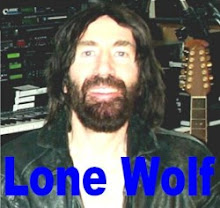
Lone Wolf Sullivan is a writer, songwriter, and studio musician.

Sunday, April 26, 2009

Brazil (1985) * * *


Set in a dystopian retro futuristic world which relies on machines, Sam Lowry (Jonathan Pryce) is a young man often daydreaming of saving a beautiful maiden while he is working as a low-level government employee and living in a small apartment. One day he is assigned the task of rectifying an error created by a government mishap, causing the incarceration of Mr Archebald Buttle (Brian Miller), shoe repairman, instead of the suspected terrorist, Archebald "Harry" Tuttle (Robert De Niro), a Heating Engineer. When Sam visits Buttle's wife, he discovers Jill Layton (Kim Greist), the upstairs neighbor of the Buttles, is the same woman as in his dreams. Jill is trying to help Mrs. Buttle find out what happened to her husband, but has tired of dealing with the bureaucracy. Unknown to her, she is now considered a terrorist friend of Tuttle for trying to report the mistake of Buttle's arrest in Tuttle's place to bureaucrats who would not admit such a mistake. When Sam tries to approach her, she is very cautious and avoids giving him full details, worried the government will track her down. During this time, Sam comes in contact with the real Harry Tuttle, a renegade air conditioning specialist who once worked for the government but left due to the amount of paperwork. Tuttle helps Sam deal with two government workers who are taking their time fixing the broken air conditioning in Sam's apartment.

Harry Tuttle: Bloody paperwork. Huh!
Sam Lowry: I suppose one has to expect a certain amount.
Harry Tuttle: Why? I came into this game for the action, the excitement. Go anywhere, travel light, get in, get out, wherever there's trouble, a man alone. Now they got the whole country sectioned off, you can't make a move without a form.

Sam determines the only way to learn about Jill is to transfer to "Information Retrieval" where he would have access to her classified records. He requests the help of his mother Ida Lowry (Katherine Helmond), who is vainly addicted to rejuvenating plastic surgery under the care of cosmetic surgeon Dr. Jaffe (Jim Broadbent). She has connections and helps her son get the position.

Sam: My name's Lowry. Sam Lowry. I've been told to report to Mr. Warrenn.
Porter: Thirtieth floor, sir. You're expected.
Sam: Um... don't you want to search me?
Porter: No sir.
Sam: Do you want to see my ID?
Porter: No need, sir.
Sam: But I could be anybody.
Porter: No you couldn't sir. This is Information Retrieval.

Sam eventually obtains Jill's records and tracks her down before she is arrested, then falsifies her records to make her appear deceased, allowing her to escape the bureaucracy. They share a romantic night together before Sam is apprehended by the government at gun-point for misusing his position. The bureaucracy considers him responsible for a rash of terrorist bombings. Sam is taken to be tortured by his old friend, Jack Lint (Michael Palin), and he is now considered part of a terrorist plot including Jill and Tuttle.

Before Jack can start, Tuttle and other members of the resistance shoot Jack and save Sam, blowing up the Ministry building as they flee. As they try to disappear into the crowds, Tuttle's disappearance is surreal and mysterious. He is covered by the scraps of paper from the destroyed Ministry building, and once Sam comes to his aid and tears through the paper, Tuttle has disappeared. The scene becomes dream-like as Sam runs to his mother at a funeral. The funeral is for Mrs. Alma Terrain (Barbara Hicks), who recently died from cosmetic surgery gone wrong. Sam's mother, thanks to Dr. Jaffe's repeated surgery, now seems like in her 20's again, looking exactly like Sam's love interest Jill, and is surrounded by a flock of juvenile admirers younger than Sam himself. She refuses to help, and falling into Mrs. Terrain's seemingly bottomless coffin, he then continues to run from the police in streets that resemble the concrete and brick walls of his nightmare daydreams. When he finds himself surrounded on three sides by the police and the imaginary monsters of his nightmares, he turns to the only escape left and climbs up a pile of old flex-ducts, finds safety in a trailer driven by Jill, and the two leave the city together.

However, it is quickly revealed this happy ending is all happening inside Sam's head. Two faces come into view staring at the camera, that of Jack and Mr. Helpmann (Peter Vaughan), who as Deputy Minister of the Ministry of Information is the system's highest official we see in the film. What they are looking at is Sam having become insane at Jack's hands. Jack stops torturing Sam, who is left with a smile on his face, humming "Brazil" as Jack moves Mr. Helpmann in his wheelchair away from the scene.

(last lines)
Mr. Helpmann: He's got away from us, Jack.
Jack Lint: 'Fraid you're right, Mr. Helpmann. He's gone.

BRAZIL is a witty vision of an extremely bleak future, a great example of the power of comedy to underscore serious ideas. Generally called "sci-fi noir", it is a view of what the 1980s might look like from the perspective of a 1940's filmmaker, an eclectic yet coherent mixture of styles and production designs depicting technology in a highly structured and bureaucratic state. It's an Orwellian vision of the future, with the citizens completely controlled by the state, while technology remains almost as it was in the 1970's. The totalitarian government is reminiscent of the one depicted in George Orwell's "Nineteen Eighty-Four", except that it has a clownish, slap-stick quality, is capitalist rather than communist, and lacks a Big Brother figure.

This movie takes a darkly humorous look at consumerism and totalitarian inhumanity. In outdoor scenes, faceless people are often seen moving full shopping carts in the streets. In one scene a person leading a brass band is holding a sign that reads "Consumers for Christ". A young girl is asked what she wants for Christmas and she quickly replies, "My own credit card!" While Sam is strapped to a chair about to be tortured, a police officer tells him, "Don't fight it son! Confess quickly, or you'll jeopardize your credit rating."

Director Terry Gilliam sometimes refers to this film as the second in his "Trilogy of Imagination" movies, starting with TIME BANDIT (1981) and ending with THE ADVENTURES OF BARON MUNCHAUSEN (1989). All are about the "craziness of our awkwardly ordered society and the desire to escape it through whatever means possible." All three movies focus on these struggles and attempts to escape them through imagination: TIME BANDITS through the eyes of a child, BRAZIL through the eyes of a thirty-something year old, and "Munchausen" through the eyes of an elderly man. Gilliam said that BRAZIL was inspired by George Orwell's "Nineteen Eighty-Four", but written from today's perspective. In Gilliam's words, his film is "the Nineteen Eighty-Four for 1984."

Film critic Michael Atkinson of The Village Voice wrote, "Gilliam understood that all futuristic films end up quaintly evoking the naive past in which they were made, and turned the principle into a coherent comic aesthetic." However, Roger Ebert disliked it, writing it "is awash in elaborate special effects, sensational sets, apocalyptic scenes of destruction and a general lack of discipline," as well as, "The movie is very hard to follow. I have seen it twice, and am still not sure exactly who all the characters are, or how they fit." The plot itself is rather thin, existing mainly as an excuse to lead the viewer into various corners of an unexpectedly humorous Orwellian world. Though a success in Europe, the film flopped upon initial release in North America, but it has since become an important cult film. There are scenes missing in the UK release of the film that Americans saw in US theaters. The reasons for excluding these scenes from the UK version and adding them to the US version are unknown.

The cast also includes: Ian Holm (Mr. M. Kurtzmann), Bob Hoskins (Spoor), Ian Richardson (Mr. Warrenn), Charles McKeown (Harvey Lime), Derrick O'Connor (Dowser), Kathryn Pogson (Shirley), Bryan Pringle (Spiro), Sheila Reid (Mrs. Buttle), John Flanagan (T.V. Interviewer / Salesman), Ray Cooper (Technician), Simon Nash (Boy Buttle), Prudence Oliver (Girl Buttle), Simon Jones (Arrest Official), Derek Deadman (Bill--Dept. of Works), Nigel Planer (Charlie--Dept. of Works), Terence Bayler (T.V Commercial Presenter), Gorden Kaye (M.O.I. Lobby Porter), Tony Portacio (Neighbour in Clark's Pool), Bill Wallis (Bespectacled lurker), Winston Dennis (Samurai Warrior), Jack Purvis (Dr. Chapman), Elizabeth Spender (Alison / "Barbara" Lint), Anthony Brown (Porter - Information Retrieval), Myrtle Devenish (Typist in Jack's Office), Holly Gilliam (Holly), John Pierce Jones (Basement Guard), Ann Way (Old Lady with Dog), Don Henderson (First Black Maria Guard), Howard Lew Lewis (Second Black Maria Guard), Oscar Quitak (Interview Official), Harold Innocent (Interview Official), John Grillo (Interview Official), Ralph Nossek (Interview Official), David Gant (Interview Official), James Coyle (Interview Official), Patrick Connor (Cell Guard), Roger Ashton-Griffiths (Priest), Russell Keith Grant (Young Gallant at Funeral), Sue Hodge, Dominic Ffytche (Office boy), Terry Forestal (Running Trooper), Terry Gilliam (Smoking man at Shang-ri La Towers), John Hasler (Naughty little boy), and Peter Sands (Ida's boyfriend). Michael Kamen composed the original music. Terry Gilliam, Tom Stoppard, and Charles McKeown wrote the screenplay. Terry Gilliam directed.

The 3-DVD box set of BRAZIL starts off with the "final final" director's cut of the film, with a runtime of 142 minutes. There are eight minutes of footage added to this release. It is presented in its original 1.85:1 dimensions. The box set presents the feature film in its correct aspect ratio for the first time, but the version on the original DVD release is not enhanced for newer widescreen TVs. New 16:9-enhanced editions of the film in both a complete set and separate film-only disc were re-issued on DVD by Criterion on September 5, 2006. Despite all Criterion's bullshit, the print is flawed. The notes mention a few digital scratch removers, but there is dirt and empty spots in many of the frames. Ary Barroso's 1939 song "Aquarela do Brasil" ("Watercolor of Brazil") is the theme of the film, although other background music is also heard. Michael Kamen, who scored the music, originally recorded "Brazil" with vocals by Kate Bush. This recording was not included in the movie or the original soundtrack release. However, it has been subsequently released on re-pressings of the soundtrack.

Saturday, April 25, 2009

The Jack Benny Program (1950 - 1965) * * *


Comedian Jack Benny (February 14, 1894 – December 26, 1974) had his own radio program beginning May 2, 1932 and ending on May 22, 1955. He brought the program to TV along with his radio regulars almost intact. The TV version of THE JACK BENNY PROGRAM ran from October 28, 1950 to 1965. Jack's stinginess, vanity about his eternal age of 39, basement vault where he kept all his money, ancient Maxwell automobile, and excruciating ineptness at playing the violin were all part of the act. Added to Jack's famous pregnant pause and exasperated "Well!" were a rather mincing walk, an affected hand to the cheek, and a look of disbelief when confronted by problems.

America's funniest cheapskate plays himself on the shows, and his verbal talent is matched by his controlled repertory of dead-pan facial expressions and gestures. Benny did his opening and closing monologues before a live audience, which he regarded as essential to timing of the material. As in other TV comedy shows, canned laughter was sometimes added to sweeten the soundtrack. The cast includes his girlfriend (real life wife) Mary Livingstone, his announcer Don Wilson, his bandleader Phil Harris, and the most important and best liked character, his black butler Rochester played by Eddie Anderson. Rochester may have been Benny's servant, but he was brassy and assertive, not a typical negro stereotype. Jack Benny's funniest shows involve him reacting to guests' insults, playing his violin badly, and doing long monologues which reflect on his familiar persona of a cheap and vain celebrity. Stories often revolve around Benny's attempts to lure famous stars to appear on his show as guests. Some of them rarely, if ever, appeared on TV.

Humphrey Bogart: I'm entitled to one phone call, ain't I? Gimme a dime I'll go down to the drugstore.
Jack: Oh, no you don't. You'll make your call here where I can keep an eye on you.
Bob: And save a dime.

Liberace: What do we have for dinner?
Cook: We have some breast of flamingo and gazelle steaks.
Jack: Breast of flamingo and gazelle steaks?
Liberace: Would you like to stay for dinner, Jack?
Jack: Well, only if you have enough. I'd hate for you to run out to the zoo just for me.

Bob Hope: (on being on a CBS show) I feel like Zsa Zsa at a P.T.A. meeting.
Bob Hope: By the way, this is where Bing did his last show and I think they've done very nicely. They've gotten most of it out of the curtains.
Bob Hope: (finding some coins tied with string in Jack's trousers) When you ask this kid for a loan, and he says his money is tied up, he isn't kidding. This is an obstacle course for pickpockets.
Jack: (poking his head through the stage curtains) Bob, will you please give me my pants back?
Bob Hope: Put your head back through there, or I'll start handing out baseballs to the audience.

Marilyn Monroe: What about the difference in our ages?
Jack: Oh, it's not that big a difference. You're twenty-five and I'm thirty-nine.
Marilyn Monroe: I know, Jack. But what about twenty-five years from now when I'm fifty and you're thirty-nine?
Jack: Gee, I never thought of that.

Other famous guests include: George Burns, James Stewart, Bea Benaderet, Lucille Ball, Vincent Price, Jayne Mansfield, Dinah Shore, Isaac Stern, Danny Thomas, David Niven, Johnny Carson, Red Skelton, George Jessel, Ed Sullivan, Fred Allen, Bing Crosby, Carol Burnett, Jack Paar, Milton Berle, Joey Bishop, Barbara Stanwyck, Robert Wagner, Raymond Burr, Phil Silvers, Connie Francis, Dean Martin, Jerry Lewis, Audrey Meadows, Ernie Kovacs, The Beach Boys, Walt Disney, Carole Lombard, Art Linkletter, Zsa Zsa Gabor, Charles Bronson, Ronald Reagan, Irene Dunne, and many others.

Widely recognized as one of the leading American entertainers of the 20th century, his radio and TV programs have had a monumental influence on situation comedy. The show appeared every six weeks for the 1951-1952 season, every four weeks for the 1952-1953 season and every three weeks in 1953-1954. For the 1953-1954 season, half the episodes were live and half were filmed during the summer, to allow Benny to continue doing his radio show. From the fall of 1954 to 1960 it appeared every other week, and from 1960 to 1965 it was broadcast weekly.

His show won 8 Emmy awards, but eventually the ratings finally got to Benny. CBS dropped the show in 1964, citing Benny's lack of appeal to the younger demographic the network began courting. He returned to his original network NBC in the fall, only to be out-rated by CBS's GOMER PYLE. Although NBC televised his shows in color (after 14 years of black and white shows on CBS), the network dropped Benny at the end of the season. Benny went on to do specials for CBS for another nine years, and was awarded the very first Trustees Award ever presented by the Academy of Television Arts and Sciences. His last TV appearance was in 1974, on a Dean Martin Roast for Lucille Ball.

"Love in Bloom" was the theme song of both his radio and TV shows. On the Johnny Carson Tonight Show he explained the joke of its inappropriateness by reciting the lyrics: "Can it be the trees. That fill the breeze. With rare and magic perfume." (pause) "Now what the hell has that got to do with me?"

The explanation usually given for the "stuck on 39" running joke is that he had celebrated his birthday on-air when he turned 39, and decided to do the same the following year, because "there's nothing funny about 40." Upon his death, having celebrated his 39th birthday 41 times, some newspapers continued the joke with headlines such as "Jack Benny Dies--At 39?"

Various DVDs of THE JACK BENNY PROGRAM are available, with a wide range of video quality. Some shows are in the public domain and are released in poor quality by fast-buck operators who undermine both the market for his shows and the technological advantages of the DVD format. Caveat Emptor: some of these budget DVDs falsely claim they are "digitally restored". Shop around and remember that you usually get what you pay for.

Thug: Look, bud, I said "Your money or your life."
Jack Benny: I'm thinking it over.

Friday, April 24, 2009

Cats & Dogs (2001) * * *


Eccentric Professor Brody (Jeff Goldblum) is working on a serum to cure dog hair allergies in humans. Unknown to him, cats and dogs have been engaged in a secret war to take over the world for centuries. This struggle has been held in check by an uneasy truce. But that period of peace is about to come to an end. A power-hungry ruthless Persian cat, Mr. Tinkles (voiced by Sean Hayes), is leading a massive feline movement against man's best friend. He will make every person on Earth allergic to dogs so that he can take over the world with his army of evil cats. The human race doesn't have a clue about the war between cats and dogs. Cats are James Bond type villains and dogs are secret agents that have been protecting the human race. One of their top field dogs, a Bloodhound agent named Buddy, has been put out of commission and they have been forced to use rookie Beagle puppy Lou (voiced by Tobey Maguire), who is the new pet of Brody's son Scotty (Alexander Pollock). Lou's inexperience as an agent makes him a prime target for assault, though his comrades, led by the stern Anatolian Shepherd Butch (voiced by Alec Baldwin), offer him help and guidance in the ways of becoming an agent.

Lou: You should've fought for me, for my family.
Butch: Why? What good would it do?
Lou: What about man's best friend? History 101, remember?
Butch: Okay, well, here's lesson number two: we help them. We work for them. We tolerate that stupid poochy-poochy baby talk crap. And for what? So that when they go off to college, they can dump you off with some old lady who can't throw a ball without so much as breaking her hip!
Lou: Is that it, then? You're gonna blame my family for what some boy did to you?
Butch: Look, kid, I'm sorry it played out like this, but it's over. We're shut down.

As the unsuspecting humans go through their busy lives, the cats make several attempts to obtain the formula, as their canine foes try tirelessly to stop them. Mr. Tinkles strives to get to the substance, analyze it and then have it turned into a means of rendering all humans in the world allergic to any kind of dog. Cats would rule, and dogs would then be exterminated. As his army of well-trained soldier cats begin a mass mobilization, the fate of humankind rests on the paws of Lou. Together with Butch and a few other dog agents from the neighborhood, Lou desperately tries to stop Mr. Tinkles and his sinister plans. Other dogs include a wise older dog who watches out for him, a large friendly dog, and a small dog who serves as an electronics expert.

Mr. Tinkles: The ninjas failed, and failure is unacceptable! If they ever show their faces again, you know what to do.
Calico: Yes. Tell them to wash with a loofah sponge. Kidding! Hello? Joke!
Mr. Tinkles: This can't be happening. I want them eliminated!
Calico: But they did manage to bug the phone. I think we should just concentrate on the glasses half full.
(Mr. Tinkles growls and throws the roll at Calico)
Calico: Ow! That's what I want to do.
Mr. Tinkles: Oh, putting a happy face on. What an interesting philosophy. At what point did you forget we're trying to take over the world?

The movie features ninja Siamese cats wreaking havoc with their kung fu prowess. Some cats wear night-vision goggles, a cat coughs up bombs disguised as fur balls, and Mr. Tinkles falls prey to the maid of his owner, who dresses him up in lacy outfits. He says, "Evil does not wear a bonnet! Did Genghis Khan ever wear a bonnet?" This effects-laden family movie can annoy cat fanciers by casting dogs as the undisputed heroes in all-out warfare with nefarious felines. Hidden headquarters and high-tech gadgets are featured on both sides of this age-old battle. On the feline side, Mr. Tinkles plots to sabotage the efforts of Professor Brody. On the canine side, Butch trains Lou to foil Mr. Tinkles's scheme--a mission that begins when Mrs. Brody (Elizabeth Perkins) adopts Lou for her son Scott.

Mr. Tinkles: Like a powerful, dark storm, I will make my presence known to the world. Like a seeping mist, I will creep into the dogs' center of power, and make them quake in fear at the very mention of my name!

Using a combination of live animals, animatronic puppets, and digital wizardry, CATS & DOGS has enough imagination to match its effects, climaxing with a feline global-domination scheme involving mice sprayed with chemicals that will make all humans allergic to dogs. The computer generated realistic lips are completely convincing when the pets speak. Goldblum and Perkins play second fiddles to this menagerie, and as madcap realism gives way to cartoonish fantasy, the movie escalates into utter chaos. Dogs include a Saluki hound (voiced by Susan Sarandon), a shaggy sheepdog (voiced by Michael Clarke Duncan), and a Chinese hairless techno-geek named Peek (voiced by Joe Pantoliano). Similar to the "Babe movies", "Cats & Dogs" is harmless fun--especially for dog lovers.

Lou: I think that if I'm going to be a secret agent, I should have a better name. I was thinking, "Toto Annihilation".
Peek: Nah, he's a pro wrestler. Sorry, that name's taken.
Lou: Alright then, "Doom Machine" it is!
Butch: Hey! You can call yourself Squicky the Spacedog for all I care, but that doesn't make you behind a rocket pack.

This is a very funny comedic action-adventure flick that mixes live action with cutting-edge CGI and animatronic effects. It is rated PG, apparently for the violence between the cats and dogs, which is carried on in a cartoonish manner that no one will find disturbing. It's a a successful family film that is charming and pleasing in every way, with funny dialogue appealing more to understanding adults, while the non-stop camera movements, cheesy effects, and characters will carry children along on its wild ride. The lighthearted comedy, laughs, and humorous jokes are purr-fect fun.

Though actors Goldblum, Elizabeth Perkins, and Alexander Pollock do impressive work as the human family, they cannot hold a candle to our furry friends. Each character is voiced magnificently by their actor, none as brilliantly as Sean Hayes, who is a real hoot as Mr. Tinkles. His devilish wit and impressive voice talent are amusing, a Dr. Evil for the younger set. To call CATS & DOGS anything but good clean fun only proves the cynicism of adulthood. The movie is one of the most enthusiastic and energetic films of the genre to be produced in a long time, a cross between the animal physicalities of "Homeward Bound" and the technical spy intelligence of the James Bond films. This is the ultimate definition of "cute," and is total, complete fun.

The cast also includes: Miriam Margolyes (Sophie the Castle Maid), Myron Natwick (Mr. Mason), Doris Chillcott (Mrs. Calvert), Kirsten Robek (Pie Mom), Frank C. Turner The Farmer), Mar Andersons (Guard at Factory Gate), Gillian Barber (Factory Receptionist), Carol Ann Susi (Sophie's Sister), Randi Kaplan (Sophie's Sister), Mary Bogue (Sophie's Sister), Alvin Sanders (Mason Employee), Mark Schooley (Mason Employee), Lou Bollo (Worker), Scott Nicholson (Worker), Trish Schill (Worker), Babe Dolan (Wife passenger), Reg Glass (Truck driver), Charles Andre (Truck driver), Peggy Logan (Nurse), Alicia Michelle (Jogger on Sidewalk), and Pamela Perry (Yorkie Dog Owner). John Debney composed the original music. John Requa and Glenn Ficarra wrote the screenplay. Lawrence Guterman directed.

The DVD features include a Dog Commentary, Cat Commentary, Deleted Scenes, and "Teaching A New Dog New Tricks". Production of a sequel, tentatively named "Cats & Dogs: The Revenge of Kitty Galore", began on September 2, 2008 under the direction of Brad Peyton. Some of the scenes will be filmed in Playland, Vancouver, and the film is scheduled to be released on November 20, 2009.

Thursday, April 23, 2009

South of Pago Pago (1940) * * ¾


Bucko Larson (Victor McLaglen) leads an expedition to the South Seas to the uncharted island of Manoa to steal pearls from the innocent unsuspecting Polynesians. With his cut-throat gang, he brings along beautiful and seductive Ruby Taylor (Frances Farmer), a blonde barroom hostess. Her opening line is "Hello Sailor", spoken in a deep baritone. When they arrive, the son of an island chieftan, young Kehane (Jon Hall), defiantly opposes the efforts of Larson to invade his domain. Larson uses Ruby as a ploy to attract Kehane. She pretends to love him, he forsakes his betrothed childhood sweetheart Malia (Olympe Bradna), and they marry. Malia dresses up in high heels and make-up in an attempt to win back his affections. But all this romance is a sub-plot to cold hearted Larson's wicked scheme to exploit the natives for the pearls that are on their sea-beds--all done in pantomime villain style with very little humour. However, Ruby turns honest at the last moment and saves Kehane's life at the expense of her own. The pearl hunt is thwarted.

It is not the good guys who dominate this film, but the bad ones. Victor McLaglen in a rare role as a villain, is a combative brute with no redeeming qualities, killing without qualm. However his leadership ability, his determination to acquire wealth, and his fearlessness along with his crewmen in the face of the overwhelming number of natives against them, is quite admirable. The final moments, where their corpses are tied to their ship before it is set adrift in retribution, is a memorable scene. Chiseled adonis Jon Hall and gorgeous Frances Farmer outlined in profiles against the steaming background volcano take the romantic closeup to a level that defies comparison.

This exotic melodrama was an attempt to cash in on the success of THE HURRICANE (1937), and again stars Jon Hall as a native islander. He does an adequate job in the role and certainly has the body of a Greek god. Farmer was only 27 when she made the movie, and she does not look quite as breathtaking as when she made COME AND GET IT four years earlier. Nevertheless, it is one of the few movies one can see Frances in.

The film is typical of the tropical escapist movies of the early 1940s, and is a notch up from most similar adventure outings, with great violent action and excellent cinematography. It's basically a better-than-average action film which co-stars two attractive actors in the leads. It includes background shots of the Kona coast and the Kalapana black sand beach, Hawaiian and Tahitian dancing, as well as Hawaiian musicians Sam Koki and Lani McIntire. The song, "South of Pago Pago", a pleasant Hawaiian-type song, is played and sung during the opening credits and then only a few bars on occasion throughout the film. It should have been used more frequently, as "Moon of Manakura" was in THE HURRICANE. "Manakura" was a smash hit in the 1940s and is still heard on occasion today.

This film marked Frances Farmer's return to Hollywood after the disappointments of her post-"Golden Boy" plays for New York's Group Theater, and the end of her romance with Clifford Odets. Her role is an obvious repeat of the saloon tramp Lotta from COME AND GET IT (1936), except this time Frances doesn't have director of photography Rudolph Mate or director Howard Hawks for support. Her Ruby even wears the same period hairstyle and has a similar wardrobe. Although still a beautiful woman, Farmer's increased weight is most noticeable in the sarongs she wears on the Polynesian island and she is coupled with Jon Hall, who is photographed more flatteringly. Beefcake star Hall shows off his sleek physique at every opportunity.

Perhaps because Farmer tries a characterization rather than give a star performance, her Ruby ironically reveals her own acting limitations. The triumph she had in COME AND GET IT included a delicacy she gave to the conventional roles of whore and ingenue. Here her world weary cynicism can be funny, but the director has her cover her weeping face with a blind, and keeps the camera at medium range for a death scene. Lines like "Do I look like a dose of poison?" and "The heart of a woman can be a typhoon" have a prophetic quality, which is more coincidence than intention, and the black and white photography makes Farmer look brunette in a waist-length wig, in spite of Ruby being a blonde, in contrast to the dark haired native women.

Producer Edward Small took director Alfred E. Green's cast and crew to the south seas to film the majority of this under-rated movie on location. Far less stylized and dated than Goldwyn's THE HURRICANE, it is admittedly filled with cliches and formula, but packaged in such visual and technical excellence it doesn't really matter. Originally released by United Artists, this production later made the revival-house rounds through the distribution channels of PRC Pictures.

The cast also includes: Gene Lockhart (Lindsay), Douglass Dumbrille (Williams), Francis Ford (Foster), Ben Welden (Grimes), Abner Biberman (Manuel Ferro), Pedro de Cordoba (Chief), Rudy Robles (Luna), Bobby Stone (Hono), Nellie Duran (Laulau), James Flavin (Cafe Customer), Nina Campana (Hono's Mother), James B. Leong (Waiter), Harry Woods (Black Mike Rafferty), and many others. The original music was composed by Chet Forrest, Lew Pollack, Bob Wright, and Edward Ward. George Bruce and Kenneth Gamet wrote the screenplay. Alfred E. Green directed.

Frances Farmer was beautiful and talented, supposedly self-destructive but actually a victim. She was an alcoholic like countless others, and it impeded her career and was a major cause of her early retirement in 1942 at the age of 28. However, her main "problem" was she was ahead of her time, basically a feminist who refused to be bossed around by Hollywood moguls. Farmer was eventually committed to mental institutions by her studio bosses--with her mother's approval. They pushed a young, sensitive artist over the edge. She spent the remainder of the decade in and out of barbaric institutions run by crazy "shrinks", suffering several nervous breakdowns and losing her battle with alcoholism. For seven years, she was subjected to 90 insulin shocks and electroshocks, and was sold by psychiatric workers to drunken sailors who repeatedly raped her. She told of being, "raped by orderlies, gnawed on by rats, poisoned by tainted food, chained in padded cells, strapped in strait jackets and half drowned in ice baths." Her last "treatment" was a lobotomy by Walter Freeman--although there are no medical records of this operation, only her own testimony. Farmer never regained her abilities. In 1949 she was finally released from the asylum. She never believed she was mentally ill, and said, "If a person is treated like a patient, they are apt to act like one... I blame nobody for my fall... I think I have won the fight to control myself."

In 1957, Farmer was found working as a hotel receptionist in San Francisco and was coaxed out of retirement. She soon made her first comeback appearance on television's Ed Sullivan Show, where she sang and discussed her hopes of revitalizing her movie career. However, she made only one more film, the 1958 teen drama THE PARTY CRASHERS. Farmer did appear in a handful of theatrical productions, and beginning in 1960 she hosted an Indianapolis-based television program about movies titled "Frances Farmer Presents". She died of cancer on August 1, 1970 aged 56. Her autobiography "Will There Really Be a Morning?" was published posthumously. In the years following her death, Farmer's cult following grew immensely, and in 1982 Jessica Lange starred in FRANCES, a film biography of her troubled life and times.

Wednesday, April 22, 2009

Night Gallery (1970 - 1973) * * *


When CBS cancelled Rod Serling's series THE TWILIGHT ZONE in 1964, Serling created a similar concept in NIGHT GALLERY as a new forum for his brand of storytelling, a diverse collection of horror, fantasy and sci-fi tales. From 1970 to 1973 he hosted the series from an art gallery on NBC. Serling and others wrote some of the stories, but also adapted classics from H. P. Lovecraft, Algernon Blackwood, Fritz Leiber, and A. E. van Vogt. NIGHT GALLERY was originally titled "Wax Museum", but the name was changed before the first episode was broadcast.

Rod Serling: "Good evening, and welcome to a private showing of three paintings, displayed here for the first time. Each is a collectors' item in its own way--not because of any special artistic quality, but because each captures on a canvas, and suspends in time and space, a frozen moment of a nightmare."

The NIGHT GALLERY two-hour pilot film was first telecast on November 8, 1969 as a TV movie. Rod Serling hosts three macabre short stories, introducing each with a framed portrait in a dark art gallery. It features the directorial debut of Steven Spielberg and one of the last acting performances by Joan Crawford. The first story stars Roddy McDowall as a covetous nephew who murders his uncle, suffering the consequence of being possessed by a family painting. The second story stars Joan Crawford as a blind millionairess who purchases the eyes of down-and-out Tom Bosley in order to enjoy 12 precious hours of sight. The final tale involves a Nazi war criminal (Richard Kiley), who attempts to evade his pursuers by escaping into a painting in a museum.

On December 16, 1970, the first episode "The Dead Man" was broadcast on NBC. Serling in an art gallery introduces the mostly macabre tales that make up each episode by unveiling paintings by artist Tom Wright depicting the stories. Equally horrific sculptures in the gallery were done by Logan Elston and Phil Vanderlei. 43 color episodes were produced: 98 story segments, including 3 in the pilot episode and 2 that were added for the syndication run. Many famous actors appear in the episodes. As the series progressed, Serling suffered from too much network and studio interference. He had less input, control of content and tone than he did on THE TWILIGHT ZONE. There was a communication problem with production, and Serling often didn't know what was going on. By the final season, stung by criticism and ignored by the show’s executives, Serling all but disowned the series.

NIGHT GALLERY was criticized for its use of comedic blackout sketches between the longer story segments in some episodes, and for its splintered, multiple-story format, which contributed to its uneven tone. Despite these distractions, Serling produced many distinguished teleplays. It was nominated for an Emmy Award for its first-season episode "They're Tearing Down Tim Riley's Bar" as the Outstanding Single Program on U.S. television in 1971. In 1972, the series received another nomination (Outstanding Achievement in Makeup) for the second season episode "Pickman’s Model". To increase the number of episodes available for syndication, the 60-minute episodes were re-edited into a 30-minute format, with many segments either severely cut or extended using newly shot scenes and stock footage. Also, episodes of the short-lived 1972 supernatural series "The Sixth Sense" were incorporated into the syndicated version of the series with Serling providing newly filmed introductions. There were two episodes that were produced but were not broadcast: "Die Now, Pay Later" and "Room for One Less". The final episode "How To Cure The Common Vampire" was broadcast May 27, 1973.

Whereas the tales in THE TWILIGHT ZONE are primarily science fiction, NIGHT GALLERY stories have a dark, sinister, morbid, supernatural, and horrific edge. However, both shows are intelligent, and many episodes in each series would fit comfortably in either series. For example, "The Different Ones" from the "Night Gallery" is about a hideously disfigured young man who is sent to a distant planet, where he discovers the inhabitants look just like him. The main thing that is the same for both series is the moralistic sense of justice. Call it Karma or Nemesis, but the characters always reap what they sow.

The first two seasons of NIGHT GALLERY are now available on DVD. The remastering quality is excellent. It is so clear that you can even see the uppper lip hair on Patty Duke in the second season entry "The Diary". There are no DVD extras. In 2004, Universal released the Region 1 DVD collection, including the pilot film and the six episodes of the first season, plus bonus episodes from seasons two and three as extras. On October 16, 2006, the first season, including the pilot film and 2 bonus episodes, one from season 2 and one from season 3, was released on Region 2 DVD. In November of 2008 Universal released the complete season two DVD collection. They announced that one story segment from season two, "Witches' Feast", would not be included due to the fact that Universal was unable to locate portions of the 40 year-old episode. When and if Universal releases the third season of NIGHT GALLERY on DVD the studio expects to release "Witches Feast" as part of that set.

Scott Skelton wrote, "We've been tracking this release pretty closely and are privy to as much information as we can squeeze out of Universal Studios. We're grateful the series has been tapped for a DVD release, and the set has been struck from original, uncut prints--the same ones Columbia House used for its mail-order volumes--and not the butchered half-hour syndication version that played on the SciFi Channel for years. We also fail to see why a series which featured the involvement of both Rod Serling and Steven Spielberg did not rate a budget that allowed special features. If Warner Brothers can load extras into DVD releases of such non-classics as "Wonder Woman" and "The Dukes of Hazzard", then Universal is out of touch with current standards in the DVD business when they fail to properly document their own classic TV shows." Scott Skelton and Jim Benson wrote "Rod Serling's Night Gallery: An After-Hours Tour". It's a great book with rave reviews, possibly superior to Marc Scott Zicree's excellent "The Twilight Zone Companion".

Which series is better? They are both great. NIGHT GALLERY appeals to horror fans, is under-rated and was not as successful as THE TWILIGHT ZONE, which is basically science fiction. Sci-fi is more popular and respectable than horror, much of which is a sub-genre of sci-fi. NIGHT GALLERY is in color, but otherwise both series are equal, featuring excellent writing, acting, direction, and intelligence.

Tuesday, April 21, 2009

Space Truckers (1996)


The movie begins in the year 2196 on the farside outpost of one of Neptune's moons, Triton. E.G. Saggs (Shane Rimmer), the capitalist boss of a large multi-planetary corporation, and evil scientist Dr. Nabel (Charles Dance) have created a cyborg warrior that is virtually unstoppable. But Saggs betrays Nabel and orders one of his warriors to kill him. Dr. Nabel rebuilds himself later and becomes Captain Macanudo.

John Canyon (Dennis Hopper) is one of the last independent space transport entrepreneurs and his outdated Pachiderm 2000 space ship looks like a big truck. He is competing against huge mega-corporations, and is hassled by high-tech interference from corrupt bosses. After Canyon delivers a cargo of pigs, genetically engineered to be square and stackable for more efficient shipping, he finds his profits siphoned off by crooked labor boss Keller (George Wendt). He initially refuses to join "The Company", an outfit controlling intergalactic trucking, but is unable to resist when the pay is five times the going rate. Times are tough and if Canyon wants to keep his space vessel, he mustn't be too choosy when it comes to clients or too inquisitive about the nature of cargo.

He visits a space station populated by space truck drivers who listen to country & western music. After an argument turns into a bar brawl, Canyon agrees to take a suspicious cargo and deliver it to Earth without questions being asked. Supposedly he is transporting sex toys. He also takes two new crew members: young rookie pilot Mike Pucci (Stephen Dorff) and waitress Cindy (Debi Mazar), who will accept his marriage proposal if he takes her to Earth to visit her sick mother. Canyon and his new-found partners narrowly escape the station, and along the way Mike and Cindy fall for each other. Soon all three of them realize that the cargo happens to be a small army of deadly killer robots.

The trio goes through an asteroid belt, their ship gets hot and they land in big trouble when swallowed by a pirate ship led by Captain Macanudo, the grotesquely disfigured former scientist Dr. Nabel who wants to have a good time and use robots for world conquest. Canyon's cargo of army androids were stolen from Macanudo by E.J. Saggs--who's plotting an android takeover of Earth. Macanudo's funniest scene, and one of the best in the film, comes when he attempts to activate his power-driven private parts to have sex with the unwilling Cindy. He has to get it started like a gas mower, only he has trouble with the pull cord.

Macanudo: I rebuilt my mind!
Cindy: So, you have a homemade brain.

Former National Lampoon editor Ted Mann, who scripted this $27 million science-fiction comedy, calls it "the first outer-space road movie." According to Mann, the film has "no scientists, no techies, none of the usual polished, sanitary environments we're used to in our space films. Space is like anywhere else -- the people who are there are underpaid and poorly regarded." Filmed at Ardmore Studios, County Wicklow in Ireland, this funny sci-fi adventure film is a wild and colorful ride. Bright and brash, it has interesting cheesy special effects and is a highly entertaining dystopian spoof.

SPACE TRUCKERS borrows from every major sci-fi epic of the past two decades, but it does so with style. It was originally made for cable television and is basically an action packed high seas adventure set in outer space that moves along nicely without ever becoming too challenging. However, many viewers and critics do not like it. One commented, "If you like awful films this will have you shaking your head in disbelief with your mouth wide open in complete amazement that a film this bad could ever have been made. This really is rubbish, no don't even be tempted to rent it for cringe factor, it's just very, very sad." Lone Wolf disagrees. I enoy it very much, and have watched it many times.

The cast also includes: Seamus Flavin (Chopper 4), Jason O'Mara (Chopper 3), Vernon Wells (Mr. Cutt), Sandra Dickinson (Bitchin' Betty), Tim Loane (Trooper Officer), Ian Beattie (Trooper), Olwen Fouéré (Building Commander), Roger Gregg (Tank Patrol), Dennis Akayama (Tech Leader), Graeme Wilkinson (Jackie), and Sean Lawlor (Mel). Colin Towns composed the original music score. Ted Mann wrote the screenplay from a story he wrote with Stuart Gordon, who also directed.

Monday, April 20, 2009

Civilisation: A Personal View by Kenneth Clark (1969) * * *


CIVILISATION: A PERSONAL VIEW BY KENNETH CLARK is a 13 episode TV series that chronicles human progress through the centuries. Regarded as one of the finest TV productions ever made, this pretentious highbrow documentary is presented by Kenneth Clark (1903 - 1983), who also wrote an accompanying book. Clark traveled around the world to illustrate the series with breathtakingly beautiful art treasures. The series was produced by the BBC and aired in 1969 on BBC Two. Both the television material and the accompanying book were written by art historian Clark who narrates CIVILISATION.

The series took three years to produce, with filming in over 100 locations across 13 countries. Hailed as a masterpiece when it was first transmitted in 1969, Clark earned a peerage on the strength of the series and became Lord Clark. More pompous, pretentious bullshit. From the fall of the Roman Empire to the Industrial Revolution and beyond, Clark's compelling narrative is accompanied by colour photography of Europe's greatest landmarks. This "history of ideas as illustrated by art and music" remains the benchmark for the numerous programs it inspired. For Clark art is pure, untouched by the corruption of politics and materialism. CIVILISATION is not really a TV show, but a lecture series that presents statements about civilization itself.

Lone Wolf worked as a projectionist at the University of Toronto and showed the entire series countless times for 4 consecutive years. Probably nobody has seen it more times on the big screen than me, and my memory of the series is the art work, Clark's annoying patrician rhetoric, and his astonishing snaggle-toothed mouth. Surely more than anyone he has has given England its reputation as "the land of bad teeth". Yes, it is a great show, but frankly it appeals primarily to snobs who imagine they have infinitely superior taste compared to the "great unwashed". In glorious color, each episode is 50 minutes long, with a total runtime of 670 minutes.

The episodes are as follows:

1) "The Skin of our Teeth" In the first episode Clark admits that he can't define "civilization". He begins with a quote from Ruskin that validates the view that civilization can only be truly understood by studying art. Clark implies civilization is about to be overrun by barbarians, so he offers to start the journey with a look at the last total collapse of reason and culture: when the barbarians destroyed the glory of Rome, then swept through Europe to threaten all the great accomplishments of good Christians. Fortunately, Charlemagne, "the first great man to emerge from the darkness," saved us all. Clark travels from Byzantine Ravenna to the Celtic Hebrides, from the Norway of the Vikings to Charlemagne's chapel at Aachen, telling his story of the Dark Ages--the six centuries following the collapse of the Roman Empire.

2) "The Great Thaw" In the second episode Clark tells about the struggle to overcome the "Dark Age" during which nothing happened in the world (meaning Europe). Watch our "leap forward" from ignorance to artistic enlightenment, embodied by cathedrals--big, heavily decorated cathedrals. The sudden reawakening of European civilization in the twelfth century is traced from its first manifestations in the Abbey of Cluny to its high point, the building of the Chartres cathedral.

3) "Romance and Reality" Beginning at a castle in the Loire, then travelling through the hills of Tuscany and Umbria to the cathedral baptistry at Pisa, he examines both the aspirations and achievements of the later Middle Ages in France and Italy. The parade of heroic figures keeps coming. Religion is represented by St. Francis of Assisi and the arts are advanced by Giotto and Dante. Clark follows the development of "the gothic imagination." Now that the courtly love tradition begins to enter art, Clark also finally starts talking about women, at least as embodiments of abstract ideas like Chastity and Nature. He seems to find placing women at the center of things somewhat absurd and courtly love poetry "unreadable". Even Dante, who paid so much honor to his Beatrice, is a little suspect in Clark's eyes.

4) "Man--the Measure of all Things" After devoting some time to females, he is back talking about men. Even better, artistic men. Clark takes a look at the Renaissance, where, in his effort to say something new about a picked-over subject, his sense of humor really comes to the fore. Visiting Florence, Clark claims European thought gained a new impetus from its rediscovery of its classical past. He also visits the palaces at Urbino and Mantua, other centers of Renaissance civilization.

5) "The Hero as Artist" Listing great Renaissance figures, Clark takes us back to 16th century Papal Rome noting the convergence of Christianity and antiquity. He discusses the heavyweight contenders in his survey of art history: Michelangelo, Raphael, and da Vinci--as well as the courtyards of the Vatican, the rooms decorated for the Pope by Raphael, and the Sistine Chapel.

6) "Protest and Communication" Clark takes us back to the Reformation. That is to the Germany of Albrecht Duerer and Martin Luther, the world of the humanitarians Erasmus, Montaigne, and Shakespeare. Clark finally focuses on a group of thinkers known more for their words who reshaped written language and reflected the radical intellectual shift of their age. Still, we spend more time looking at pictures of them than learning the details of their ideas or listening to their words. We do get to see some Shakespeare performed by Ian Richardson and Patrick Stewart.

7) "Grandeur and Obedience" In the Rome of Michelangelo and Bernini, Clark tells of the Catholic Church's fight against the Protestant north, the Counter-Reformation and the Church's new splendor symbolized by the glory of St. Peter’s. The Counter-Reformation provided the Catholic Church an opportunity to produce more opulent art. Michelangelo, Caravaggio, and Bernini rose to the task, and their work led to the Baroque.

8) "The Light of Experience" Here Clark tells of new worlds in space and in a drop of water that the telescope and microscope revealed, and the new realism in the Dutch paintings which took the observation of human character to a higher stage of development. The power of the Church gives way to the power of Reason, epitomized by thinkers like Descartes and realistic painters of the rising middle class like Rembrandt and Vermeer. Plus the rise of trading empires like Holland.

9) "The Pursuit of Happiness" Clark talks of the harmonious flow and complex symmetries of the works of Bach, Handel, Haydn and Mozart--and the reflection of these in the Rococo churches and palaces of Bavaria. Although every episode is backed by period music, this is also the first time that Clark calls attention to the connection between architectural harmony and the structure of music, particular as this is the age of Bach and Mozart.

10) "The Smile of Reason" Clark discusses the Age of Enlightenment tracing it from the polite conversations in the elegant Parisian salons of eighteenth-century, through the subsequent revolutionary politics to the great European palaces of Blenheim and Versailles, then finally to Jefferson’s Monticello. Seen through the windows of Versailles and Monticello and the words of Voltaire and Jefferson, science, wit, and intellect were prized above all. Once again we see more about the places where people like Voltaire wrote than actually hear any of the words of Voltaire that changed thought in Europe.

11) "The Worship of Nature" Belief in the divinity of nature, Clark argues, usurped Christianity’s position as the chief creative force in Western civilization and ushered in the Romantic movement. Here Clark visits Tintern Abbey, the Alps, and there discusses the landscapes of Turner and Constable. Romanticism reigns. From Rousseau's view of "natural man" to the paintings of Constable and Turner, with a detour to quote the Marquis de Sade, we see how nature inspired a generation.

12) "The Fallacies of Hope" Clark argues that the French Revolution led to the dictatorship of Napoleon and the dreary bureaucracies of the nineteenth century, and traces the disillusionment of the Romantic artists from Beethoven's music, Byron's poetry, Delacroix's paintings to Rodin's sculpture. The reason of the Enlightenment reaches its apotheosis in the impulsive utopian visions of Napoleon, Beethoven, and Byron. As Wordsworth said, "to be young was very heaven." But soon the revolutions would give way to disillusion and cynicism.

13) "Heroic Materialism" Clark concludes the series with his discussion of materialism and humanitarianism of the past century. This takes us from the industrial landscape of nineteenth century England to the skyscrapers of twentieth century New York. The achievements of the engineers and scientists--such as Brunel and Rutherford--having been matched by the great reformers like Wilberforce and Shaftsbury. There is nothing about Twentieth Century art in this series. Clark does not even pretend to understand or respect anything after 1900, but he has plenty to say about the end of the Nineteenth Century which led to the grim modern era that seems to mark the end of civilization for him. However, he does see hope in a history of humanitarianism, "the great achievement of the Nineteenth Century."

Lord Kenneth Clark's CIVILISATION is a revolutionary series despite the conservatism of its message. As a presenter he is dignified, patronizing, pompous, pretentious, and extremely opinionated about western art and culture. He is quite proud to admit that he is "a stick in the mud" who believes in old fashioned values. And don't forget his snaggled teeth. They really are enough to make you not watch his magnificent contribution to western culture. The four DVD set includes a specially written 36-page illustrated booklet of viewing notes. DVD extras include Sir David Attenborough remembering the making of CIVILISATION and a photo gallery of behind-the-scenes stills. But you really must watch it on the big screen to appreciate the great art work. On a small TV screen you'll only see vague muddy art and your eyes will inevitably focus on Clark's bad teeth. It's ironic that CIVILISATION was made for TV, yet the art it depicts can only be appreciated on the big screen. Edwin Astley composed much of the incidental music. Michael Gill directed 7 episodes, Peter Montagnon directed 5, and Ann Turner directed 3.

Tuesday, September 02, 2008

STAR TREK: The Next Generation TV (1987-1994) * * *


Eighteen years after the original STAR TREK TV sci-fi show ended, creator Gene Roddenberry resurrected the concept with a different cast of characters. It takes place in the 24th century, about 80 years after the original. The series premiered on September 28, 1987 to 27 million viewers with the 2 hour pilot "Encounter at Fairpoint". 178 episodes were produced, and the series ended May 23, 1994 with "All Good Things..."

Comparing STAR TREK TNG with the original, the "Enterprise" space ship (NCC 1701-D) is almost twice as big as Captain Kirk's, special effects are superior, and the scripts are equally well-written and teach a lesson. It has a slick and sleek look and style derived from the STAR TREK movies. Crew complement is over 400, compared to 141 in the original. The mission is the same: seek out new planets and civilizations, plus police the galaxy. There are additions such as the "Holodeck" for realistic recreational fantasies, and "Ten Forward", a bar that serves "synthehol". But unlike the original, there are too many characters and most are not charming, with the exceptions of Data, Worf, O'Brien, and eventually Riker. Most of the stories are quite good and inventive, with more detail than the original. There is a focus on the relationships between the crew members and TNG is less episodic and more serialized. Runtime for the original series is 51 minutes per episode, runtime for TNG episodes is 46 minutes.

(opening monologue) Picard: "Space... The final frontier. These are the voyages of the starship Enterprise. It's continuing mission, to explore strange new worlds. To seek out new life and new civilizations. To boldly go where no one has gone before."

Jean-Luc Picard: The pompous Captain played by Patrick Stewart is presented as the greatest creature in the galaxy. He talks like Hamlet in outer space and says "Make it so", "As you wish", and "Tea, Earl Grey, hot" too often. Like Kirk, he is married to his ship and attentive to his crew. But whereas Kirk is a cultural icon, Picard is just some guy who is really nice. Picard is intelligent, cool, moralistic, diplomatic, serious, too old, and not sexy. He adheres to the "Prime Directive" more than Kirk, but has broken it many times. Dr. Crusher is his main love interest.

Picard: I will just have to trust that you will not let Admiral Pressman put the Enterprise in unnecessary risk and if I find that that trust has been misplaced, I will have to re-evaluate the command structure of this ship. Dismissed.

William Riker: The first officer played by Jonathan Frakes is a suave and somewhat flippant all-American from Alaska. Picard calls him "Number One" although he really is number two. Riker is bold, ambitious, and somewhat arrogant, but experience teaches him to be patient and more reserved. He is sexy and often flirts with alien females. Starting in season 2 he grows a beard. "Riker's job is to provide Captain Picard with the most efficiently-run ship and the best prepared crew he can," Frakes explains. "As a result, he maintains a more military bearing than the other characters, despite the fact that salutes and other military protocol no longer exist in the 24th century." William Riker and Deanna Troi are based on Decker and Ilia from STAR TREK: The Motion Picture.

Riker: You were right, someone blew out the hatch. They were all sucked out into space.
Data: Correction, Sir. That's "Blown out".
Riker: Thank you, Data.
Data: A common mistake, Sir.

Data: The Second Officer and Operations Officer is an android, a logical and objective sophisticated robot who tries to understand his confusing human colleagues because he wishes to become more human. Data was created by Noonien Soong and has a positronic brain, but no emotions. He adds comic relief and is reminiscent of Spock. Data has super-strength and an incredible memory. He's virtually an encyclopedia, but only in terms of information, not behavior. Data is innocent, but he does have a sense of curiosity and wonder that allows him to evolve. He is played by Brent Spiner.

Data: From any particular point of view, sir ?
Picard: On the perspective Lt. Yar using them in combat with Lutan's wife.
Data: Most interesting. Could this be Human Joke Number 663?
Geordi: Negative, Data. That's a captain's order.

Geordi La Forge: The Tactical and Conn Officer for the Enterprise is blind, but can "see" with a special visor apparatus that was derived from a cheap plastic hair barrette. He's a nerd and impressed Picard by staying up all night to fix a shuttle craft with a minor problem. La Forge's irreverence has been tempered with his responsibilities, but his sense of humor remains strong. His faith in technology and his ability to master it, normally an inspiration to those around him, was shaken slightly with the 2370 discovery that warp drive can harm the fabric of some spatial areas. In his personal life, La Forge is insecure regarding dating and female relationships, although this has lessened with time. LaForge is played by Levar Burton.

(talking about Data training his cat)
Data: Unfortunately, I have been less than successful.
Geordi Laforge: I've got an idea. How about a phaser? A low-stun setting at just the right moment might do the trick.
Data: Geordi, I cannot stun my cat.
Geordi Laforge: I was kidding, Data.

Worf: The Tactical and Conn Officer in season 1, and Chief of Security and Tactical Officer for seasons 2 to 7 is a Klingon who was raised by humans, Sergey and Helena Rozhenko, on the planet Gault. His name is "Worf, son of Mogh". Like all Klingons he is obsessed with honor and is courageous and proud. Despite his conflicts over being a Klingon among human and other Federation cultures, he remains loyal to the Federation and its ideals. And he has the respect of the Klingon people due to his defeat of the late Chancellor Gowron in a bat'leth fight. Worf has Klingon and human love interests, marries Jadzia Dax and in 1995 joined the cast of STAR TREK: Deep Space Nine. Worf is played by Michael Dorn.

Data: If the warp drive fails to activate, the results could be... unfortunate.
Worf: Very unfortunate. We will be dead.

Beverly Crusher: The Chief Medical Officer for seasons 1 and 3 to 7 is played by Gates McFadden. She is intelligent, passionate, caring, sensitive, conscientious, ethical, considerate, with a strong will and sense of justice. She is missing from season 2 because of a stage work commitment, and the Star Trek explanation is Crusher was head of Starfleet Medical from 2365 to 2366. Dr. Crusher was married to Jack Crusher who died in an accident on the Stargazer when her son Wesley was 5 years old.

Picard: What is wrong with me ?
Crusher: I wish the hell I knew, Captain. But something unusual has definitely been happening to you.
Picard: Why do doctors always say the obvious as if it's a revelation?
Crusher: Why do captains always act like they are immortal ?

Deanna Troi: The Ship's Counselor is half-Betazoid and half-human. She has some telepathic powers, primarily the ability to sense emotions. Technically she is an extra-sensory empath with clairsentience. Mainly she helps crew members in emotional distress and gives Picard information about the true emotions of others. In "The Loss" (episode 84) her emotions range from anger to fear to helplessness when deprived of her empathic ability by nonsentient two-dimensional lifeforms, becoming the so-called "patient from hell." Dessert is her favorite part of a meal, and one of her favorites is chocolate. Riker is her main love interest, but there are others including Worf. Troi is played by Marina Sirtis as a cheerful, confident, over-emotional busybody who is incapable of minding her own business.

Troi: I sense that you're angry with someone.
Worf: I do not know what you are talking about.
Troi: You're angry with K'Ehleyr because she died and she left you with a son that you didn't know you had.

Wesley Crusher: The teenage son of Dr. Crusher is Conn Officer, an "acting ensign", in seasons 1 to 4. He was given the position by the child-hating Picard because of Wesley's great intelligence. But there is rarely any evidence that he is anything special, he's just a normal teenager. Wesley admitted being afraid of lightning storms and Bulgallian rats, but his greatest fear is whether he would be able to choose among lives in a no-win situation, a choice that led to his father's death. He is a geek with some appeal to young viewers, but is generally disliked by most Star Trek fans. Will Wheaton plays the character.

Wesley Crusher: He wants the impossible.
Geordi Laforge: That's the short definition of "Captain".

Tasha Yar: The Chief of Security and Tactical Officer in Season 1 is human. She is of Ukranian descent, born on Turkana IV, and is killed by Armus on Vagra II in the episode "Skin of Evil". Tasha is played by Denise Crosby as sympathetic, proficient, competent, cool, but somewhat emotional at times. Trained in martial arts and athletics, her favorite pastimes are aikido and Parrises squares, and she participated in ship-board competitions. Having grown up hardened to sentimentality, Tasha usually finds it difficult to express her femininity.

Yar: It is so frustrating to be controlled like this.
Picard: Lieutenant. Tasha, it's all right.
Yar: What in the hell am I doing, crying?
Picard: Don't worry, there's a new ship's standing order on the bridge. When one is in the penalty box, tears are permitted.

Dr. Katherine Pulaski: The Chief Medical Officer for Season 2 is played by Diana Muldaur, who appears in 2 episodes of the original series. Although a regular character, she is always listed in the credits as "Special Guest Star". Pulaski was originally on the USS Repulse. She is fairly traditional, distrusts transporters and androids, and is outgoing, stubborn, brusque, high-spirited, courageous, with a cool bedside manner. Pulaski had been married and divorced three times by the time she joined the Enterpirse crew in 2365.

(Dr. Pulaski complains to Deanna about not getting along with Captain Picard)
Pulaski: He has such a consuming dedication to his ship, he doesn't seem to be able to step back to see the human side of the equation.
(Deanna smiles)
Pulaski: What's the matter?
Troi: Kate--I don't think he'd be where he is if he couldn't see the human side of the equation. Perhaps the two of you aren't all that different.

Miles O'Brien: The Transporter Chief who also does Helm and Tactical work for Seasons 1 to 6 is a non-commissioned officer. He was born in Ireland, is pragmatic, and has a wife and children. O'Brien is often made to suffer on the show, because the producers felt the audience would easily empathize with him. He moved to another TV show, STAR TREK: Deep Space Nine. O'Brien is played by Colm Meaney, who was born in Dublin, Ireland. While filming the episode "The Wounded", there is a scene of O'Brien serving Keiko steak and potatoes for dinner. The potatoes had to get from the spoon to the plate easily, while he continued with the dialogue, moved around, etc. After many takes, it worked, except one small piece of potato bounced off the plate and onto the table. So, Meaney improvised, and quickly popped it in his mouth.
Director: "Cut!"
Meaney: "What was wrong with that?"
Director: "Well, you popped that potato in your mouth."
Meaney: "Yeah, so?"
Director: "Well, you can't do that--see, this is a self-cleaning ship."
Meaney: "I got to it first."

Miles O'Brien: Those are Klingon pain sticks. I once saw one of them used against a two ton Rectyne Monopod. Poor creature jumped five meters at the slightest touch; finally died from excessive cephalic pressures.
Wesley Crusher: You mean...?
Miles O'Brien: That's right. The animal's head exploded like...
Doctor Pulaski: I think that's enough, Chief O'Brien.

Keiko O'Brien: The Botanist in Seasons 4 and 5 is Japanese, married Miles O'Brien, and eventually moved to STAR TREK: Deep Space Nine with him. Her daughters are Molly and Kirayoshi. Keiko is intelligent and committed to her family and career. In 2375, upon the end of the Dominion War in STAR TREK: DS9, Keiko, Molly and Yoshi move to Earth when Miles takes a job as instructor at Starfleet Academy. Keiko is played by Rosalind Chao.

Keiko O'Brien: (during a crisis) I'm going into labor.
Lieutenant Worf: You cannot. This is not a good time, Keiko.
Keiko O'Brien: It's not open for debate. Like it or not, this baby is coming.

Guinan: The Bartender in Season 2 to 6 is a mysterious wise El-Aurian ("Listener") and often gives advice to Picard and other crew members. Guinan is between 500 and 700 years old, has been married 23 times, and borne many children. Apparently she has hidden powers she chooses not to display. She has spoken of "serious trouble" that she escaped thanks to the trust of Picard. In return, he once said, "Guinan is very selective about whom she calls a friend." Guinan is played by Whoppi Goldberg, who asked the producers of TNG for a part in the show because of her fondness for the Uhura character in the original franchise.

Wesley: I'm never gonna feel this way about anyone else.
Guinan: You're right.
Wesley: I didn't expect you to say that.
Guinan: There'll be others. But every time you feel love, it'll be different. Every time it's different.
Wesley: Knowing that doesn't make it any easier.
Guinan: It's not supposed to.

Lwaxana Troi: The Ambassador from Betazed and voice of the computer for seasons 1 to 7 is the mother of Deanna Troi. Her complete title is "Lwaxana Troi, Daughter of the Fifth House, Holder of the Sacred Chalice of Rixx, Heir to the Holy Rings of Betazed". This mostly unappealing character is played by Majel Barrett, wife of Gene Roddenberry, and Nurse Christine Chapel in the original series. She is larger than life, exuberant, loud, flashy, flaky, eccentric, arrogant, and has telepathic abilities.

(after Picard rescues Lwaxana from Daimon Tog)
Lwaxana: Thank you, Jean-Luc. You were most convincing. (purring) You certainly convinced me.
Picard: Mrs. Troi, I'm truly grateful that you risked your life for my people. I'll have you home within hours.
Lwaxana: (provocative tone) Really, that isn't necessary, Captain. I'd love to hear more of that poetry...
Picard: (disentangles himself from Lwaxana) Perhaps another time.
(offers her the captain's chair and walks up to Wesley Crusher)
Picard: Mister Crusher, set course for Betazed. (low voice) Warp Nine.
(Wesley grins and sets the coordinates)

Reg Barclay: The Diagnostic Technician and Systems Engineer in seasons 3 to 7 is a nervous human played by Dwight Schultz. He lacks confidence, has a transporter phobia, is a social misfit, but is a very human and sympathetic character. Barclay has a tendency to spend more time inside the holodeck than in real social situations. He has a crush on Deanna Troi and an inferiority complex about Will Riker.

(after Barclay has managed to raise the shield strength by 300%)
Riker: Mr. Barclay! Everyone's still trying to figure out how you did it.
Barclay: Well, it...it just occurred to me that I could set up a frequency harmonic between the deflector and the shield grid, using the warp field generator as a power flow anti-attenuator, and that, of course, naturally created an amplification of the inherent energy output.
Riker: (clueless) U-huh, I see that...

Q: The immortal creature played by John de Lancy comes aboard the Enterprise now and then to test humanity with silly and often deadly dangerous games. In a way he is like Data, trying to understand the complexity of humanity. He is omnipotent, petulant, mischievous, annoying, mercurial, supremely arrogant, boastful, and unappealing. Q belongs to the Q Continuum, and is a popular recurring character because of his comedic and dramatic chemistry with Picard. He is derived from the "Trelene" character in the original series' episode "The Squire of Gothos". In the TNG eipisode "Deja Q", they had problems filming John DeLancie's nude scene. The director had him in a jockstrap, but couldn't film around the indentations it made in his skin because of the camera's perspective. Finally, he told everyone who was offended by nudity to leave the set, dropped the jock strap, and got the scene in one take. The scene was filmed at 7 am, and the mariachi band scene at midnight.

Q: Temper, temper, Captain.
Picard: Get off my ship.
Q: I do so only because it suits me. But I cannot promise not to appear again.
Q: Humans. I'd have thought by now you would have scampered back to your own little star system.

Q: Jean-Luc, it's wonderful to see you again. How about a big hug?
(puts his feet up on Picard's desk)
Q: Well don't just stand there. Say something.
Picard: Get out of my chair.

There are many other characters, and guest appearances by: DeForrest Kelley, Leonard Nimoy, James Doohan, Mark Lenard, Stephen Hawking, Ray Walston, Kelsey Grammer, Bebe Neuwirth, Tim Russ, Famke Janssen, Kirsten Dunst, Teri Hatcher, Ashley Judd, David Warner, Ronny Cox, Terry O'Quinn, Paul Winfield, John Tesh, Joe Piscopo, William O. Campbell, Bob Gunton, Carel Struycken, James Cromwell, Walter Gotell, Ben Vereen, Madge Sinclair, Tony Todd, Tom Jackson, Tony Jay, Norman Lloyd, Corbin Bersen, Jean Simmons, Stephen Root, and Mick Fleetwood.

There were 24 directors, most notably Cliff Bole, Les Landau, Winrich Kolbe, Rob Bowman, and Robert Scheerer. Gene Roddenberry gets a writing credit for 176 episodes, but there were 45 writers, notably Ronald D. Moore (27) and Brannon Braga (20). There were 26 producers, most notably Rick Berman and Peter Lauritson. Music is credited to Dennis McCarthy (88 episodes), Ron Jones (42) and Jay Chattaway (42).

The show was shot on 35 mm film with Panavision cameras using Dolby Surround audio, and each epiode cost about $1,500,000 to produce (twice the projected budget). It has lavish production values, has made over $500,000,000 in syndication and merchandising, and is on the list of shows endorsed by the "Viewers for Quality Television". It is just as popular as the original in syndication, but can never surpass it because it merely follows its tradition. However, it is one of the few successful revivals on TV and one of the best TV series produced in the 1980's and 1990's.

Monday, September 01, 2008

BARBARELLA (1968) * * *


Jane Fonda stars as the 41st century sexy astronaut who travels in a pink space craft with an interior lined with fake fur. Barbarella is sent on a mission to disarm a weapon, because "the universe has been pacified for centuries". The President of Earth tells her, "Your mission, Barbarella--find Durand Durand."

On Lythion, planet 16 in the system Tau Ceti, Barbarella crash lands in the ice and forests of Weer, tunnels into the Labyrinth of the City of Night, then makes her way to SoGo. The city is evil, ruled by the sexy Great Tyrant (Anita Pallenberg).

Great Tyrant: "So, my pretty pretty. We meet again."
Barbarella: "You! The little one-eyed wench!"
Great Tyrant: "You have a good memory, pretty pretty. Yes, sometimes I like to go out among my people, be like them, ordinary, 'evil' as you call it. So, I'm your little one-eyed wench. I'm also the Great Tyrant."
Barbarella: "That's nice."
Great Tyrant: "It amuses me immensely. Now I believe you are interested in the whereabouts and welfare of a certain party, yes?"
Barbarella: "As a matter of fact I am. I'm here under the orders of the President of Earth, I'm looking for Durand Durand."
Great Tyrant: "I'm not talking of him. I'm speaking of the angel!"
Barbarella: "Pygar?"
Great Tyrant: "Yes, Pygar. He has escaped the labyrinth. Crime. He has destroyed twelve of my black guards. Crime. And he dares to deprive me of a pleasure unique in SoGo, an Earthling. Crime. Crime. You want your fine-feathered friend? Look, there he is."
Barbarella: "De-crucify the angel!"
Great Tyrant: "What?"
Barbarella: "De-crucify him or I'll melt your face!"
Barbarella: "I suppose you realize you saved my life."
Dildano: "A life without cause is a life without effect. Are you typical of Earth women?"
Barbarella: "I'm about average."
Dildano: "The password will be: Llanfairpwllgwyngyllgogerychwyrndrobwllllantysiliogogogoch."

Durand Durand: "I'll do things to you that are beyond all known philosophies!"

In bizarre SoGo, Barbarella has many strange adventures and lots of non-explicit sex. Barbarella is accustomed to sex with pills, and tells a suitor, "Make love? But no one's done that for centuries." Many sci-fi intellectuals object to Fonda being a "sex object". Not me. It's one of my favorite films, and I've seen it dozens of times. What I like is that it's "so 60's it hurts" and it has a strong element of fantasy. Serious Science Fiction fans believe sci-fi is simply a view of the future. No. Sci-fi is fiction with a scientific basis. It does not have to deal with the future and fantasy is important because it is foolish to imagine that our present model of science will not change.

BARBARELLA is derived from a racy French comic strip. The movie is very colourful, inventive, and with tongue-in-cheek humour. The great sound track is unfortunately mono. Pop band Duran Duran supposedly took their name from one of the characters. No. His name is actually Durand Durand. And although Barbarella spurns the advances of the Great Tyrant in the movie, a lesbian love scene was filmed but not used. Still, we do hear delicious dialogue from Pallenberg such as: "You're very pretty pretty. Would you like to come and play with me? For someone like you I charge nothing."

When BARBARELLA was released it was a critical and box office failure. However, it has since become a major cult movie, especially on home video. The film is very influential in the pop music world. Duran Duran, Fuzzbox, Kylie Minogue, Jamiroquai, Scott Weiland, Matmos, Prince, and others have paid tribute to BARBARELLA.

Soundtrack songs were written by Bob Crewe and Charles Fox. They are: "Barbarella", "Drag Me Down", "Love Theme from Barbarella", "I Love All the Love in You", "The Black Queen's Beads", and "An Angel is Love". Others in the cast include: John Phillip Law (Pygar), Milo O'Shea (Durand Durand), Marcel Marceau (Professor Ping), Claude Dauphin (President of Earth), Serge Marquand (Captain Sun), Veronique Vendell (Captain Moon), Catherine Chevallier (Stomoxys), David Hemmings (Dildano), Ugo Tognazzi (Mark Hand), Lina Maryan (Gara Granda), Antonio Sabato (Jean Paul), and many others. Anita Pallenberg's lines were dubbed in by Joan Greenwood. Marcel Marceau's lines are dubbed in. Jane Fonda performs her own lines in both the English and French versions.

The Barbarella comic was created by Jean-Claude Forest. Writing credits are Claude Brule, Terry Southern, Roger Vadim, Vittorio Bonicelli, Clement Biddle Wood, Brian Degas, Tudor Gates, and Jean-Claude Forest. Music was composed by Michel Magne and James Campbell. Roger Vadim, who was married to Jane Fonda at the time, directed.

Like other movies I watch frequently, BARBARELLA is "ambient TV" for me now. That is, I talk on the phone, write a letter, etc. while the sound track provides ambience. I hear everything but don't see the entire film.

GALAXINA (1980) * * 1/2


In the year 3008, Captain Cornelius Butt (Avery Schreiber) runs the police space cruiser Infinity. He and his crew are given orders to travel to distant Altair 1 to recover a mysterious crystal, the Blue Star, that has unlimited power.

Before the trip, they visit an outer space brothel filled with bizarre and mostly repulsive aliens. The crew sing, "Porno, porno, porno patrol. Here comes the porno patrol" Captain Butt consumes a raw egg that he regurgitates and a rubber creature is born that later calls him "mommy".

Captain Butt: "If a jackass had both your brains, he'd be a very dumb jackass!"
The crew go into cryochambers and suspended animation for the 30 year journey to Altair 1. Galaxina (Dorothy Stratten), a beautiful robot, is left in charge of the ship and she upgrades herself and becomes more human. When the crew thaw out, handsome pilot Sgt. Thor (Stephen Macht) falls in love with her. Galaxina's lover calls her "Bunnyfluff".

TV Commercial: "Do you have a drinking problem? Then come on down to Happy Hour Spirits! We've got all the booze you need!"

Galaxina visits a Western town on Altair 1 to find Frank Future and the Blue Star. The old "Batmobile" from the Batman TV series is parked on the street. She visits a "Human Restaurant" (humans are on the menu) run by Mr. Spot (David A. Cox), a funny Spock impersonator. Galaxina asks him the whereabouts of Frank Future. Mr. Spot can't remember if he was baked or poached, but says, "He was delicious."

Mr. Spot gives Galaxina permission to go upstairs, where she has an unpleasant encounter with Ordric (Ronald Knight), a Darth Vader clone. Next she is captured by the descendants of a motorcyle gang who worship Harley David Son. Eventually she escapes and returns to the Infinity. The movie ends somewhat abruptly, although Captain Butt's voice-over commentary during the end credits creates a satisfying conclusion.

Also in the cast are: J. D. Hinton (Pvt. Robert "Buzz" McHenry), Lionel Mark Smith (Maurice), Tad Horino (Sam Wo), Herb Kaplowitz (Rock Eater), Aesop Aquarian (Chopper), Angelo Rossito (egg creature), Nancy McCauley (Elexia), Fred D. Scott (Commander Garrity), Peter Schrum (Fat Daddy), Susan Kiger (Blue Girl), Marily Joi (Winged Girl), Rhonda Shear (Robot/mime), Bartine Burkett (Whistler's Mother), Jacqueline Jacobs (Tasty Dish), Michael D. Castle (Horn Man), Herb Kaplowitz, Aesop Qquarian, Angelo Rossitto, Nancy McCauley, Fred Scott, David Cox, Peter Schrum, Susan Kiger, Milyn Joi, Rhonda Shear, Hugh Warden, Frank Ferro, and many others. Arlon Ober was music supervisor. William Sachs wrote the script and directed.

GALAXINA is a Sci-Fi space spoof with obvious references to STAR TREK, STAR WARS and ALIEN. Many of the sound effects are stolen from BATTLESTAR GALACTICA (1979) and the STAR TREK (1966) TV series. It's fairly low-budget, but looks reasonably good.

Film critics do not like it at all. However, looking in 7 movie review books and 23 internet entries, almost none of the critics offer a proper synopsis of the plot. Therefore, I suspect few of them actually watched the movie. For your interest, these critics write GALAXINA is "cheap", features "non-acting" and has a "boring scenario". The few who include a synopsis, gleefully go completely overboard in their criticisms. They "protest too much, methinks", and are unfair scumbags with zero credibility.

I've seen it about 20 times, and though it's no match for BARBARELLA (1968), I like it very much. It's quite amusing, and the only thing I don't like is the mean-spirited personality of Captain Cornelius Butt. Avery Schreiber can be very funny, but the script written by director William Sachs portrays him as stupid with funny lines that often don't work very well.

This was the last film of Dorothy Stratten, the gorgeous 20-year-old Playboy Playmate of the Year. Shortly after GALAXINA was released, she was brutally murdered by her estranged husband. Dorothy Stratten's story is told in Bob Fosse's last film STAR 80 (1983), and also in the TV movie DEATH OF A CENTERFOLD: THE DOROTHY STRATTEN STORY (1981). I have the documentary DOROTHY STRATTEN: THE UNTOLD STORY (1985) by Playboy/Warner. It's not listed in any movie review books, but it's quite good.

Dorothy Stratten's other films are: AUTUMN BORN (1979), AMERICATHON (1979), SKATETOWN, USA (1979), FANTASY ISLAND (1979), BUCK ROGERS IN THE 25TH CENTURY (1979), and THEY ALL LAUGHED (1981). Here are some of her personal quotes:

"If someone's going to talk about me, I'd want it to be positively. The way many write, you'd think only bad things were interesting. If we don't think positive, what's the use? It's a lot more fun, you know."

"I can honestly, and proudly, say that I never was on the casting couch. Oh, of course there have been advances from certain men in the movie industry, but nothing overwhelming. I never had any qualms about posing nude. The human body was always an attractive figure to me, that is, if it was in healthy shape, and young. I think I had a more European outlook about the body and sex. The body is in no way dirty, and sex is something beautiful to give to and share with a lover. It has nothing to do with promiscuity, because I only believe in being in love with one man at a time."

"I never claimed to have any extraordinary talent, just maybe extraordinary curiosity. I can learn, I am learning, and I hope to become a proficient, eventually a good, actress. Several have made the transition from a sex symbol to being taken seriously - that's something I really yearn for."

FREDDY GOT FINGERED (2001) * * 1/2


Gordon Brody (Tom Green) is an aspiring cartoonist living at home with father Jim (Rip Torn), mother Julie (Julie Hagerty) and younger brother Freddy (Eddy Kaye Thomas) in Portland, Orgegon. He leaves for Hollywood to find success as an animator. Along the way he passes a stud farm and stops to play with a horse's penis, and is quite excited to be a "farmer" for the first time.

In Hollywood, studio mogul Dave Davidson (Anothony Michael Hall) tells him his cartoons need more work and rethinking. Gord moves back home, where he is treated badly by his father. The family is interrogated by a psychiatrist (Lorena Gale) and Gord fabricates a story about his father sexually molesting his brother in the basement. This is the source of the film's title. Gord neglects to mention that Freddy is 25, so father is taken away and Gord now has the house to himself.

Gord falls in love with beautiful nymphomaniac Betty (Marisa Coughlan), who is a nurse and amateur rocket scientist confined to a wheelchair. She loves giving oral sex to Gord and having her paralyzed legs beaten with a cane. As for Gord, he goes scuba diving in a toilet, plays an organ with sausages, swings a newborn baby around by its umbilical cord, licks a wound with bone protruding through the skin, and wears the carcass of a dead deer.

Julie: "Gordie, sit down. We're having roast beef."
Gord: "Why do you guys always have roast beef?"
Jim: "Boo-hoo. Little Lord Fauntleroy's tummy hurts because there's too much roast beef in it."
Gord: "It's just boring. I'm eating a chicken sandwich."
Jim: "No, you're not!"
Gord: "This is crazy. I'm a 28-year-old man, I should be able to eat a chicken sandwich if I want."
Jim: "He's 28 years old and he can eat a chicken sandwich. Very Impressive. Mike Fitzgibbon's son is a nuclear physicist, and my son can eat a chicken."
(grabs chicken sandwich and throws it to the dogs)
Julie: "Jim, no!"
Jim: "You can either eat that goddamn roast beef, or you can go to bed."

Soon Gord creates a brilliant animated series "Zebras in America" based on his family that becomes a success. He is paid $1,000,000. With the money he rents a helicopter to apologize to Betty and gives her $150,000 worth of jewels. She says, "But Gord, I don't care about jewels, I just want to suck your c**k." Next he spends $750,000 to move his father's bedroom to Pakistan. They have some adventures, which include Gord playing with the penis of an elephant. Father and son return to America.

When the film was released, there was a magazine headline "Has Tom Green Gone Too Far?" FREDDY GOT FINGERED was unanimously panned by all critics. Some even gave it an unprecedented "negative one star out of five stars". Here are typical comments: "The worst piece of cinematic crap I have experienced"; "doesn't scrape the bottom of the barrel, doesn't deserve to be mentioned in the same sentence with barrels"; and "quite simply the worst movie ever released by a major studio in Hollywood history". However, A. O. Scott of the New York Times compared it to conceptual performance art.

This movie won the Worst Film award in five categories at the 2001 Golden Raspberry Awards. The film won (drum roll, please): Worst Picture, Worst Screenplay, Worst Actor, Worst Director, and Worst Couple. Tom Green showed up in a tux at the ceremony to accept the awards, the first winner to ever do so. He brought along his own red carpet.

Others in the cast include: Harland Williams (Darren), Jackson Davies (Mr. Malloy), Connor Widdows (Andy Malloy), R. Nelson Brown (Larry), Shaquille O'Neal (Shaquille), Charles Buettner (Rupert), Joe Flaherty (William), Stephen E. Miller (Ernie), Cliff Solomon (Big Bear), Stephen Tobolowsky (Uncle Neil), and many others. The script was written by Tom Green and Derek Harvie. Original music is by Mike Simpson. Tom Green directed.

FREDDY GOT FINGERED is a very brave and original exercise in extremely bad taste. It has pushed the boundaries of what a mainstream movie can get away with. There is much profanity (including well over 50 uses of "f***"), horse and elephant erections, Rip Torn's bare buttocks, lots of blood and guts, violence, anti-social/criminal behavior, and creative shock and gross out jokes. Where else can you find such outrageous entertainment?

Blog Archive