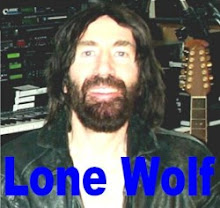
Lone Wolf Sullivan is a writer, songwriter, and studio musician.

Friday, June 12, 2009

The Star (1952) * * *


Margaret Elliot (Bette Davis) was once one of Hollywood's great stars, but as she ages into her 50's, both her career and her life have reached rock bottom. An actress who once knew the heights of fame as an Oscar-winning movie queen is forced to confront the depths of defeat. Bankrupt and washed-up, she lives in the past without accepting the reality of her age and her own demanding nature. Drowning her sorrows in alcohol and self pity, Margaret is in serious denial about herself.

She hasn't worked for several years, her marriage has fallen apart, her former husband has custody of her pre-teen daughter Gretchen (Natalie Wood), and she's running short of money. Margaret's agent Harry Stone (Warner Anderson) can't get her a part, and isn't willing to lend her the money to pay her bills. When they learn that Margaret is all but penniless, her sister (Fay Baker) and brother-in-law (David Alpert) turn their back on her, and Margaret's landlady Mrs. Adams (Kay Riehl) threatens to evict her. One evening in downtown LA, Margaret runs into her agent outside of a storefront auction house. Her possessions are being sold to the highest bidder and he's just purchased a gaudy candelabra that used to belong to her. "Be a scavenger," she wails to him, "Pick my bones."

Margaret heads over to the mansion of her wealthy ex-husband John Morgan to tell his new wife Peggy (Barbara Woodell) a thing or two. "You threw yourself at him," she harangues, "You told him how bad I was for him, that I was too busy with my career, that what he needed was a real wife." Then, she rolls her eyes and snorts, "Ugh…pure soap opera."

Peggy: Is it money? Do you want more from John?
Margaret: More money? I never asked Johnny for money.
Peggy: He's given you $2500 over the past two years.
Margaret: Well, I gave him $ 25,000 when I divorced him so he could marry you.

Margaret goes upstairs to visit with Gretchen. "My six months with daddy was up on the sixteenth," she helpfully reminds her mother, "I was wondering when you'd come for me." Margaret makes up excuses because she can't afford to take care of her own child. Gretchen has been busy defending her mother's professional honor by beating up any of the neighborhood kids who call her mother a has-been. Margaret tries to save face and says that she's starting a new movie soon, "If you're a star, you don't stop being a star."

Margaret: Haven't you ever cried because you're happy?
Gretchen: No.
Margaret: Well, you see, some people cry when they're happy and laugh when they're mad.

After tucking her daughter into bed, she heads home to her small apartment. Despite Margaret's financial situation, her ungrateful sister and brother-in-law ask for their monthly stipend. "Can't you get it through your thick skulls that I'm broke!" she bellows, "Dead, flat, stony broke!" After throwing them out, she picks up her Academy Award and goes on a bender."Come on, Oscar--let's you and me get drunk," Margaret says to the Academy Award itself, which she cradles bitterly. With her Oscar on the dashboard and a drink in her hand, Margaret drives through the affluent neighborhood that she used to call home. "Going, going, gone," she tearfully reminisces before being arrested by police and thrown in the jail drunk tank, saying "You don't seem to know who I am!" The next morning, Margaret is bailed out by an old industry acquaintance, Jim Johannson (Sterling Hayden).

Jim Johannson put up bail because she did a "swell thing" for him once: "I go out to repair your bathhouse and ten days later I'm playing opposite Margaret Elliot in Faithless." Despite the fact that it was "the worst picture ever made", he's eager to return the favor and give her a helping hand. He urges Margaret to leave Hollywood behind, and offers to care for her if she'll have him. After she is evicted from her apartment, Johannson takes her back to his place, a comfortable apartment that overlooks the shipyard he owns and operates. When she awakens in his bed, all her troubles come flooding back to her. Margaret's night in jail has made the morning papers. She quickly makes a call to her daughter to explain the previous night's misadventures, "Mother was at the jail getting atmosphere for her new picture," she claims.

Johannson tries in his own down-to-earth way to use the boat engine he's working on as an analogy for the downward spiral that Margaret is facing. But she's content on mulling over the ghosts of her former career, "I was sick of the tripe they were forcing me to play," she tells him, "They said I was box-office poison." Johannson gives her a harsh but realistic life assessment: "You're confusing what was with what is. It was swell while it lasted. But now it's over."

Margaret: It'll never be over!
Johannson: Once though you were a woman, but I was wrong. You're nothing but a career!

Margaret slaps him and runs out on the only person who cares about her. At a drugstore she tries to buy some sleeping pills, but steals an expensive bottle of perfume instead. She then returns to Johannson and confesses. "What's the matter with me? Going, going, gone." In a confessional mood, she tells him that it was no favor to get him the lead in "Faithless". When a distinguished leading man refused to play opposite her, she swore to get even by making the next man she saw a big star.

Johannson takes it all in stride and suggests that, since she has it, she put on some of the fancy perfume. Oddly, it doesn't have any scent. "It must have been a display bottle," he guesses, "Well, when you grabbed it you thought it was real. It's the story of your life isn't it?" Yes, in a wonderfully heavy-handed way, it sure is. Margaret's real world rehabilitation begins with a refreshing day spent sailing with Gretchen and Johannson. Since her movie career option is essentially out, Johannson helps her get a "real" job working behind the counter in a department store. This is probably the worst idea ever, truly a disaster. Two women recognize her and begin to gossip over whether it's appropriate to have a jailbird working in the lingerie department.

"Take a good look ladies, so there's no doubt. It is Margaret Elliot and it is a disgrace," she fumes, "Margaret Elliot waiting on a couple of old bags like you!" She tosses some lacy merchandise at them and storms out from behind the counter. "I'm going back where I belong. I am Margaret Elliot and I intend to stay Margaret Elliot!"

"One good picture is all I need," she says, puffing away on a cigarette as if her life depended on it, "They can't put me out to pasture." Margaret's pleas to her agent finally result in an audition with producer Joe Morrison (Minor Watson), and she holds on to the desperate hope she may have one more chance at regaining her stardom. Morrison is making "The Fatal Winter", and she manages to get a screen test for a part in a film she always wanted to do. Margaret is shocked to learn that her star power holds less clout than it used too. They want her to shoot a screen test for the role of the older sister, not the lead. Offered to be tested for a supporting role in the film, she accepts, believing that if she plays the character as a sexy young girl she will be awarded the top role.

The next day, after enduring the make-up and hair for the frumpy sister, Margaret ducks into a dressing room and changes her hair and wardrobe to a more flattering style. When it becomes clear that she's intent on playing the vamp instead of the aged recluse the part calls for, the young director attempts to make a few suggestions. But she won't listen and plays it her own way. During the scene, Davis is playing it bad on purpose, wonderfully bad in fact. After shooting the obviously atrocious test, Margaret asks for some feedback. "Fine," the director deadpans, "Your fans would love it."

Full of ego and hubris, Margaret actually believes that the test will win her the part of the young lead. She buys a new wardrobe and is eager to go out and celebrate her "return to the screen" with Johannson. "You're going to have a little brother," she tells her Oscar statuette. But all the excitement has worn her out and she ends up sleeping most of the evening away. Margaret is in for a rude awakening when she settles into her seat inside the studio screening room to see her test. "Oh it's horrible, it's horrible," she sobs when she realizes how painfully inappropriate her performance was. She's ruined her chance for the comeback she so desperately wanted and shouts at her b & w image flickering across the screen. Margaret fails the test, told that she no longer has that "dewy quality". When she realizes what she has done, her world comes crashing down on her, self realization sets in, and she confronts what's most important--being a star, or being a woman.

Her agent takes Margaret back to his Bel Air home for a rest. She awakens to the sounds of a cocktail party downstairs. She tries to sneak out, but ends up chatting with colleagues and overhears that someone else got the part she tested for. Barbara Lawrence, the starlet playing the coveted lead in "The Fatal Winter", causes quite a stir when she shows up. A young producer sits with Margaret and tells her about a script that she might be interested in. If the producer sounds familiar, it's because he's Paul Frees, the voice actor with a list of credits a mile long, including feature films and several animated TV shows. He describes his "Hollywood story" and it's main character, a delusional actress of Norma Desmond-like proportions. Could he be telling the pitiful story of Margaret's life? She flees the party and picks up Gretchen in the middle of the night. They drive to Johannson's apartment where, in a tacked on happy ending, Margaret literally runs into the arms of the only man who understands and loves her. He gives her a tender kiss.

This 1950s melodrama is stark and grim, a penetrating study of Hollywood and an aging actress who has problems with work, booze, family, and money, years after she won an Academy Award. Davis has no qualms about appearing as a woman who is aging, as she appears with bags and circles under her eyes and has a somewhat jowly and bitter look. The wardrobe is mostly drab, and the sets are pedestrian. This all works to effect, symbolic of Margaret Elliot's new reality. Sterling Hayden gives a credible performance and a teenage Natalie Wood as Margaret's daughter is adorable in the role.

THE STAR is a great film. Its theme is that careers are important, but not as important as the relationships we have with other people, such as our family and other loved ones. Some people think this is a sexist slant for the movie, but it's a message equally true for men and women who want fame and fortune instead of just enjoying their lives and being with the people they care about. This movie is disliked by some people because they resent the truthful message about those obsessed with the American Dream according to Hollywood.

The cut-rate script and production values betray THE STAR as a product of Davis' post-Warner Bros. films. It does have some sunny location shots of San Pedro, plus a young Natalie Wood before she broke out of child-star roles. But the biggest draw, other than Davis, is the Hollywood behind-the-scenes juice, and the guessing game of how close the material was to Davis' own career. The parallels between Davis' real life and the character she plays are often eerily similar. Davis had plenty of her own personal and professional disappointments to draw upon.

Davis said that she based her portrayal of the washed up actress on her rival Joan Crawford, but Crawford's career was one of the most durable Hollywood ever produced. The script was written by the husband and wife team Katherine Albert and Dale Eunson, who were long-time friends of Crawford's. THE STAR is as much about Davis as it was Crawford. Whether she's playing herself or a thinly veiled version of Crawford, is beside the point. The end result is one hundred percent Bette Davis. This film proves that no one does a better Bette Davis impersonation than Davis herself. She manages to employ every mannerism in her personal bag of acting tricks. The result is a deliriously over-the-top performance from one of Hollywood's best actors.

The cast also includes: Minor Watson (Joe Morrison), June Travis (Phyllis Stone), Paul Frees (Richard Stanley), Robert Warrick (R.J., Actor at Party), Barbara Lawrence (Herself), Herb Vigran (Roy), David Alpert (Keith Barkley), James Anderson (Actor playing Jed Garfield in "The Fatal Winter"), Florence Auer (Old Biddy in Store), Marie Blake (Annie, Stones' Maid), Claire Carleton (Jailbird), Byron Foulger (Druggist), Gil Frye (George, Assistant Director), Sam Harris (Party Guest),Al Hill (Cameraman), John Indrisano (Projectionist), Marcia Mae Jones (Waitress), Lorin Raker (Somers), Frank J. Scannell (Auctioneer), Dorothy Vaughan (Annie's Friend in Department Store), and Katherine Warren (Mrs. Ruth Morrison). Victor Young composed the original music. Dale Eunson and Katherine Albert wrote the screenplay. Stuart Heisler directed.

The 1950's were a difficult time for Bette Davis. After her career defining role in ALL ABOUT EVE (1950) and before the box-office success of WHAT EVER HAPPENED TO BABY JANE? (1961), the quality of the work she was offered declined. Davis herself referred to the decade as her "ten black years". It was during one of those "black years" that she starred in the camp exposé THE STAR (1952), a low-budget drama about an aging actress who is desperate for a comeback. It's certainly not one of Davis' more subtle performances, but she received her ninth Academy Award nomination for Best Actresss for her role--but she lost to Shirley Booth in COME BACK, LITTLE SHEBA (1952)--a role that had been first offered to Davis.

Thursday, June 11, 2009

Multiple Maniacs (1970) * * ¾


Lady Divine (Divine) runs the travelling sideshow "Lady Divine's Cavalcade of Perversions", a free exhibit of various perversions, fetish acts, cheap thrills, and obscenities such as the "Puke Eater". The show is actually a front for a group of psychotic kidnappers, with Lady Divine the most vicious and depraved of all. Although the show is free, the performers must persuade and even physically drag reluctant passers-by to attend. At the end of every show, the shocked audience is led into a tent where they are robbed at gunpoint by Lady Divine.

Mr. David: Yes folks, this isn't any cheap X-rated movie or any 5th rate porno play, this is the show you want! Lady Divine's cavalcade of perversions, the sleaziest show on earth! Not actors, not paid impostors, but real actual filth who have been carefully screened in order to present to you the most flagrant violation of natural law known to man! These assorted sluts, fags, dykes and pimps know no bounds! They have committed acts against God and nature, acts that by their mere existence would make any decent person recoil in disgust.

On a Baltimore street, the makeshift carnival show has been erected in a few tents. Barker Mr. David (David Lochary) promises a parade of shocking performers, including a woman licking a bicycle seat, armpit lickers, "actual queers, kissing on the lips", a heroin addict going cold turkey, and a naked human pyramid. After Lady Divine shoots and kills a woman who insults her, she leaves town to stay with her prostitute daughter Cookie Divine (Cookie Mueller). Lady Divine and her lover Mr. David argue. She is bored with the routine and wants to concentrate on robbing and murdering people, without the facade of the smutty sideshow Cavalcade. Mr. David is alarmed by her increasing viciousness. He gets together with Bonnie (Mary Vivian Pearce), his young mistress he has been seeing on the side.

Bonnie: Oh Mr. David, this is even better than amyl nitrate. It's better than Carvada. It's even better than heroin! Oh Jesus, this is even better than last time! if only we could perform acts 24 hours a day! Oh, that would be supreme happiness.

Lady Divine: How dare you contaminate my dressing room with this little piece of filth!
Mr. David: She is not. She is an auto-erotica copraphrasiac and a gerontophiliac, and I just thought you might be interested in her for the show, that's all.
Bonnie: Yes and I can start immediately. I have this great act all worked out, with this great old man in his late 70s and his mirror, well, actually he's my...
Lady Divine: (in disgust) Oh!
Bonnie: ...and we used to have kind of a thing together, and I heard about this show and I thought what an ideal setup, I mean!
Lady Divine: Get her out! Get her out of here! How can you flaunt your cheap little one-night-stands in my face, especially at a time like this!

After Lady Divine leaves the carnival murder scene and visits Cookie and her boyfriend Steve (Paul Swift), a member of the Weather Underground, she receives a call from Edith (Edith Massey), proprietor of the local bar, who tells her that Mr. David has been at her bar with another woman. She heads there to catch them and kill Mr. David, but is raped on the way by two glue-sniffers. While recovering from this, the Infant of Prague (Michael Renner Jr.) appears and leads her to a church, and she interprets this as divine approval of her plan to kill Mr. David. In the church Lady Divine prays, then is approached and seduced by young Mink (Mink Stole). They have a sexual encounter in the church pew involving Mink inserting a rosary into Lady Divine's rectum, a "rosary job", while describing the Stations of the Cross.

Lady Divine: (in church, trying to pray, notices Mink) She coughs, as if to attract my attention towards her, and gave me a lewdly religious glare... It was then that I realized that she was using her rosary as a tool of erotic pleasure! She made me get into a kneeling position. My head was spinning. And all at once, she inserted her rosary into one of my most private parts!
Mink: I usually sleep in churches, you know, in the confessionals. They lock all the churches up at night now because of all the thieves and they never check the confessionals. Saturday nights are the only problem, and nights that are holy days because of early masses the next day. And Lent, s**t, forget it, I gotta hang in synagogues then, and it's just not the same thing if you know what I mean. Oh, Jesus, you're my first celebrity I ever gave a rosary job to! And at St. Cecilia's, oh, wow, imagine!
Lady Divine: Oh, but I don't even know your name!
Mink: It's Mink, but lots of people just call me The Religious Whore.

Now lesbian lovers, Lady Divine and Mink go to Edith's bar with the intent to kill Mr. David and his mistress, but they are too late. David and Bonnie, who have decided to kill Lady Divine to protect themselves, have left. Mr. David returns to Cookie's house to kill Lady Divine, but finds only Cookie and fellow performer Ricky (Rick Morrow) there. An argument ensues and Bonnie accidentally kills Cookie. They tie up Ricky and hide Cookie's corpse just before Lady Divine and Mink return.

Lady Divine: What about you, Mr. Angel? What about those house-robbings and how about Sharon Tate! How about that!
Mr. David: I told you to never bring that up again. I cannot remember it and I will not.
Lady Divine: Had a real ball that night, didn't you?
Mr. David: Stop it!
Lady Divine: If I didn't know any better I'd swear you were having an orgy!
Mr. David: Well, you were there, too!
Lady Divine: Ah, but I didn't do what you did pig! You're going to jail. If I go to jail, it'll be for other things, and if I go to jail, I just might start remembering. I just might crack that Tate case for them--what have I got to lose?

Bonnie tries to shoot Lady Divine, but Lady Divine attacks and kills her with a knife. She then turns on Mr. David and kills him too, devouring his internal organs and becoming extremely frenzied. In a fit of raging passion she kills Mink after she shoots Ricky, and becomes more crazed when she finds her daughter's body hidden behind the couch.

Just after collapsing, exhausted from the ordeal, a giant 12 foot lobster named Lobstora enters and rapes Lady Divine. Afterwards she says "You're a maniac now Divine", stumbles out into the street, steals a car, terrorizes a couple in a lovers' lane, returns to the city, destroys a car, then runs around Baltimore, insane, bloody, and wearing a mink coat. The film ends with the appearance of the National Guard, who surround Lady Divine on the street and shoot her down, accompanied by the sound of Kate Smith singing "God Bless America".

MULTIPLE MANIACS is a trashy comedy film by Baltimore, Maryland filmmaker John Waters. The movie features actors who were part of the Dreamland acting troupe for Waters' films, including Mary Vivian Pearce, David Lochary, Mink Stole, Edith Massey, and Cookie Mueller. Of course, the star is Divine, a huge and strangely attractive 300 pound transvestite whose real name was Glenn Milstead. It is Waters's second feature film, the first with sound, a dragged-out affair with some great moments. You'll love it or hate it, there's no in between.

Inspired by the Sharon Tate killings, which were unsolved when Waters began shooting, MULTIPLE MANIACS is Waters' response to the peace and love ideals of the late 1960s hippie movement. In his book "Shock Value", Waters calls this his favorite of his films, for its "meanness and harsh documentary look." Although a technical improvement over his first feature MONDO TRASHO (1969), it's still pretty rough. The filming, like the subject matter, is crude, but shows hints of Waters's keen eye for visuals. There appears to have been only one take of each scene, with the camera moving back and forth from speaker to speaker to avoid editing. Given that limitation and Waters's outrageous, hilarious dialogue, his cast does quite well. Look and listen for Divine and Cookie flubbing their lines, Divine's wig almost falling off as he is being violated by Lobstora, and Mink Stole trying not to laugh as a male pedestrian walks by when she and Divine are discussing the murder of Mr. David and Bonnie.

Filmed on a $5000 budget, MULTIPLE MANIACS is a tribute to H. G. Lewis's 1964 shocker 2000 MANIACS, a John Waters favorite. The plot is a parody of Roman Polanski's REPULSION (1965), as we see the demented visions of a sexually confused woman driven to madness. Most of the film's early scenes are somewhat drab with shocking dialogue. The main set is Waters' apartment, but it picks up near the end as Divine does an over-the-top impersonation of a madwoman, comparing herself to Godzilla and stalking the streets of Baltimore. An extended scene of the crucifixion of Jesus Christ is incomprehensible or in the wrong movie, although it is probably related to the "rosary job" scene with Lady Divine narrating her version of Christ. There is graphic violence, extensive nudity, sexual situations, adult situations, substance abuse, and profanity. If you don't enjoy circus freaks, transvestites, and sex with lobsters, you probably won't get the humor in MULTIPLE MANIACS. However, if you enjoyed John Waters' infamous PINK FLAMINGOS (1972), "the filthiest film ever made!", then you'll like this sleazy trash film. This is a true camp classic in black and white with a not too black and white plot. There is no category for this movie. It is unique.

The cast also includes: Susan Lowe (Cavalcade pervert), Howard Gruber (Gilbert), Vincent Peranio (Freak), Jim Thompson (Freak), Dee Vitolo (Freak), Ed Peranio (Freak), Bob Skidmore (Cavalcade Patron), Margie Skidmore (Murdered spectator), Jack Walsh (Straight Person), Susan Walsh (Female Church-Goer), Gilbert McGill (Freak), Pat Moran (Cavalcade Patron), Paul Landis (Freak), Mark Lazarus (Straight Person), Harvey Freed (Straight Person), Susie Nichols (Freak), Steve Waters (Lover's Lane Boy), Julia Richardson (Freak), William Kirby Cullen (Freak), Jack Roberts, Mark Isherwood, Berenica Cipcus (Cavalcade Pervert), Hawley Peterson, Tom Wells (Freak), Cowboy Foulke (Freak), George Figgs (Jesus Christ), and Alan Reese. Written, scored, produced and directed by John Waters.

John Waters: I made this film, which glorified violence, at the peak of the hippie love generation. But hippies liked it. Part of its success was to offend my target audience in a humorous way. Of course, now that sounds much more calculated than I was.

Wednesday, June 10, 2009

Creature from the Black Lagoon (1954) * * *


Dr. Carl Maia (Antonio Moreno) goes to see his friend chief scientist Dr. David Reed (Richard Carlson ), an ichthyologist who works at a marine biology institute. They plan to re-join a geology expedition to the Amazon where fossilized evidence of a "missing link" between land and sea animals has been discovered in the form of a skeletal hand with webbed fingers, and perhaps "a living amphibious missing link". Dr. Reed persuades the institute's financial backer Mark Williams (Richard Denning ) to fund the expedition to look for the remainder of the skeleton. They travel on a steam boat called the Rita captained by a rude old sailor named Lucas (Nestor Paiva). The expedition consists of David, Maia, Williams, as well as Reed's girlfriend and assistant Kay Lawrence (Julie Adams) and another scientist named Dr. Edwin Thompson (Whit Bissell). When they arrive at Dr. Maia's camp, however, they discover that his entire research team has been killed while he was away. Captain Lucas suggests it was done by a jaguar, but the others are unsure. The audience sees the attack on the camp, which was committed by a living version of the fossil the scientists seek.

Lucas: It is impossible. But I, Lucas, will do it.
David Reed: We didn't come here to fight monsters, we're not equipped for it.
Lucas: There are many strange legends in the Amazon. Even I, Lucas, have heard the legend of a man-fish.

An excavation of the area where Maia found the fossil hand turns up nothing. Williams is ready to give up the search, but Dr. Reed suggests that possibly thousands of years ago the rest of the skeleton fell into the water and was washed downriver. Captain Lucas says that the tributary empties into a lagoon known as the "Black Lagoon", a paradise from which no one has ever returned. The scientists decide to risk it, unaware that the amphibious Gill Man that killed Dr. Maia's assistants earlier has been watching them. It notices beautiful Kay and follows the Rita all the way downriver to the Black Lagoon. Once the expedition arrives, Dr. Reed and Mark go diving to collect fossils from the lagoon floor. After they return, Kay goes swimming and is stalked underwater by the creature, which then gets caught in one of the ship's draglines. Although it escapes, it leaves behind a claw in the net that reveals its existence to the scientists.

Lucas: I can tell you something about this place. The boys around here call it "The Black Lagoon", a paradise. Only they say nobody has ever come back to prove it... What kind of fishing is that? Who eats rocks?
Carl Maia: I eat rocks, in a manner of speaking. I crush and look inside them and they tell me things.
Lucas: What do they tell you?
Carl Maia: How old they are.

Kay: Hurry, David.
Dr. Reed: I've almost got it.

More encounters with the Gill Man claim the lives of two of Lucas' crew members, before the Gill Man is captured drugged, and locked in a cage on board the Rita. It escapes during the night and attacks Dr. Thompson, who was guarding it. Kay hits the beast with a lantern to drive it off before it can kill Dr. Thompson. After this, Dr. Reed decides they should return to civilization, but as the Rita tries to leave they find the entrance blocked by fallen logs, done by the escaped Gill Man. As the others try to remove them, Mark is killed trying to capture the creature single-handed underwater. The creature then abducts Kay and takes her to his cavern lair. Dr. Reed, Captain Lucas, and Dr. Maia chase the creature and rescue Kay. The creature is riddled with bullets before it retreats to the lagoon where its body sinks in the watery depths not to be seen again--until the sequel.

Though it features one of the weakest of the classic Universal monsters, THE CREATURE FROM THE BLACK LAGOON is still a first-rate horror film. Director Jack Arnold makes excellent use of the tropical location, using heavy mists and eerie jungle noises to create an atmosphere of menace. The film's most effective ingredient is the monster itself, with his pulsating gills and webbed talons. It looks real and frightening, especially in the close-up shots of the creature when he is out of the water. Gasping for air, his mouth opens and closes in short spasms as the fins on his gills gesticulate in a parallel rhythm, and he quite convincingly comes across as a giant mutant with nothing but the most malevolent of intentions. The creature was played on land by stuntman Ben Chapman and underwater by champion swimmer Ricou Browning--who was forced to hold his breath during long takes because the suit did not allow room for scuba gear. The end result was certainly worth the effort, proven in the famous scene where the Gill Man swims gracefully beneath his female quarry in an eerie ballet--a scene imitated later by Steven Spielberg in the opening of JAWS (1975).

Not since KING KONG (1933) has the "beauty and the beast" theme been portrayed in such a sexually charged way. Arnold turns a B-movie plot into a moody, stylish, low-budget feature. The jungle exteriors turn from exotic to treacherous when the creature blocks their passage and strands them in the wilds. Much of the film is shot underwater, where the murky dark is animated by shimmering beams of sunlight, creating images both lovely and alien. The studio-built sets of the creature's underground lair are far less naturalistic, but serve their purpose. As with most of Arnold's 1950s genre films, he works with a less than magnetic leading man (Richard Carlson) and a conventional script, but he overcomes these limitations by creating a vivid and sympathetic scaly monster and establishing a thick moody atmosphere. Even in black-and-white, the underwater photography in THE CREATURE FROM THE BLACK LAGOON is beautiful, one of the best aspects of the film. Much of this underwater footage was shot in protected nature reserves in Florida, and though it was not directed by the film's primary director, it fits in seamlessly with Arnold's top-notch above-water directing style. The film has great photography, good acting, excellent production values, an intelligent plot, a bathing beauty, and a claustrophobic atmosphere with a realistic genuinely scary monster. Plus Julie Adams looks fantastic in a bathing suit, even in the conservative swimwear of the 1950s.

THE CREATURE FROM THE BLACK LAGOON was originally filmed in 3-D requiring polarized glasses, and there are some very dynamic shots that are obviously meant to exploit the 3-D technique. Unfortunately, the 3-D process originally used on this film only works with a special projection setup, so the 3-D version is not available for home video. Some art-house theaters do occasionally screen the 3-D version and its worth watching in that format if you ever have the opportunity.

The cast also includes: Bernie Gozier (Zako), Henry A. Escalante (Chico), Ricou Browning (the Gill Man in water), Ben Chapman (the Gill Man on land), Perry Lopez (Tomas), Sydney Mason (Dr. Matos), and Rodd Redwing (Louis the expedition foreman). Henry Mancini, Hans J. Salter, and Herman Stein composed the original music. Harry Essex and Arthur A. Ross wrote the screenplay from a story by Maurice Zimm. Jack Arnold directed.

The film was novelized in 1977 by author Ramsey Campbell under the pseudonym of "Carl Dreadstone" as part of a series of books based on the classic Universal horror films. It gives a completely different origin for the Gill-man, who in this version of the story is gigantic, almost as big as the Rita herself, weighing in at 30 tons. It is both coldblooded and warmblooded, is a hermaphrodite, and also possesses a long whip-like tail. The gigantic creature is dubbed "AA" for "Advanced Amphibian" by the expedition team members. After slaying most of the team, destroying a Sikorsky helicopter, and kidnapping Kay more than once, the creature is killed by the crew of a US Navy torpedo boat.

REVENGE OF THE CREATURE (1955) is the first sequel to THE CREATURE FROM THE BLACK LAGOON. Having survived being riddled with bullets at the end of the first film, the Gill Man is captured and sent by the Ocean Harbor Oceanarium in Florida, where he is studied by animal psychologist Professor Clete Ferguson (John Agar) and ichthyology student Helen Dobson (Lori Nelson). Helen and Clete begin to fall in love, much to the chagrin of Joe Hayes (John Bromfield), the Gill Man's keeper. The Gill Man takes an instant liking to Helen, which severely hampers Professor Ferguson's efforts to communicate with him. Eventually the Gill Man escapes from his tank, kills Joe in the process, and flees to the open ocean. Unable to stop thinking about Helen, he soon begins to stalk her and Prof. Ferguson, ultimately abducting Helen from a seaside restaurant where the two are at a party. Prof. Ferguson tries to give chase, but the Gill Man escapes to the water with her. The professor and the local police must now try to track down Helen and her amphibious abductor. Eventually they are located. The police lights anger and confuse the Gill Man so he puts Helen down. A hail of bullets throw him into the water, and he floats away using the exact same film footage from the first movie. If the plot sounds familiar, it's because it is a repetition of the first film and producer William Alland admitted both were modeled on KING KONG.

The film is notable as being the only sequel to a 3-D film shot in 3-D as well. It is also the first screen role for Clint Eastwood, who appears as an uncredited lab technician early in the film. He is shown having a discussion with the professor, accusing a test subject cat of eating a lab rat. However, his character had in fact accidentally put the lab rat in his lab coat pocket. The movie was released May 11, 1955 in the United States. In 1997, it was aired as an episode of the comedy series MYSTERY SCIENCE THEATER 3000, which mocked the film.

THE CREATURE WALKS AMONG US (1956) is the final and weakest installment of The Creature horror film series from Universal Pictures. Following the Gill Man's escape from Ocean Harbor, Florida, a team of scientists led by deranged Dr. William Barton (Jeff Morrow) capture him in the Everglades. During the capture, the creature is badly burned in a fire. While bandaging the Gill Man, the doctors notice that it is shedding its gills and even breathing using a kind of lung system. Now that the creature has more human-like skin, it is given clothing. The doctors attempt to get the Gill Man to live among humans. Dr. Barton ruins the plans in a murderous rage when he kills guide Jed Grant (Gregg Palmer), who had made romantic advances to his wife Marcia (Leigh Snowden). Realizing what he has done, Barton then tries to put the blame on the Gill Man. The creature witnesses the killing and goes on a rampage. After ripping down the confining electric fence, it kills Barton and then slowly walks back to the sea. It is last seen on a beach, advancing towards the ocean.

That's all there is to this movie, except for an unimportant subplot about a decaying marriage. The dialogue is inflated, awkward, and repetitious. And the pace is slow, especially for a 78 minute movie. The Gill Man is the only good thing about this entry, a melodramatic and unnecessary good-bye, the weakest movie in the trilogy. Underwater scenes were filmed at Wakulla Springs in North Florida, today a state park. Unlike the previous two Creature films, this was not filmed in 3-D.

Tuesday, June 09, 2009

The Rutles: All You Need Is Cash (1978) * * *


THE RUTLES: ALL YOU NEED IS CASH is a 1978 television film mockumentary that traces the career of a fictitional British rock group called The Rutles. It's a parody of the Beatles written by Eric Idle, who directed it with Gary Weis. It features 20 songs written by Neil Innes, which he performs with three musicians. He relied on his memory of Beatles music, without listening, to create soundalike songs. It was first broadcast on March 22, 1978 on NBC, earning the lowest ratings of any show on American television that week. It did much better in the ratings when it premiered in the UK on BBC2 less than one week later.

(on manager Leggy Mountbatten's discovery of the Rutles)
Iris Mountbatten: Well, he told me that he'd been to see these young men in a dark cellar.
Narrator: Yes.
Iris Mountbatten: He was always very interested in young men.
Narrator: Oh, yes.
Iris Mountbatten: Youth clubs, Boy Scouts, that sort of thing.
Narrator: Yes.
Iris Mountbatten: But these, he said, were different.
Narrator: In what way?
Iris Mountbatten: Their hair, and... their presence... and their music...
Narrator: He liked it?
Iris Mountbatten: No, he hated it.
Narrator: What did he like?
Iris Mountbatten: Well, em... the trousers.
Narrator: What about their trousers?
Iris Mountbatten: Well, they were, eh, they were very, em... tight.

The music and events in the lives of the Rutles parallel that of The Beatles almost to the letter, spoofing many of the latter's career highlights. For instance, the cartoon movie YELLOW SUBMARINE is spoofed as "Yellow Submarine Sandwich", and the song "Get Back" becomes "Get Up And Go". A soundtrack album was released in 1978 followed in 1996 by "Archaeology", spoofing the Beatles' "Anthology" series. In addition to two albums, Innes and John Halsey toured as The Rutles in the UK--augmented by other musicians. The touring group performed songs from the Rutles' repertoire and from Innes's own career.

Archie Macaw, Record Producer: Well, one day this rather odd chap hopped into the office. He'd been to see virtually everyone in the business and been shown the door. He asked to see my door, but I wouldn't show it to him. Instead, he showed me the photographs and tapes of the Rutles. They were pretty rough, but they had something.
Narrator: What was it?
Archie Macaw, Record Producer: I think it was the trousers.

The Rutles are played by Eric Idle, John Halsey, Ricky Fataar, and Neil Innes. They had originally appeared in a sketch as a band on Idle's program RUTLAND WEEKEND TELEVISION. The sketch was later re-broadcast on the American TV show SATURDAY NIGHT LIVE. For this film, Fataar replaced David Battley who had appeared as Stig O' Hara in the original sketch. ALL YOU NEED IS CASH was one of the first films of its kind, and an inspiration for the successful Rob Reiner cult comedy film THIS IS SPINAL TAP which followed in 1984.

Reporter: It must have been a great honor, meeting the queen.
Ron Nasty: Yes, it must have been.
Reporter: What did she ask you?
Barry Wom: She asked us who we were. And then to get out.
Reporter: What did you say?
Dirk McQuickly: (pointing at Ron Nasty) I said I was him.

ALL YOU NEED IS CASH is primarily a series of skits and gags that illustrate a different part of the fictional Rutles story, closely following the chronology of The Beatles' own story. The cohesive glue of the film is the soundtrack by Neil Innes, who created 20 songs for the film, each an affectionate imitation of a different Beatles song or genre of songs. 14 of the songs were released on a soundtrack album with elaborate packaging. The CD version subsequently added the six songs omitted from the original vinyl album. The album was both critically and commercially successful and was nominated for a Grammy award for Best Comedy Recording of the year. Orchestrations and arrangements for the Rutles recordings were made by noted film composer John Altman.

The film is also notable for its many cameo appearances by a cross-section of both British and American comic talent, including those with ties to MONTY PYTHON, SATURDAY NIGHT LIVE and the lesser-known but directly-related RUTLAND WEEKEND TELEVISION. Probably the most noteworthy cameo is by George Harrison who had earlier appeared as himself on the RUTLAND WEEKEND TELEVISION 1975 Christmas Special. Harrison plays a TV journalist conducting an interview outside the headquarters of Rutle Corps, oblivious to the stream of people coming out of the building carrying items stolen from the office--a reference to the Beatles' famously plundered Apple Boutique and Apple Headquarters itself, where even the roof lining was looted. The interview ends abruptly as the microphone is stolen out of his hand.

George Harrison: The Rutles sort of liberated me from The Beatles in a way. It was the only thing I saw of those Beatles television shows they made. It was actually the best, funniest and most scathing. But at the same time, it was done with the most love.

Ringo Starr liked the happier scenes in the film, but felt the scenes that mimicked sadder times hit too close. John Lennon loved the film so much that he refused to return the videotape and soundtrack he was given for approval. He told Innes, however, that "Get Up and Go" was too close to The Beatles' "Get Back" and to be careful not to be sued by Paul McCartney. The song was subsequently omitted from the 1978 vinyl LP soundtrack. Paul McCartney, who had just released his own album, "London Town", always answered "no comment". According to Innes: "He had a dinner at some awards thing at the same table as Eric one night and Eric said it was a little frosty." Idle claimed McCartney changed his mind because his wife Linda thought it was funny. All the Beatles and Apple consented to the use of the Beatles' Shea Stadium concert footage, along with other "real" footage cut in with Rutle footage.

The film also features cameos from Idle's fellow Python Michael Palin, several SNL cast members including Gilda Radner, John Belushi, Bill Murray, and Dan Aykroyd, as well as SNL writers and occasional performers Al Franken and Tom Davis, Bianca Jagger as Dirk McQuickly's wife Martini, Ronnie Wood as a Hells Angel, and Mick Jagger and Paul Simon as themselves. THE RUTLES is notable for bringing together British and American comic talent in a way that has seldom happened before or since. Publicity for the Beatles was also parodied. Before the film was broadcast, areas of London had posters saying "The Rutles are Coming" analogous to "The Beatles are Coming" poster which announced their arrival in a town.

Narrator: Mick, why do you think the Rutles broke up?
Mick Jagger: Why do I think they did? Why did the Rutles break up? Women. Just women. Getting in the way. Cherchez la femme, you know.
Narrator: Do you think they'll ever get back together again?
Mick Jagger: I hope not.

THE RUTLES: ALL YOU NEED IS CASH now has a cult status that grew from the success of the soundtrack album, and after the release of the film on the comparatively new medium of home video.

THE RUTLES Cast:

* Eric Idle as Dirk McQuickly (styled after Paul McCartney) / Narrator / Stanley J. Krammerhead III, Jr., occasional visiting professor of applied narcotics at the University of Please Yourself Ca.
* John Halsey as Barry Wom (Barrington Womble), styled after Ringo Starr.
* Ricky Fataar as Stig O'Hara, styled after George Harrison.
* Neil Innes as Ron Nasty styled after John Lennon.
* Michael Palin as Eric Manchester, Rutle Corp. Press Agent / Lawyer
* George Harrison as The Interviewer
* Bianca Jagger as Martini McQuickly
* John Belushi as Ron Decline, the most feared promoter in the world
* Dan Aykroyd as Brian Thigh, ex-record producer who turned down the Rutles
* Gilda Radner as Mrs. Emily Pules
* Bill Murray as Bill Murray the K.
* Gwen Taylor as Mrs. Iris Mountbatten / Chastity
* Ron Wood as Hell's Angel
* Terence Bayler as Leggy Mountbatten
* Henry Woolf as Arthur Sultan, the Surrey Mystic
* Ollie Halsall as Leppo, the "fifth Rutle", styled after Stuart Sutcliffe.

The movie has been released on DVD, originally in a 66-minute version incorporating cuts for syndication, later in a "special edition" restored to its full length of 76 minutes and with extras including a commentary by Idle. The full-length version replaces a spoof newsreel voiceover by Idle with an American-sounding announcer. The soundtrack was reissued on CD. It included additional tracks from the original TV sessions remixed in stereo by Neil Innes. He, Fataar and Halsey returned in 1996 to record The Rutles "Archaeology", but without the involvement of Eric Idle.

A sequel titled THE RUTLES 2: CAN'T BUY ME LUNCH was produced in 2002. It was modelled on the 2000 TV special THE BEATLES REVOLUTION, was made in 2002, remained unreleased for a year, then released in the US on DVD in 2003. The film features an even larger number of celebrity interviewees discussing the band's influence. This was met with mixed reactions from fans, especially since it used material culled from the original. Documentary interviewer Melvin Hall (Eric Idle) asks mainstream artists, actors, and musicians about the days of the popular band The Rutles, though mostly ending up in the wrong country. Melvin also interviews a gay sexologist named Hans Hänkie.

In the interviews with David Bowie, he is seen holding a copy of the vinyl album "The Rutles 1", calling it a "piece of marketing extravagance". Bowie discussing the album on one of the DVD's extra features is hilarious. The interview in the film shows the cover of the album with a black circle that has the words "27 No. 1 Songs On One LP". In the DVD extras, the circle on the album cover says "27 No. 1 Songs On 1 CD", even though this is a vinyl record album. Either way, this was the only time that a Rutles album was practically identical to a Beatles album in both album cover and title.

The plot remains the same as its 1978 counterpart, with a new introduction and conclusion with Idle's character, Melvin Hall. This comedy is a ghost of its earlier incarnation. There are tons of footage from the original and a smattering of new interviews, but the whole thing just doesn't have much zest to it. Part of this has to do with the fact that half of The Beatles are gone. George made a notable cameo in the first Rutles film, but this new mockumentary showcases the loss of John Lennon and George Harrison. Between pussyfooting around certain issues and not going for hard-hitting jokes, Idle and company just tread water here. Basically it's a disappointment. A DVD has yet to be released in the UK.

THE RUTLES 2 Cast:

* Eric Idle as Narrator / Dirk McQuickly / Lady Beth Mouse-Peddler
* Neil Innes as Ron Nasty
* Ricky Fataar as Stig O'Hara
* John Halsey as Barry Wom
* David Bowie as Himself - Interviewee
* Billy Connolly as Interviewee
* Carrie Fisher as Interviewee
* Jewel Kilcher as Interviewee (as Jewel)
* Steve Martin as Interviewee
* Mike Nichols as Interviewee
* Conan O'Brien as Interviewee
* Salman Rushdie as Interviewee
* Garry Shandling as Interviewee
* Robin Williams as Hans Hänkie
* April Adams as Groupie Interviewee (scenes deleted)
* Clint Black as Interviewee
* Jimmy Fallon as Reporter
* Tom Hanks as Interviewee
* Bill Murray as Bill Murray "The K" (archive footage)
* Graham Nash as Interviewee
* Kevin Nealon as Kevin Wongle
* Catherine O'Hara as Astro Glide
* Jim Piddock as Troy Nixon
* Bonnie Raitt as Interviewee
* David A. Stewart as Interviewee
* James Taylor as Interviewee
* Jann Wenner as Interviewee
* Hans Hänkie as Interviewee

RUTLAND WEEKEND TELEVISION (1975-76)

The Rutles began in 1975 as a sketch on Eric Idle's BBC2 television series RUTLAND WEEKEND TELEVISION. Two seasons, the first consisting of six episodes and the second seven, were broadcast in 1975 and 1976. A Christmas special also aired on Boxing Day 1975. The fictional TV station is strapped for cash, so all of its productions tend to be "cheap and cheerful". It spoofs documentaries, presents bogus news items, parodies period dramas, and includes all kinds of other television-related skits. This was Idle's first television project after MONTY PYTHON'S FLYING CIRCUS ended the previous year.

One sketch presented Neil Innes, an ex-Bonzo Dog Doo Dah Band member, fronting The Rutles singing "I Must Be In Love", a pastiche of a 1964 Lennon-McCartney tune. The band's name was a continuation of the premise of the TV show on which the skit originated. It was presented as a program by a fictional TV network in Rutland, the smallest county in England. One running joke was that it was run on a shoestring. If the show parodied a topic, it would use names derivative of "Rutland". To rut is a seldom used word meaning to have sexual intercourse, and the show used "rut" in countless ways. When Idle and Innes created a parody of the Beatles, Idle suggested "Rutles". Innes was the musician/composer for the series and wrote all the songs. He came up with the spoof "A Hard Day's Rut". He had written "I Must Be In Love" which he realized sounded very "Beatley" and thought of the Rutles skit. He passed the idea to Idle, who had a separate idea about a boring TV documentary maker. They merged the ideas into one extended film shot for the TV show. David Battley, Henry Woolf, and Gwen Taylor were also regulars on the show.

None of the episodes have been released on DVD because the show has complicated rights issues, belonging to both the BBC and Idle, and with issues concerning appearances by former-Beatle George Harrison and the songs of Neil Innes. He claims that Idle has no interest in seeing the series released because it reminds him of an unhappy time in his life, but recent litigation and bitterness concerning THE RUTLES spin-off may also be a consideration.

Eric Idle, in a 1975 Radio Times interview said, "It was made on a shoestring budget, and someone else was wearing the shoe. The studio is the same size as the weather forecast studio and nearly as good. We had to bring the sets up four floors for each scene, then take them down again. While the next set was coming up, we'd change our make-up. Every minute mattered. It's not always funny to be funny from ten in the morning until ten at night. As for ad-libbing, what ad-libbing? You don't ad-lib when you're working with three cameras and anyway the material goes out months after you've made it."

In merchandising for the TV series, references were made to a Rutles album (Finchley Road) and a single ("Ticket To Rut"). In 1976, BBC Records produced "The Rutland Weekend Songbook", an album containing 23 tracks including the Rutles songs "I Must Be In Love" and "The Children Of Rock And Roll"--later reworked as "Good Times Roll".

On March 17, 2008, all four Rutles reunited for the first time at a 30th anniversary screening of ALL YOU NEED IS CASH at the Egyptian Theater in Hollywood. The event included a Q & A session and performance by members of the tribute show "Rutlemania" which ran for a week at the Ricardo Montalban Theater in Hollywood before doing a week in NYC at The Blender Grammery Theater. The "Rutlemania" live show was conceived and written by Eric Idle which starred The Beatles tribute group "The Fab Four" as "The Pre-fab Four" Rutles. In February of 2009 on his website InnesBookOfRecords.com, Neil Innes released what he refers to as "Ron Nasty's Final Song", titled "Imitation Song"--a parody of "Imagine".

Eric Idle did not write, sing or perform any Rutles music, ever. However, Idle, as the face that was most identifiable to Americans as the lip-synching Dirk McQuickly narrator, took whatever credit there was to be had for the Rutles. He enjoyed this for years, until the Rutles album was re-released in the 1990s, when the true genius of the team was revealed to all as Neil Innes. Now Innes and Idle have nothing but animosity between them.

On DVD The look of THE RUTLES film is exactly right, the writing is very funny, and the songs are surprisingly Beatles-like and quite listenable. Extras are quite good and include a brief intro by Eric Idle's narrator character, as well as audio commentary and text memoirs from Eric Idle. His commentary is excellent, informative and entertaining. There are also 4 deleted scenes that last about 18 minutes, a photo gallery with 29 pictures, and a "Play Songs Only" option, where you hear only the film's songs: "Goose Step Mama", "Number One", "Between Us", "With a Girl Like You", "Hold My Hand", "I Must Be in Love", "Living in Hope", and "Ouch!"

Monday, June 08, 2009

Village of the Damned (1960) * * *


(first lines)
Prof. Gordon Zellaby: (on telephone) Good morning. Uh, would you get me Major Bernard at his Whitehall number? Thank you.

As the movie opens, there are cosy English scenes of sheep grazing and Professor Gordon Zellaby (George Sanders) standing by a fireside, but the mood very quickly changes. During a telephone conversation, he passes out in mid-sentence. All of the inhabitants and animals of the village of Midwich suddenly fall unconscious, and anyone entering the village also loses consciousness. The military arrives and establishes a cordon. When the pilot of an observation aircraft goes below 5,000 feet, he loses consciousness and the plane crashes. A five mile exclusion zone around the village is established for all aircraft. The military send in a man wearing a biological isolation suit, but he too falls unconscious and is pulled back by a safety rope. He awakens and reports a cold sensation just before passing out. At that very moment, the villagers regain consciousness, seeming otherwise unaffected. The incident is referred to as a "time-out", and no cause is determined.

A few months later, all women and girls of childbearing age who were in the affected area are discovered to be pregnant, sparking many accusations of infidelity and premarital sex. The accusations fade as the extraordinary nature of the pregnancies is discovered. All of the women give birth on the same day, and the doctor doing the bulk of the deliveries reports on the unusual appearance of the children, who all have pale blond, almost white flaxen hair, penetrating golden eyes and unusual finger nails. As they grow, and develop at impossible speed, it becomes clear that they also have a powerful telepathic bond with one another. They can tell each other anything that they see from great distances. As one learns something, so do the others. Anyone who looks at them sideways meets with a violent accident. Soon they begin to exert a sinister control over the other villagers. Professor Zellaby's wife Anthea (Barbara Shelley) is scolded by her child David (Martin Stephens), and a motorist who is deemed a threat winds up driving into a wall. The initial joy felt by Anthea soon turns to fear as she wonders just what sort of baby she has given birth to, though she still retains the love of a mother for her child. The suspense builds as it becomes obvious what a threat the children are becoming.

Three years later village Professor Zellaby, whose son David is one of the children, is initially positive about them. With government agreement, he attempts to teach the children while hoping to learn from them, and the children are all placed in a separate building where they will learn and live. While the children continue to exert their will, Profesor Zellaby, who is connected to the military via his brother-in-law Michael Gwynn (Alan Bernard), attends a meeting with British Intelligence to discuss the children. There he learns that Midwich was not the only place affected, and followup investigations had revealed similar phenomena in other areas of the world. In a township in northern Australia, thirty infants were born in one day but all died within 10 hours of birth. Ten children were born in an Inuit community in Canada. Fair-haired children born to their kind violated their taboos, and all of them were killed. Zellaby learns that the Soviet government has used an atomic cannon to destroy a village in Irkutsk, Russia containing the mutant children. Everyone was killed, but the children survived and are being educated to the highest possible level by the state.

Although only three years old, the kids are physically the equivalent of children four times their age. Their behavior has become increasingly unusual. They dress impeccably, always walk as a group, speak in a very adult way, are very well-behaved--but they show no conscience or love and demonstrate a coldness to others. All of this causes most of the villagers to fear and be repulsed by them.

David Zellaby: People, especially children, aren't measured by their IQ. What's important about them is whether they're good or bad, and these children are bad. You have to be taught to leave us alone.

They begin to exhibit the power to read minds, or to force people to do things against their will. The latter is accompanied by an alien glow in the children's eyes. There have been a number of villagers' deaths since they were born, many of which were unusual, such as the drowning of an expert child swimmer, and some believe that the children are responsible. This is later confirmed when they are shown making a man crash his car into a wall, killing him and then forcing his suspicious brother to shoot himself.

Professor Zellaby compares the children's resistance to reasoning with a brick wall, and uses this idea as self-protection after the children's evil nature becomes explicit to him. He takes a hidden time-bomb to what he expects to be a session with the children, and tries to block their awareness of the bomb by visualizing the brick wall. David scans his father's mind--showing an emotion (astonishment) for the first time: "You're not thinking of atomic energy, you're thinking of ... a brick wall!" The children exert force to try to break down Zellaby's mental wall to learn what he is hiding from them. They discover his actions just a moment before the bomb detonates.

In the final shot the glowing eyes of the children appear against the background of the burning building, then move out of view.

(last lines)
Prof. Gordon Zellaby: A brick wall... a brick wall... I must think of a brick wall... a brick wall... I must think of a brick wall... a brick wall... brick wall... I must think of a brick wall... It's almost half past eight... brick wall... only a few seconds more... brick wall... brick wall... brick wall... nearly over... a brick wall...

This moody and gripping sci-fi classic is about possessed children with telekinetic powers. Midwich's mysterious children fascinate with their glowing eyes and creepy Hitler Youth-like presence. It's a fairly faithful adaptation of John Wyndham's 1957 novel "The Midwich Cuckoos", and the film is refreshing in these days of computer-generated visual effects. Director Wolf Rilla creates unease the old-fashioned way: through atmosphere and character development. The opening sequence, in which the military attempts to figure out the extent of the Midwich epidemic, is especially unsettling. This film sags in the middle, but several interesting and provocative ideas are explored, all of them still relevant today. Foremost is the question of how societies should react to "aliens" in their midst, especially ones who are more intellectually advanced. The children are basically humans who find themselves living among Neanderthals and must struggle to survive in an atmosphere of hostility.

The cosy English setting and black and white photography make the film seem old fashioned in many ways, but also add to the reality and unsettling atmosphere. There is a naivety that permits the use of a small cast. George Sanders, for example, plays a professor whose expertise is accepted on just about anything scientific, and Michael Gwynn as Zellaby's army Major brother-in-law has a direct line to the top men in the War Office. As for the children's strange powers, the only special effects are their glowing eyes. But all of this only improves the film by making the viewer concentrate on plot and character. It's down to Earth, realistic, and has a quality that makes it utterly believable. The cast are fairly low key with the exception of the two leads. Barbara Shelley is excellent and George Sanders has a smooth, dignified style that makes him convincing leader of men. Effects are practically non-existent and the creators wisely go for off screen terrors which only heighten the fear factor. It features a great opening, some talky scenes and an ending that is a bit anticlimactic.

The film was originally an American picture when pre-production began in 1957. Ronald Colman was contracted for the leading role, but MGM shelved the project, deeming it inflammatory and controversial because of the sinister depiction of virgin birth. The film was shot on location in the village of Letchmore Heath, near Watford, approximately 12 miles north of London. Local buildings such as The Three Horseshoes Pub and Aldenham School, were used during filming. The blond wigs that the children wore were padded to give the impression that they had abnormally large heads. Children were lit in such a way as to cause the iris and pupils of their eyes to merge into a large black disc against the whites of their eyes in order to give them an eerie look, achieved by creating animated overlays of a white iris. Alternative UK prints without the "glowing eyes" effects exist, and according to Peter Preidel who played one of the children in the film the initial UK release in June 1960 had no glowing eyes. They were added for the American release in December 1960. The Guardian newspaper claimed in an article in 2003 that the British censors precluded the use of glowing eye effects in the initial UK release for being too horrific.

The cast also includes: Laurence Naismith (Doctor Willers), Richard Warner (Harrington), Jenny Laird (Mrs. Harrington), Sarah Long (Evelyn Harrington), Thomas Heathcote (James Pawle), Charlotte Mitchell (Janet Pawle), Pamela Buck (Milly Hughes), Rosamund Greenwood (Miss Ogle), Susan Richards (Mrs. Plumpton), Bernard Archard (Vicar), Peter Vaughan (P.C. Gobby), John Phillips (General Leighton), Richard Vernon (Sir Edgar Hargraves), John Stuart (Professor Smith), Keith Pyott (Dr. Carlisle), Alexander Archdale (The Coroner), Sheila Robins (Nurse), Tom Bowman (Pilot), Anthony Harrison (Lieutenant), Diane Aubrey (W.R.A.C. secretary), Gerald Paris (Sapper), and Bruno (The Dog). The Children are played by: June Cowell, John Kelly, Carlo Cura, Lesley Scoble, Mark Milleham, Roger Malik, Elizabeth Munden, Teri Scoble, Peter Preidel, Peter Taylor, Howard Knight, Brian Smith, Janice Howley, Paul Norman, Robert Marks, John Bush, and Billy Lawrence. Ron Goodwin composed the original music. Stirling Silliphant, Wolf Rilla, and Ronald Kinnoch (as George Barclay) wrote the screenplay from John Wyndham's novel "The Midwich Cuckoos". Wolf Rilla directed.

The sequel CHILDREN OF THE DAMNED followed in 1963. It's a poor follow-up that tries to blend 1960's kitchen sink drama with a new generation of alien children, but fails to advance any of the ideas from the original and produces few new ideas of its own. Moving the location from the countryside to a London school for the gifted, professor Dr. David Neville (Alan Badel) assembles high I.Q. moppets from around the world for an intellectual experiment that goes horribly awry. The sequel has its merits but it lacks the visceral and unsettling terror associated with the original. It's nice to see Alan Badel and Ian Hendry in starring roles, but this is not a highpoint of either of their careers. Unlike VILLAGE OF THE DAMNED, which draws the viewer in virtually from the opening scene, CHILDREN OF THE DAMNED is tedious, unoriginal, and ultimately boring. The sequel finds six children who appear normal in all respects are actually radically evolved superior human beings with acute psychic powers. When a psychologist attempts to find out where they came from, they escape and hide in a church as the inferior human race revolts against them. CHILDREN OF THE DAMNED is morally and politically ambitious, exploring the notion that humans are perhaps far worse than the cuckoos in their midst. Unfortunately it's also very dull, with no real involvement or forward momentum, and it exists in a vacuum--the events in the first film are never even acknowledged. While the sequel suffers in comparison to the original it's still worth seeing.

John Carpenter's 1995 remake of VILLAGE OF THE DAMNED is lifeless, predictable and hardly worth watching. Christopher Reeve, Kirstie Alley and Mark Hamill are good actors, but are disappointing in this film. It's more explicit and violent than the original, but the children are laughable and the movie lacks atmosphere and a sense of horror, despite depictions of a man falling asleep on a barbecue grill and a woman eviscerating herself with a scalpel while under the children's psychic control. The children are much more alien than in the original film and become more alien in appearance as they use their powers at greater intensity. Also, a conspiracy theory permeates the plot. It is implied that the American government is willing to allow the children to grow to adulthood regardless of how many murders the children commit. However, one character states that the other colonies of children have been destroyed and that Midwich is scheduled to be next, which implies that the government is not willing to allow the children to grow up.

A double-feature DVD from Warner Home Video is available with VILLAGE OF THE DAMNED and CHILDREN OF THE DAMNED. It offers anamorphic widescreen versions of both films, and each film also includes its original theatrical trailer and a feature commentary. Video quality is remarkably clean, with a very solid and beautifully rendered gray scale, deep blacks and excellent contrast levels. Fine details are fully realized. There is a total lack of edge effects and other digital anomalies for an exceptionally smooth visual presentation. The audio is mono but with a considerable punch to it. For VILLAGE OF THE DAMNED there is a thoughtful and thorough audio commentary by author Steve Haberman. For CHILDREN OF THE DAMNED we get a fairly thorough commentary by the sequel's screenwriter John Briley.

Sunday, June 07, 2009

The Flash Gordon Serials (1936-1940) * * ¾


FLASH GORDON is a 1930s film serial which tells the story of three people from Earth who travel to the planet Mongo to fight the evil Emperor Ming the Merciless. It's based on a science fiction comic strip by Alex Raymond which debuted on January 7, 1934. Universal bought the rights to Raymond’s strip and with a $350,000 budget, double the normal serial budget, aimed to make a serial to top all others. It wasn’t just the larger budget that made FLASH GORDON an important part of cinema history, it was the plot’s adult content that would thrill viewers then and now.

Three serials were produced: FLASH GORDON (1936), FLASH GORDON'S TRIP TO MARS (1938), and FLASH GORDON CONQUERS THE UNIVERSE (1940). All starred Buster Crabbe as Flash Gordon, Jean Rogers as Flash's girlfriend Dale Arden, Frank Shannon as Dr. Alexis Zarkov, and Charles Middleton as the villainous Ming the Merciless of planet Mongo. At movie theaters in the 1930s one chapter or episode of a serial would be shown each week. Always the ending of each episode was unresolved with a "cliffhanger" to encourage patrons to return the next week to see the outcome. FLASH GORDON is considered "King of the Cliffhanger Serials" because it did it best.

During the 1950s, the 3 serials were shown on American TV. To avoid confusion with the FLASH GORDON television series airing at the same time, they were retitled: SPACE SOLDIERS, SPACE SOLDIERS' TRIP TO MARS, and SPACE SOLDIERS CONQUER THE UNIVERSE. And over the years the serials have been edited into quite a few "movies" with a confusing variety of titles such as FLASH GORDON: MARS ATTACKS THE WORLD and SPACESHIP TO THE UNKNOWN.

In the first entry FLASH GORDON (1936) with 13 chapters, the planet Mongo is on a collision course with Earth. Internationally renowned polo player and Yale graduate Flash Gordon (Buster Crabbe) and Dale Arden (Jean Rogers) are enlisted by Dr. Alexis Zarkov (Frank Shannon) to save Earth from being destroyed by the runaway planet Mongo. Dr. Zarkov blasts off in a rocket ship to Mongo, with Flash and Dale as his assistants. They find that the planet is ruled by the cruel Emperor Ming (Charles Middleton), who lusts after Dale and sends Flash to fight in an arena. Ming's daughter, Princess Aura (Priscilla Lawson), tries to spare Flash's life.

Aura helps Flash to escape as Zarkov is put to work in Ming's laboratory and Dale is prepared for her wedding to Ming. Flash meets Prince Thun (James Pierce), leader of the Lion Men, and the pair return to the palace to rescue Dale. Flash stops the wedding ceremony, but he and Dale are captured by King Kala (Duke York), ruler of the Shark Men and a loyal follower of Ming. At Ming's order, Kala forces Flash to fight with a giant octosak. Fortunately, Aura and Thun rescue Flash from the octosak.

Prince Thun: Ming is merciless and all-powerful. He can only be taken by surprise.

Trying to keep Flash away from Dale, Aura destroys the mechanisms that regulate the underwater city. Flash, Dale, Aura and Thun escape from the underwater city, but are captured by King Vultan (Jack "Tiny" Lipson) and the Hawkmen. Dr. Zarkov befriends Prince Barin (Richard Alexander), and they race to the rescue. Dale pretends to fall in love with King Vultan in order to save Flash, Barin and Thun, who are put to work in the Hawkmen's Atomic Furnaces and where they eventually create an explosion in the furnaces.

Dr. Zarkov saves the Hawkmen's city from falling, earning Flash and his friend King Vultan's gratitude. Ming insists that Flash fight a Tournament of Death against a masked opponent, and then a vicious orangopoid. Flash survives the tournament, and Ming says, "He fights well, the Earth man." Still determined to win Flash, Aura has him drugged to make him lose his memory. But Flash recovers his memory and Ming is determined to have him executed.

Zarkov invents a machine that makes Flash invisible. Flash torments Ming and his guards. Barin hides Dale in the catacombs, but Aura has her tracked by a tigron. Aura realizes the error of her ways, and falls in love with Barin. She tries to help Flash and his friends to return to Earth--but Ming plots to kill them. Ming orders that the Earth people be caught and killed, but Flash and his friends escape from the emperor's clutches. The film ends with Flash, Dale and Zarkov making a triumphant return to Earth.

Clifford Vaughn composed the original music. Ella O'Neill, Geroge H. Plympton, Basil Dickey, and Frederick Stephani wrote the screenplay based on Alex Raymond's comic strip. Ray Taylor and Frederick Stephani directed. Runtime is 245 minutes. The FLASH GORDON serial was also condensed into a feature-length film titled FLASH GORDON or ROCKET SHIP or SPACE SOLDIERS (TV title).

In FLASH GORDON'S TRIP TO MARS (1938) with 15 episodes, another disaster is striking the Earth. A fictional chemical element called nitron is vanishing from the atmosphere, causing hurricanes and other meteorological disasters. Flash and Dr. Zarkov use an airplane to take measurements and discover that a ray-beam from Mars is the source of the nitron depletion. A comical newspaper journalist, Happy Hapgood (Donald Kerr), arrives on the scene to get the scoop, and stows away when they, together with Dale Arden, leave to investigate in Zarkov's rocket ship.

They discover that Azura (Beatrice Roberts) the Queen of Mars is working with Ming the Merciless, their enemy from Mongo, not dead as they had believed, to conquer earth. All Martians who oppose her have been turned into clay humanoids, consigned to live in a world of clay-walled caverns beneath the Martian soil. Flash, Zarkov, Dale and Happy take refuge from the Martians in one of these caverns and are captured by the Clay People, and taken to their Clay King (C. Montague Shaw). From him, they learn what is transpiring between Queen Azura and Ming, and agree to become allies and help.

Flash, Dale, Zarkov, and Hapgood fight against Azura's magic and her Martian space-force, Ming's weaponry, the treacherous Forest People, and other dangers on Mars. Finally, they win by showing Azura that Ming has been plotting behind her back to take power from her. Azura's alliance with Ming is broken, at the cost of the Queen's own life, but the Clay People are freed from their curse. And the evil emperor of Mongo, his Nitron ray destroyed and his escape cut off by the now hostile Martian forces, is finally destroyed by the accidental result of his own machinations and treachery.

Ray Trampe, Norman S. Hall, Wyndham Gittens, and Herbert Dalmas wrote the screenplay based on Alex Raymond's comic strip. Ford Beebe, Robert F. Hill, and Frederick Stephani directed. The runtime is 299 minutes, but a 97 minute edited movie version was also made from this serial.

In FLASH GORDON CONQUERS THE UNIVERSE (1940) with 12 episodes, the story starts on Earth. A deadly plague has been ravaging the planet, known as the Purple Death. One of Ming's rockets is dropping purple dust into the Earth's atmosphere which leaves a purple spot on the forehead of its victims and causes instant death. Ming the Merciless is behind the plague, and Flash Gordon is sent with Dr. Zarkov and Dale Arden to the planet Mongo to find the cause of the plague, as well as a cure. Caused by Ming's spaceships dropping "Death Dust" into the Earth's atmosphere, they eventually find an antidote for it and Flash and Zarkov distribute it by the same method soon after the start of the series, while Dale Arden remains in the Forest Kingdom.

Soon reunited with her, the trio continue to battle Ming, his cohorts, and his underlings. Ming's Captain Torch (Don Rowan) is the "spearpoint villain" of this serial, a type of character which the previous two did not have. He takes tactical command of the efforts to stop them. Before they leave, they destroy Ming by locking him in a tower and crashing a rocket ship into it. Prince Barin (Roland Drew) takes his rightful place as ruler of Mongo. In his rage, Ming says, "I am the universe!" for nearly his last words. Ming is finally killed in this serial, the weakest of the three. With a simple metaphor, at the end of the series Zarkov says that Flash Gordon has conquered the universe.

George H. Plympton, Basil Dickey, and Barry Shipman wrote the screenplay based on Alex Raymond's comic strip. Ray Taylor and Ford Beebe directed. Runtime is 220 minutes. FLASH GORDON: THE PURPLE DEATH FROM OUTER SPACE is an edited movie version of this serial.

These serials are good examples of the movie serials from the 1930s. A relatively simple plot is strung out over many episodes with each episode ending in a cliffhanger. While the costuming and special effects now look very dated, we can see why this was the perfect medium for a character like Flash Gordon. The serial format allows for a much longer story than can be told in a single 2 hour movie, but the limitation of a serial is it must recap everything the audience needs to know for every episode to keep the structure of the story linear and simple. This also makes these serials perfect for children of all ages.

Where would science fiction films be today if there had been no "Flash Gordon" comic strip or movie serials? It was the first outright science fiction serial, although earlier serials had contained sci-fi elements such as gadgets. FLASH GORDON was intended to regain an adult audience for serials and was shown in "A" Theaters in large cities across the USA. Many newspapers, including some not carrying the "Flash Gordon" comic strip, printed big feature stories in their entertainment pages with Alex Raymond drawings and stills from the serial. Because of its popularity, 6 of the 14 science fiction serials were released within five years of FLASH GORDON.

Both Buster Crabbe and Jean Rogers were normally brunettes. Crabbe had his hair dyed blond in order to appear more like the comic strip Flash Gordon. He was very self conscious about this and kept his hat on in public at all times, even with women present. He did not like men whistling at him. Rogers also had her hair dyed blonde, apparently to capitalise on the popularity of Jean Harlow. FLASH GORDON benefits greatly from avoiding the other serials’ reliance on location-shooting in Bronson Canyon. The use of Universal’s soundstages combined with Ralph Berger’s art direction create a unique comic book reality that many decades years later looks great.

The book "The Flash Gordon Serials 1936-1940" by Roy Kinnard, Tony Crnkovich and R.J. Vitone is a very good illustrated guide to the serials. It's the most complete filmography of FLASH GORDON serials ever, and focuses on all three of Flash's popular serials. Written with attention to detail and richly illustrated with film stills and promotional shots, this is the definitive history of the legendary series with Buster Crabbe, Jean Rogers and Charles Middleton. There are interview quotations from cast members Buster Crabbe, Jean Rogers, and Caroll Borland. It features 3 appendices, filmographies for 50 of the most prominent cast members and a complete list of serials and television remakes. We learn that Charles Middleton (Ming) was paid $500 per week to act in FLASH GORDON'S TRIP TO MARS. However, he was only contracted for two weeks work. Buster Crabbe (Flash) was paid $400 per week, but worked for the entire 8 weeks of filming. There is also an overview of the serial film BUCK ROGERS (1939), also starring Buster Crabbe.

BUCK ROGERS (1939) is a Universal serial film based on the "Buck Rogers" comic strip by Philip Francis Nowlan. It stars Buster Crabbe as the heroic Buck Rogers, Constance Moore as his relatively seldom-seen romantic interest Wilma Deering, Jackie Moran as sidekick George "Buddy" Wade, and Anthony Warde as "super-racketeer" "Killer" Kane.

The story begins with Buck Rogers and Buddy Wade (Jackie Moran) in the midst of a dirigible flight over the North Pole. They are caught in a savage storm and crash--but not before they release an experimental substance called Nirvano Gas that they hope will preserve them until rescue can arrive. The Nirvano Gas works, but the dirigible is buried in an avalanche and is not found until 500 years have passed. When Buck and Buddy are found, they awaken to a world ruled by the ruthless dictator "Killer" Kane (Anthony Warde) and his army of "super-racketeers." Only those who live in the "Hidden City", run by the benevolent scientist Dr. Huer (C. Montague Shaw) and his military counterpart, Air Marshal Kragg (William Gould), resist the criminal rulers of Earth.

Buck and Buddy join the resistance, and they set out for Saturn, where they hope that they can find help in their fight against Kane. Saturn is run by Aldar (Guy Usher) and the not-so-aptly-named Council of the Wise and Prince Tallen (Philson Ahn). To the dismay of Buck and Buddy, they also discover that Kane has dispatched ambassadors of his own, headed by his loyal henchman, Captain Laska (Henry Brandon). The serial then becomes a back-and-forth struggle between Buck and Kane to secure the military support of Saturn for the struggles on Earth. Along with Lieutenant Wilma Deering (Constance Moore), Buck and Buddy join in the fight to overthrow Kane with the help of Prince Tallen and his forces. They eventually win and Earth is free of Kane's grip.

Norman S. Hall, Dick Calkins, and Ray Trampe wrote the screenplay based on Philip Francis Nowlan's comic strip. Ford Beebe and Saul A. Goodkind directed. There are 12 chapters in
BUCK ROGERS with a total runtime of 237 minutes. It's not as entertaining as FLASH GORDON, and much of the movie takes place on Buck Roger's space craft.

Some "experts" have claimed that FLASH GORDON and BUCK ROGERS are so alike that they are virtually "interchangeable". This is not true, because they are quite different. The only real similarity is that the setting is outer space. Buster Crabbe plays a completely different character in a completely different scenario. Buck Rogers spends much of his time with teen-age"Buddy" Wade in his space craft, whereas Flash Gordon is typically with his love interest Dale Arden or Dr. Zarkov and seldom uses a rocket ship.

All three FLASH GORDON serials are available on DVD with all the episodes intact. Well-transferred to DVD, they look better than the old VHS versions. Most of the special effects are very hokey, which actually makes the films more fun to watch. They are corny and just for fun. There is plenty of suspense, both from the cliffhanger endings of the episodes and the evolution of the relationships between the characters. Several villains turn into good guys by the end. The second and third serials have good music too, including Liszt's "Les Preludes". If you are looking for high quality transfers of the FLASH GORDON series, Image Entertainment is the best. The sound is clear and images are crisp and focused. For the movie buff it is very interesting to see how the quality of sound, photography, and set designs improved every two years. The cliffhanger nature of each serial episode was an edge-of-your-seat thrill to its original audiences, and are works of pure nostalgia for us now.

The first serial has been selected for preservation in the United States National Film Registry, designated a cultural treasure for being "culturally, historically, or aesthetically significant".

Saturday, June 06, 2009

Mork & Mindy (1978 - 1982) * * *


Mork (Robin Williams) is an alien hatched from an egg from the planet Ork sent to Earth in his egg-shaped space craft to get him off Ork and to study Earthlings. He reports to his unseen superior Orson (Ralph James). On Earth he meets Mindy McConnell (Pam Dawber), an average woman who takes him in and shelters him. She has strange adventures as Mork learns about human life, acting and looking eccentric. As an outsider, Mork is unfamiliar with human customs and often questions some of the strange traditions that we take for granted. In addition to saying "Nanoo, Nanoo", Mork has an uncanny ability to impersonate celebrity voices. Eventually, the relationship between Mork and Mindy goes from a strong friendship to romance, and they marry, eventually bearing a son Mearth from Earth, who ages backwards like his father.

This bizarre TV comedy series on ABC was a spinoff from the sitcom HAPPY DAYS. The character of Mork first appeared in the season 5 episode "My Favorite Orkan", where he attempts to take Richie Cunningham back to Ork as a human specimen, but his plan is foiled by Fonzie. The character proved to be popular enough with the audience to rate a series of his own, though in MORK & MINDY, Mork resides in Boulder, Colorado in 1978 as opposed to Happy Days' late 1950s and early '60s Milwaukee, Wisconsin.

Landing in a giant egg in Boulder, Colorado, Mork tries to fit in on Earth by dressing in a suit, which he wears backwards. He befriends 21 year old Mindy, a music store clerk, after she is stranded one evening after an argument with her boyfriend. Mork offers assistance, and Mindy, not seeing his on-backwards suit, assumes he's a priest, mistaking his wardrobe gaffe for a priest's collar. Mindy is taken in by Mork's willingness to listen. Unknown to her, he's simply observing her behavior as part of his mission, and the two become friends. They walk back to her apartment, where Mindy sees his backwards suit and Mork's rather unconventional behavior for a priest. She asks him who he really is, and the innocent Mork, having not learned how to lie, tells her the truth.

Mork: If Holly liked him so much, how come she punched him and told him he was weird.
Mindy: Boys and girls often punch or push or hit each other as a sign of affection.
Mork: Punching and pushing and calling someone names means you like them?
Mindy: Yeah, it can.
Mork: Then the cowboys and Indians are lovers?

Discovering Mork is an alien, Mindy promises to keep his identity a secret and allows him to move into her attic. However, Mindy's father Fred (Conrad Janis), expresses outrage that his daughter is living with a man, especially one as bizarre as Mork. Fred's mother-in-law Cora Hudson (Elizabeth Kerr), has a much less conservative view, and approves of Mork and the living arrangement. Mindy and Cora also work at Fred's music store where Cora gives music lessons to a young black child named Eugene (Jeffrey Jacquet), who becomes Mork's friend. Also seen occasionally is Mindy's snobbish old friend from high school Susan Taylor (Morgan Fairchild).

Eugene: (Seeing Holly for the first time) She sure is a doll.
Mork: An android maybe, but not a doll.
Eugene: No, that's not what I meant. A cute chick, a fox. Real hot stuff.
Mork: Ohh, a fox. (makes noise like a barking hound)

Stories usually center on Mork's attempts to understand human behavior and American culture as Mindy helps him to adjust to life on Earth. At the end of each episode, Mork reports back to Orson on what he has learned about Earth. These end-of-show summaries allow Mork to comment humorously on social norms.

Mork's greeting is "Nanoo, Nanoo" along with a hand gesture similar to Mr. Spock's Vulcan salute from STAR TREK combined with a handshake. It became a popular catchphrase at the time, as did "Shazbot", an Orkan obscenity that Mork uses. Mork also says "kay-o" instead of OK. Often you can clearly see that Robin Williams gives up the script to ad-lib his own lines while Pam Dawber runs after him, desperately trying to keep the show under control. It's amusing at times when they're close together during a manic moment and she's looking into his eyes in amazement, petrified at what he's about to do next. Williams would also go crazy off-stage in an effort to distract Dawber when she had a scene on her own. He made up so many jokes during filming that the scripts eventually had specific gaps where Williams was allowed to perform freely. In many scenes, Dawber apparently had to bite her lip to avoid laughing and ruin the take.

The series was extremely popular in its first season. The Nielsen ratings were very high, ranking at #3, higher than the show that spawned it, HAPPY DAYS. However, ABC network management sought to "improve" the show in several ways. This was done with counterprogramming, a technique in which a successful show is moved opposite a ratings hit on another network. The show was moved from Thursdays, where it outrated CBS' THE WALTONS to Sundays where it replaced the cancelled sci-fi series BATTLESTAR GALACTICA. The show now aired against two highly-rated shows: NBC's anthology series THE SUNDAY BIG EVENT and CBS' ARCHIE BUNKER'S PLACE. The highlight of the first season is "Mork's Mixed Emotions," a tour-de-force that TV Guide ranked among the top 100 TV episodes of all time, # 94 to be exact. Mork believes that emotions are bad, and tries to lock them inside himself, but they are unleashed in a lusty, happy, weepy, angry, envious torrent. Williams won a Golden Globe for this inaugural 1978 season.

The second season brought an attempt to seek younger viewers. The characters of Fred, Cora and Eugene were dropped, though both appear briefly in later episodes where Fred would arrive with a new bride. It was explained on the show that Fred was sent off to tour as a conductor with an orchestra, and he took Cora with him on the road. However, neither Eugene or Susan were seen or mentioned again. New cast members and a disco version of the first season's theme tune were added. Among the new supporting characters were Remo DaVinci (Jay Thomas) and Jean DaVinci (Gina Hecht), a brother and sister from NYC who own a neighborhood deli where Mork and Mindy spend a lot of time. Also added as regulars were their grumpy neighbor Mr. Bickley (Tom Poston), and Nelson Flavor (Jim Staahl), Mindy's cousin who ran for city council. The show's main focus was no longer on Mork's slapstick attempts to adjust to a new world, but on the relationship between Mork and Mindy on a romantic level. In a two-part second season episode, Raquel Welch appears as Captain Nirvana of the Necrotons, an alien species of beautiful women who are enemies of the Orkans. Due to the abrupt changes to the show and the new timeslot, ratings fell dramatically. It was quickly moved back to its previous timeslot and efforts were made to return to the core of the series, but ratings never recovered.

Louise Bailey: (in a jail cell with Mindy) Funny the way things happen. I'm in here because of a silly old parking meter.
Mindy: You're kidding!
Louise Bailey: No, I went into a hardware store and when I came out, there was a policeman writing me a ticket.
Mindy: I don't believe it, they threw you in jail for a parking ticket.
Louise Bailey: Well, in a roundabout way. You see when I put the shovel in the trunk, Walter's arm fell out.
Mindy: Who's Walter?
Louise Bailey: My husband.
Mindy: What was he doing in the trunk?
Louise Bailey: Not much... he was dead. I warned him about his snoring for years but he just wouldn't believe me. So last night I took a pair of my very best pantyhose, and I wrapped them around his neck... real tight. You know it was the first good night's sleep I've had in 31 years.
Mindy: (she gets up and walks across to the other side of the cell) Well, you look well rested.
Louise Bailey: You don't snore, do you, dear?

For the third season, Mindy's father and grandmother were brought back and added along with Jean and Remo. The show attempted to fix its previous meddling, with the third season's hour-long opener titled "Putting The Ork Back in Mork". Other supporting cast additions included two kids from the day-care center Mork worked at: the intellectual Lola (Amy Tenowich) and the gluttonous Stephanie (Stephanie Kayano). A new supporting cast member was added in Mindy's close friend Crissy Wilzak Comstock (Glenda Faye Comstock), but she only lasted one season. When these ideas failed to improve ratings, many wilder ideas were tried to attempt to capitalize on Williams' comedic talents.

Mork: (referring to the Exidor Boutique, in which Mork invested all of their savings) Come on, Mind, Exidor knows what he's doing.
Exidor: (storming out of the dressing room, talking to his imaginary friend) What do you mean the mannequins want a coffee break? They just had one ten minutes ago and all they did was dribble.
Exidor: (to Mork) Partner. Glad to see you brought the little woman.
Mindy: We want our money back now, and don't call me the little woman.
Mork: What she's trying to say is, Exidor, we've had a change of heart, you know like when Annie Richards wanted to change dressing rooms.
Exidor: I've only been open two hours. Even Evita didn't pay off its backers that fast.
Mindy: We want our money back.
Exidor: Look, business is a little slow but we're gonna have our two-for-one sale. Buy two, get one. Who could resist that?
Mindy: That is the most ridiculous thing I've ever heard.
Exidor: Listen, Perky, are you insinuating I'm some kind of crack-pot? Well, that's what they said about David Rockefeller.
Mindy: Nobody ever said that about David Rockefeller.
Exidor: I did... ( looks the other way) Pepe, Pepe. You call yourself a tailor? Just lengthen the sleeve don't clip his nails (Exidor storms off with Pepe)

In the fourth season, Mork and Mindy are married. Jonathan Winters, one of Williams' idols, was brought in as their child, Mearth from Earth. Due to the different Orkan physiology, Mork laid an egg, which grew and hatched into the much older Winters. It had been previously explained that Orkans aged "backwards", explaining Mearth's appearance and that of his teacher, Miss Geezba (Louanne). Other attempts included the use of special guest stars. However, due to the continuing ratings slide, Mork and Mindy was canceled after its fourth season, on May 27, 1982.

Mearth: (seeing that the apartment has been filled with expensive toys) Mammy, the tooth fairy has been keeping up with inflation.
Mindy: (sarcastic) Gee, I wonder who could be behind all this.
Mork: (Mork jumps out of a huge box in the middle of the room) Surprise!
Mindy: No, not really.

The cast also includes: Robert Donner (Exidor), Tom Poston (Franklin Delano Bickley), Jeffrey Jacquet (Eugene), Jim Staahl (Nelson Flavor), Bill Kirchenbauer (TNT), Ilene Graff (Tracy), Patrick Cranshaw (Jake Loomis), Tom Kindle (Buzz), Dick Yarmy (Dr. Litney), George Pentecost (Herman), Shelley Fabares (Cathy), Jonathan Ian (Jonathan), Vidal Peterson (The Elder), Foster Brooks (Miles Sternhagen), Nancy Eddo (Stella), Mark Fenske (Tom), Jim Greenleaf (Donald), Milt Jamin (Waiter), Kristin Larkin (Suzanne), Joe Regalbuto (Kalnik), Stephen Stucker (Billy Vincent), Dan Barrows (Dittman), Michael Prince (John Taylor), Jeff Harlan (Bill), Susan Lawrence (Sally), Ed Greenberg (Jack), John Miranda (Cop), William Porter (Ernest), James Staley (Reverend), Peter Elbling (Derek), Bill Morey (Mr. Prendergast), Anita Dangler (Princess Lusitania), Georgia Engel (Ambrosia), Debra Jo Fondren (Kama), Vicki Frederick (Sutra), Johnny Haymer (Danny St. Thomas), Linda Henning (Margaret), Tyler Horn (Soldier), Jeremy Krispien (Jerry Looney), Ronnie Schell (Bob Faith), David Wall (Club Owner), Raquel Welch (Captain Nirvana), Paul Willson (Bob), Scott Marshall (Boy Scout), Terrence E. McNally (Laxative Salesman), Corey Feldman (Billy), Priscilla Morrill (Miss Kalinowski), Maureen Arthur (Zelka), and Harvey Lembeck (Ovits). David Michael Frank composed the original music for the first episode. There were 30 script writers, most notably Tom Tenowich, April Kelly, Ed Scharlach, Dale McRaven, and Bruce Johnson. There were 7 directors, most notably Howard Storm who directed 59 episodes.

Mork returned to HAPPY DAYS in an episode in 1979. Mork tells Richie that he enjoys coming to the 1950s because life is simpler and more "humdrum" than in the 1970s. When Fonzie sees Mork he immediately tries to run away, but Mork freezes him and makes him stay. He eventually lets him go, but not before Fonzie asks Mork to reveal two things about the future: "cars and girls". Mork's response is "In 1979... both are faster." The episode is mostly a retrospective in which clips are shown as Richie and Fonzie try to explain the concepts of love and friendship to Mork.

Paramount Home Entertainment and CBS DVD have released the first three seasons of Mork & Mindy on DVD in Regions 1, 2 and 4. The cases are slim, not bulky like most DVD sets. Season one has 25 episodes, and is generally considered to be the best. The show is presented in 1.33:1 full frame, as originally shot. For a 1970s TV show it looks great with very little print damage or grain. The sound is mono and there are no extras on the DVDs.

Robin Williams and Pam Dawber are reportedly in negotiations to revive their MORK & MINDY TV characters for a new movie. Dawber has revealed that Williams has been keen to do the project for many years, but never found the time to commit. But apparently the film version of MORK & MINDY is a go. Dawber said, "Robin and I were speaking at a function, and he's the one who said he'd love to do a Mork movie sometime--and what's great about Robin is that wouldn't even consider doing it if the original cast didn't return. It was put in the pipeline, but Robin had just been so busy with all his other movies that we didn't have time for this one. Every time we bump into each other though, he still insists we are going to do it one day--a Robin promise. I look forward to it, it'll be such a blast."

Blog Archive