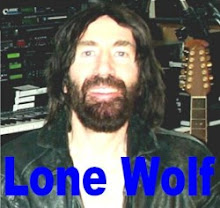
Lone Wolf Sullivan is a writer, songwriter, and studio musician.

Tuesday, May 12, 2009

Message to Love: The Isle of Wight Festival (1997) * * *


From August 26 to 31, 1970, rock music fans flocked to the English Isle of Wight to witness the third and final festival to be held on the island. It was held on Afton Down, an area on the western side of the island. The last of three consecutive music festivals to take place on the island between 1968 and 1970, it was the largest musical event of its time (until Summer Jam at Watkins Glen in 1973), greater than the attendance of Live Aid, Woodstock and Rock in Rio. The Guinness Book of Records has cited its attendance as 600,000, which is well above the organizers' estimate of 500,000.

For about a year after the Woodstock Music and Art Fair in 1969, it seemed as though everyone wanted to stage a rock festival. However, The Rolling Stones' disastrous Altamont free concert, documented in the film GIMME SHELTER (1970), forever tarnished the image of the rock festival in the USA, while in Europe, the 1970 Isle of Wight Festival was fortunately less disastrous than Altamont, but nearly as controversial. Staged by two men with greater ambitions than practical experience, the festival was held on a small island off the British coast. But while at Woodstock no one had given much thought about keeping gatecrashers out, at the Isle of Wight those without tickets were greeted with corrugated steel fences that sealed off the festival grounds. Huge numbers of visitors simply camped on hills surrounding the grounds, while others broke down the fences by force after refusing to pay the 3 pounds admission. This led to heated conflicts between the promoters, who ranted bitterly to the audience from the stage, the festival's security staff, the concert-goers, and the performers. The documentary examines the concert both on-stage and behind-the-scenes, capturing performances from many of the artists who appeared.

The Isle of Wight Festivals already had massive reputations in 1968 and in 1969 by attracting acts such as Jefferson Airplane, T.Rex, The Move, Pretty Things, Joe Cocker, the Who and Bob Dylan--in his first performance since his 1966 motorcycle accident. The organizers Fiery Creations (alias brothers Ronald Foulk and Raymond Foulk) were determined to make the 1970 event a legendary event. In this aim they enlisted Jimi Hendrix. With Jimi confirmed, artists such as Chicago, The Doors, The Who, Joan Baez, and Free willingly took up the chance to play on the island. The event had a magnificent but impractical site, a strong but inconsistent line up and the logistical nightmare of transporting 600,000 on to the island with a population of less than 100,000. The aftermath and commercial failings of the festival ensured it would be the last event of its kind on the Isle of Wight for thirty-two years.

This is a complete rockumentary showing everything from the performances of several rock legends to the backstage squabbling that nearly destroyed the festival, but was a precursor of the greed and cynicism that would strike the rock music scene of the 1970's. The film depicts the many problems associated with the festival, including gate-crashing, numerous crowd incursions onto the stage, Kris Kristofferson being booed offstage, and head promoter Rikki Farr's whining and ranting to the audience, which only intensified as the situation deteriorated: "We put this festival on, you bastards...we worked for one year for you pigs!"

Unlike the films MONTERERY POP (1968) and WOODSTOCK (1970), with their cheerful sense of innocence, MESSAGE OF LOVE details a major cultural movement in fast decline. The big draws here are rough, spacey performances by rock's ragged aristocracy of the time: the Doors, the Who, Hendrix, Ten Years After, Jethro Tull, and the Moody Blues. Standout numbers include Hendrix's "Voodoo Chile (Slight Return)" and the Doors' apocalyptic songs "When the Music's Over" and "The End." Also documented are the endless posturing and infighting among the egotistical festival promoters, the bands' managers, and the artists. Only 50,000 of the 600,000 attendees were paying customers, and war between the capitalist interests and the hostile hippies outside the gates eventually overwhelms the good vibes. The film hits all the usual targets, but reaches the heights of counterculture craziness when an overwrought Marxist hippie storms the stage and screams, "This is a psychedelic concentration camp!"

Opposition to the proposed festival from the residents of the Isle of Wight was much better co-ordinated than it had been in previous years. The Isle of Wight was a favourite retirement destination of the British well-heeled, and a haven of the yachting set, and many of the traditional residents deplored the huge influx of hippies. Renting a few acres of suitable farmland to hold a music festival had in earlier years been a simple commercial matter between the promoters and one of the local farmers, but by 1970 this had become subject to approval decisions from several local council committees who were heavily lobbied by residents' associations opposing the festival. As a result of this public scrutiny, the preferred ideal location for the third Festival was blocked, and the promoters in the end had no choice but to accept the only venue on offer by the authorities, East Afton Farm, Afton Down, a site that was in many ways deliberately selected to be unsuitable for their purpose. One unintended result of the pick of location was that, since it was overlooked by a large hill, a significant number of people were able to camp out on the hill and watch the proceedings for free.

This documentary was shot in 1970, but for many reasons was not shown to the public until 1995 in Great Britain. Director Murray Lerner and his film crew were hired by the Isle of Wight Festival promoters to make a movie of the events and music. Due to financial problems and lack of interest from the film distributors, the film footage sat unreleased for 25 years, although bits of Hendrix, The Who, and Free's performances surfaced in other presentations.

FESTIVAL SCHEDULE

Wednesday, August 26

* Judas Jump: A heavy progressive rock band featuring Andy Bown and Henry Spinetti of The Herd and Allan Jones of Amen Corner
* Kathy Smith: A Californian folk singer, was well-received.
* Rosalie Sorrels: Another folk musician.
* David Bromberg: He was not on the bill, but performed a popular set.
* Redbone: A native American pop/rock outfit.
* Kris Kristofferson: He performed a controversial set. Due to poor sound, the audience was unable to hear his set, and it appeared that they were jeering him.
* Mighty Baby: A psychedelic rock band.

Thursday, August 27

* Gary Farr: The brother of Rikki Farr, Gary had been the front man of the T-Bones, an R&B combo that featured Keith Emerson on keyboards. By this time, he had become a solo artist, and his only album, "Strange Fruit", for CBS Records, had been released in 1970.
* Supertramp: Their debut album had just been released a month prior to the festival.
* Andy Roberts' Everyone
* Howl: A Scottish hard-rock band formerly known as "The Stoics", featuring Frankie Miller.
* Black Widow
* The Groundhogs: English blues rockers
* Terry Reid
* Gilberto Gil: Representing the Tropicalia movement, the Brazilian musician played to a frenzied audience.

Friday, August 28

* Fairfield Parlour: They had recorded a single called "Let The World Wash In", released under the name "I Luv Wight", which they hoped would become the festival's theme song. They had also previously recorded as The Kaleidoscope.
* Arrival: Their set, which included a Leonard Cohen cover was well received.
* Lighthouse: This popular orchestral Canadian act performed two sets at the festival.
* Taste: Legendary guitarist Rory Gallagher had a blues trio from 1968 to 1970. This was one of their final shows, which was filmed and recorded. An album was released of their set in 1971.
* Tony Joe White: He performed his hits including "Polk Salad Annie" The drummer was Cozy Powell.
* Chicago: Their set, including "25 or 6 to 4," "Beginnings" and "I'm a Man" was a highlight of the night.
* Family
* Procol Harum: Frontman Gary Brooker commented that it was a cold night.
* Voices Of East Harlem: Not actually a band, but a bunch of singing school children from Harlem. They had one studio album. Their set received several standing ovations.
* Cactus: A bluesy hard rock band. Two songs from their set were featured on the LP "The First Great Rock Festivals Of The Seventies".

Saturday, August 29

* John Sebastian: The showstopper of the Festival performed an 80-minute set, during which Zal Yanovsky, former Lovin' Spoonful guitarist, made a surprise guest appearance.
* Shawn Phillips: An American folk musician performed an impromptu solo set.
* Lighthouse (second set)
* Joni Mitchell: She played a controversial set. Following her rendition of "Woodstock", a hippie named Yogi Joe interrupted her set to make a speech about Desolation Row. When Joe was hauled off by Joni's manager, the audience began to boo until Mitchell made an emotional appeal to them for some respect for the performers. She called the audience "tourists". Contrary to popular belief, Joe was not the man who was ranting about a "psychedelic concentration camp". That was another incident that took place the previous day. After the crowd quieted down, Mitchell closed her set with "Big Yellow Taxi".
* Tiny Tim: His rendition of "There'll Always Be an England" can be seen in the film Message To Love.
* Miles Davis: The jazz superstar played a single, continuous version of "Call It Anything" lasting 38 minutes, which can be seen on the "Miles Electric--A Different Kind Of Blue" DVD released in 2004. The documentary shows an edited segment of that performance.
* Ten Years After: The British blues rockers basically reproduced their famous Woodstock set. Highlights included "I'm Going Home" and "I Can't Keep From Crying Sometimes", which was featured in MESSAGE TO LOVE.
* Emerson Lake and Palmer: This was actually their second gig. "Pictures at an Exhibition", which featured the Moog synthesizer was the centerpiece of their historic set. Commercially released as "Emerson, Lake and Palmer Live at the Isle of Wight Festival 1970" in 1997.
* The Doors: Their set was shrouded in darkness due to Jim Morrison's unwillingness to have spotlights on the band. Their performances of "The End" and "When The Music's Over" are featured in MESSAGE TO LOVE.
* The Who: Their entire set, including the Tommy rock opera, was released in 1996 on CD as "Live at the Isle of Wight Festival" (1970). Three years later their set appeared on DVD with significant cuts from Tommy and a few other songs such as "Naked Eye" missing. In addition, the DVD song set order was radically altered to present Tommy as if having been performed at the second-half of the concert, when in fact, Tommy was performed in the middle of their lengthy set, and the closing title was "Magic Bus", which concluded some Who concerts at that time. Unfortunately, a 2006-reissued DVD of the concert was not corrected for these major deficiencies, despite having been personally supervised by Pete Townshend.
* Melanie: This Woodstock veteran played a well-received set. Prior to her set, Keith Moon of The Who offered her some moral support and encouragement. Not until afterwards did Melanie realize who he was.
* Sly & The Family Stone: The showstoppers of Woodstock performed to a tired audience on the early morning of Sunday. However, the audience woke up for spirited renditions of "I Want To Take You Higher," "Dance To The Music" and "Thank You (Falettinme Be Mice Elf Agin)", which featured Sly on guitar. Prior to their encore, another political militant decided it was time to make a speech, and the booing audience started to throw beer cans onto the stage. Freddie Stone was hit by a flying can and an angry Sly decided to skip the encore. He did promise a second appearance, but this never occurred.
* Mungo Jerry were there but decided not to play

Sunday, August 30

* Good News: An American acoustic duo.
* Kris Kristofferson (Second set)
* Ralph McTell: Despite an enthusiastic reception from the audience, he did not play an encore, and the stage was cleared for Donovan.
* Heaven: England's answer to Chicago and Blood Sweat & Tears
* Free: Their set list consisted of "Ride On A Pony", "Mr. Big", "Woman", "The Stealer", "Be My Friend", "Fire & Water", "I'm A Mover", "The Hunter", their classic hit "All Right Now", and concluded with a cover of Robert Johnson's "Crossroads".
* Donovan: He first performed an acoustic set, and then an electric set with his band Open Road.
* Pentangle: A British folk combo. A German woman interrupted their set to deliver a political message to the audience.
* The Moody Blues: A popular British act and veteran of the 1969 festival. Their rendition of "Nights in White Satin" can be seen in MESSAGE TO LOVE.
* Jethro Tull: Their set is featured on "Nothing Is Easy: Live at the Isle of Wight 1970".
* Jimi Hendrix: The star of the festival performed in the early hours of August 31st with Mitch Mitchell on drums and Billy Cox on bass. His set has been released on CD and video in various forms. In the beginning Hendrix had technical problems, which at one point during "Machine Gun" involved the security's radio signal interfering with his amp's output. He arrived at the festival very tired from lack of sleep. Most of the time he played a Gibson "Flying V" guitar, and he does not have the same inimitable tone he gets from his Fender Stratocaster.
* Joan Baez: Her version of "Let It Be" can be seen in the film MESSAGE TO LOVE.
* Leonard Cohen: Backed by his band The Army, his tune "Suzanne" can be seen in the film.
* Richie Havens: The musician who opened Woodstock closed this festival with a set during the morning of August 31. As Havens performed his version of "Here Comes the Sun," the morning sun rose. Havens' set, which is available as an audience recording also included "Maggie's Farm", "Freedom" and "Minstrel From Gault".

In an important way, MESSAGE TO LOVE is the final chapter in an unofficial trilogy of concert films, along with WOODSTOCK and GIMME SHELTER, that paint a picture of the highest and lowest points of Woodstock Nation politics--from mass goodwill to anarchy. However, MESSAGE OF LOVE is a rock & roll movie with several performances that are outright revelations, such as the Who's triumphant show, the Doors' "The End", and Jimi Hendrix's "Machine Gun". But some are superfluous, including Ten Days After, Emerson, Lake, and Palmer, and Jethro Tull. Cameras are often focused on the increasingly testy relationship between deadbeat hippies who travel a long way to see the show but refuse to pay, and capitalist concert producers who resort to using guard dogs, cops, and aluminum walls to keep crashers at a distance. The mood becomes so bad, in one scene Joni Mitchell breaks down in tears after singing her ode to peace and love, "Woodstock". A crazed hippie bothers her on stage, she calls the audience "tourists", and carries on singing "Big Yellow Taxi." Kris Kristofferson is booed off stage, but the film does not show his come-back performance a few days later, when he was better received.

Most of the performances are good, although a little too brief and some songs are edited. The Miles Davis segment lasts about one minute. This is more of a documentary of the event than anything else. You'll see the promoters and the crowd get almost as much time on the camera as the performers. The Isle of Wight wasn't exactly Britain's answer to Woodstock. Altamont ended the Woodstock spirit and this is Hippydom's last true hurrah at a great festival.

There are poignant moments, like Jimi Hendrix' final performance featuring "Message to Love", "Machine Gun" and "Voodoo Chile (Slight Return)", and one of the Doors' final performances featuring "When the Music's Over" and "The End". After disasters like Altamont, the promoters add security like police dogs and a metal fence dividing the young teens and adults who've paid admission from those who haven't. So, naturally, there's plenty of arguments between the promoters and the music fans. Due to the war between them, Kris Kristoferson is unfairly booed onstage. Folks are too busy trying to get in to listen to the original "Me and Bobbie McGee". Joan Baez, after her performance of "Let It Be" is interviewed. She's honest and says "This is my job, so naturally, I expect to be paid." A humorous moment is Tiny Tim singing via megaphone "There'll Always Be An England".

An alarming moment is when one hippie says he's given his young son LSD. It's interesting to see a young thin Ian Anderson perform with Jethro Tull ("Whoever said we wouldn't perform tonight is full of...") on "My Sunday Feeling", and a young thin Paul Rogers perform "All Right Now" with Free. This is also Emerson, Lake and Palmer's debut performance, and each of them celebrates by Emerson nearly destroying his organ, Lake setting off a cannon and Palmer removing his shirt while performing "Pictures at an Exhibition/Blue Rondo a la Turk". It's also one of the Moody Blues' first performances live. Fortunately for the freeloaders, the fence is taken down and all hold hands in peace, while a guitar plays "Amazing Grace". You begin to sympathize with Rikki Farr as he tells the audience that he and the other promoters will have to pay for this decision. As the festival comes to an end, Farr sums it all up when he says "This is the last great event."

The DVD has a runtime of 127 minutes, whittled down from 175 hours of footage. Sony Music released it on February 24, 2004. Too many of the music performances are extremely edited-down. Donovan is only seen for about three seconds. John Sebastian's show stopping performance is poorly edited too as they come in for the ending of his song. Performances from Tony Joe White, Melanie, Cactus, and Procol Harum weren't even included in favor of "Machine Gun" (Hendrix) ", All Right Now" (Free), and "Young Man Blues" (The Who)--all redundant footage available in other presentations. Finally, the film is generally downbeat, focusing on the problems that plagued the festival. The violence and unpleasantness are exaggerated. It was actually a good festival, with great bands and many positive aspects. Too bad Lerner didn't focus more on this. All songs are live except for Bob Dylan's "Desolation Row", which is the studio version, played over the end credits of the film. The American title is MESSAGE TO LOVE: THE ISLE OF WIGHT FESTIVAL: THE MOVIE, whereas the UK title is simply MESSAGE TO LOVE.

Monday, May 11, 2009

Monterey Pop (1968) * * *


On a beautiful weekend in 1967 from June 16-18, at the height of the Summer of Love, the first and only THE FIRST ANNUAL MONTEREY INTERNATIONAL POP MUSIC FESTIVAL was captured on film by documentary filmmaker D.A. Pennebaker. Some of the festival's big acts, such as The Byrds, The Grateful Dead, and Buffalo Springfield didn't make the final cut for various reasons. In some cases it was a legal or managerial decision. However, I once listened to the entire 3 day concert and was surprised at how bad most of the musical performances were. Eric Burdon, a great singer, was absolutely embarrassing singing "Gin House Blues". Laura Nyro was OK, but basically flopped at the festival. On the other hand, Monterey Pop instantly made superstars out of Jimi Hendrix and Janis Joplin for their astonishing performances.

Program book: Be happy, be free; wear flowers, bring bells--have a festival.

Otis Redding: This is the Love Crowd, right?

The performers who appear in the film are excellent: Jimi Hendrix, Otis Redding, The Who, Jefferson Airplane, Hugh Masekela, Big Brother and the Holding Company (featuring Janis Joplin), Simon & Garfunkel, and The Mamas and the Papas. Papa John Phillips was one of the festival's principal organizers along with Paul McCartney. Pennebaker immortalized moments that have become legend: The Who destroying their instruments at the end of "My Generation", and Jimi Hendrix Experience setting his guitar on fire during "Wild Thing". Backstage before the show Pete Townshend accused Hendrix of ripping off the Who's stage act. Hendrix called Townsend a "honkey", who refused to follow his performance, realizing that nobody could. On the last day of the event, Ravi Shankar pleased the crowd with his energetic Ragas. He was quite disturbed by the violent showmanship of The Who and The Jimi Hendrix Experience, and actually didn't want to perform. The arrogant jerk demanded his own separate stage, where he played in a cloud of incense. (Lone Wolf also plays sitar and is not very impressed by Shankar.)

Papa John Phillips: We were doing the Monterey Pop Festival, which I produced with Lou Adler, and the town of Monterey was sort of frightened by the thought of two hundred and fifty thousand hippies coming. The police force was very concerned. They were prepared for riots, but they ended up interacting with the kids in a very positive way. Policemen had orchids in their helmets and on their motorcycles.

Mama Michelle Phillips: I thought we did a poor concert there. We only had about two minutes to warm up, and we hadn't rehearsed for three months. I came off the stage crying. There was something so extraordinary about the harmonic convergence of that weekend. I don't believe Monterey could ever happen again.

Hugh Masekela: Monterey was a platform to be able to get more visibility to bring awareness about what was happening especially on my continent. People were turned on in those days just with music. There was no genre, category, or marketing as there is today. People just loved music, they either liked it or it didn't turn them on.

D.A Pennebaker: People were there to see what was going to happen. There was no attitude about it. People were just as interested and surprised by Ravi Shankar as they were by Canned Heat.

The film concentrates on the musical performers, with only brief intimations of the burgeoning counterculture, showing unique and amazing sights, sounds, and experiences. Two years before Woodstock, an unprecedented crowd of young people gathered in and around the Monterey County Fairgrounds for a three day celebration. It attracted an estimated 200,000 total attendees with 55,000 to 90,000 people present at the event's peak at midnight on Sunday. Only about 10,000 were actually seated in the official paying "audience". Admission was only $1, but most did not pay. The performers appeared for free with all revenue donated to charity--only lodging and travel expenses were provided. The only exception was Ravi Shankar, who was paid $3,000 for his afternoon-long performance on sitar. It was a time of reunion and discovery for the performers as well as the audience. Funds raised by the festival and subsequent film and CD sales were earmarked to The Monterey Pop Foundation which is still in existence today and providing help to worthwhile causes such as the Haight Ashbury Free Clinic. Rolling Stones guitarist Brian Jones attended, introduced The Jimi Hendrix Experience, and was hailed "King of the Festival" as he waded through the crowds undisturbed by the hippies.

Songs featured in the film, in order of appearance:

1. Big Brother & The Holding Company ("Combination of the Two")
2. Scott McKenzie ("San Francisco")
3. The Mamas & The Papas ("Creeque Alley" & "California Dreamin'")
4. Canned Heat ("Rollin' & Tumblin'")
5. Simon & Garfunkel ("The 59th Street Bridge Song (Feelin' Groovy)")
6. Hugh Masekela ("Bajabula Bonke")
7. Jefferson Airplane ("High Flyin' Bird" & "Today")
8. Big Brother & The Holding Company ("Ball & Chain")
9. Eric Burdon & The Animals ("Paint It Black")
10. The Who ("My Generation")
11. Country Joe & The Fish ("Section 43")
12. Otis Redding ("Shake" & "I've Been Loving You Too Long")
13. The Jimi Hendrix Experience ("Wild Thing")
14. The Mamas & The Papas ("Got a Feelin'")
15. Ravi Shankar ("Raga Bhimpalasi").

In 2002 MONTEREY POP was re-released on DVD as part of a Criterion Collection box set, The Complete Monterey Pop Festival, one of the most impressive sets they've released to date. It also includes Pennebaker's short films JIMI PLAYS MONTEREY (1986) and SHAKE! OTIS AT MONTEREY (1986), as well as two hours of outtake performances, including some by bands not seen in the original film. One of rock music's most famous concerts gets the royal treatment with this three-disc boxed set.

Material on two of the three discs has already been widely available. MONTEREY POP, D.A. Pennebaker's 79-minute, 1968 film, effectively sets the scene for the festival. It shows the festival from construction to the festival's end. While not all the featured performances are great, those that are--the Who, Jimi Hendrix, Janis Joplin, and Otis Redding--are worth the price of admission, especially in the high-definition digital transfer and new 5.1 mix seen and heard here. The same can be said for JIMI PLAYS MONTEREY and SHAKE! OTIS AT MONTEREY, which appear in the boxed set on a separate disc and provide a much fuller look at Hendrix's and Otis Redding's amazing sets.

Those two discs are also loaded with bonus features, including audio commentary by Pennebaker, festival producer Lou Adler (on Monterey Pop), and author Peter Guralnick (Shake!); audio-only remarks by some of the performers; photos; trailers; and other material. There's also a substantial booklet, filled with essays and photos. But it's the third disc, "The Outtake Performances", comprising some two hours of music that didn't make the final film edit, that will be of most interest to many viewers. The disc supplies a taste of some of the artists who didn't appear in Monterey Pop at all, such as the Byrds, Buffalo Springfield, Quicksilver Messenger Service, plus a more complete look at some who did.

DISC ONE: MONTEREY POP in a new high-definition digital transfer, supervised by D.A. Pennebaker. New 5.1 mix by legendary recording engineer Eddie Kramer, presented in Dolby Digital and DTS. Audio commentary by Festival producer Lou Adler and D.A. Pennebaker. New video interview with Lou Adler and D.A. Pennebaker. Audio interviews with Festival producer John Phillips, Festival publicist Derek Taylor, and performers Cass Elliot and David Crosby. Photo essay by photographer Elaine Mayes. Original theatrical trailer. Orginal theatrical radio spots. Monterey Pop scrapbook. Optimal image quality: RSDL dual-layer edition.

DISC TWO: JIMI PLAYS MONTEREY and SHAKE! OTIS AT MONTEREY are featured. The Jimi Hendrix film contains performances of: "Can You See Me?", "Purple Haze", Sgt. Pepper's Lonely Hearts Club Band", "Monterey", "Killing Floor", "Foxy Lady", "Like a Rolling Stone", "Rock Me Baby", "Hey Joe", "The Wind Cries Mary" and "Wild Thing". The Otis Redding film contains performances of: "Shake", "Respect", "I've Been Loving You Too Long", "(I Can't Get No) Staisfaction", and "Try a Little Tenderness". New high-definition digital transfers, supervised by D.A. Pennebaker. New 5.1 mixes by legendary recording engineer Eddie Kramer, presented in Dolby Digital and DTS. Audio commentary on JIMI PLAYS MONTEREY by music critic and historian Charles Shaar Murray. Two audio commentaries on SHAKE! by music critic and historian Peter Guralnick: the first on Otis Redding's Monterey performance, song by song; the second on Redding before and after Monterey. Interview with Phil Walden, Otis Redding's manager from 1959 to 1967. Original theatrical trailer for JIMI PLAYS MONTEREY. Video excerpt: Pete Townshend on Monterey and Jimi Hendrix. Optimal image quality: RSDL dual-layer edition

DISC THREE: "Monterey Pop--The Outtake Performance" contains two hours of performances not included in the original film, from the following artists: Buffalo Springfield, The Association, Big Brother and the Holding Company, The Blues Project, The Byrds, The Paul Butterfield Blues Band, Country Joe and the Fish, The Electric Flag, Jefferson Airplane, Al Kooper, The Mamas and the Papas, Laura Nyro, Quicksilver Messenger Service, Simon and Garfunkel, Tiny Tim, and The Who. Here are the artists and the songs played in order: "Along Comes Mary" by The Association, "Homeward Bound" and "Sounds of Silence" by Simon and Garfunkel, "Not-So-Sweet Martha Lorraine" by Country Joe and the Fish, "(I Heard Her Say) Wake Me, Shake Me" by Al Kooper, "Driftin' Blues" by The Paul Butterfield Blues Band, "All I Ever Wanted to Do (Was Love You)" by Quicksilver Messenger Service, "Drinkin' Wine" by The Electric Flag, "Chimes of Freedom", "He Was a Friend of Mine", and "Hey Joe" by The Byrds, "Wedding Bell Blues" and "Poverty Train" by Laura Nyro, "Somebody to Love" by Jefferson Airplane, "Flute Thing" by The Blues Project, "Combination of the Two" by Big Brother and the Holding Company, "For What It's Worth" by Buffalo Springfield, "Substitute", Summertime Blues", and "A Quick One While He's Away" by The Who, "Straight Shooter", "Somebody Groovy", "San Francisco (Be Sure to Wear Flowers in Your Hair)", "I Call Your Name", "Monday, Monday", and "Dancing in the Street" by The Mamas and the Papas. Finally there is a performance by Tiny Tim of "King for a Day", "Laugh, Clown, Laugh", "May God Be With Our Boys Tonight", and "My What a Funny Little World This Is".

The first two discs also have special features, but there are none on disc three. However, there are over 60 pages of essays, a list of performers and a lot of other extras.

Sunday, May 10, 2009

Monty Python's Flying Circus (1969 - 1974) * * *


MONTY PYTHON'S FLYING CIRCUS was a group of six comedians who created a British television comedy sketch show that first aired on the BBC on October 5, 1969. The troupe included John Cleese, Eric Idle, Michael Palin, Terry Jones, Terry Gilliam, and Graham Chapman. Forty-five episodes were made over four series with their distinctive brand of irreverent and often surreal comedy and satire on BBC-1 from 1969 through 1973 and on BBC-2, without Cleese, for the last few months of 1974--plus 2 episodes for German TV, both entitled "Monty Python's Fliegender Zirkus". The final episode of Series 4 was recorded on November 16 and broadcast on December 5, 1974.

BBC Announcer: We interrupt this program to annoy you and make things generally irritating.
Hermit: It's...

The first three series contained 13 episodes each, but the fourth ended after six. MONTY PYTHON offered savage broadsides against the pomposity and repression of the British establishment, spoofs of European history, satires of leading intellectual and cultural figures, and lots of cross-dressing men in drag. These ugly "women" were referred to as pepperpots, and usually Carol Cleveland appears for sexy female roles. The show is noted for its surreality, risqué or innuendo-laden humour, sight gags, and sketches without punchlines. It also features the animations of Terry Gilliam, which are often sequenced or merged with live action.

Announcer: And now for something completely different.

Loosely structured as a sketch show but with an innovative stream-of-consciousness approach, it pushed the boundaries of what was acceptable in style and content on TV. The irreverent skits are often surreal, baudy, uncompromising, tasteless, but inevitably hilarious. The troupe wrote and performed their work, changing the way performers entertained audiences. Monty Pythons' creative control allowed them to experiment with form and content, discarding rules of television comedy. Their influence on comedy has been overwhelming in the UK and in North America, influencing shows such as SATURDAY NIGHT LIVE.

The members of Monty Python were highly educated. Terry Jones and Michael Palin are Oxford graduates. Eric Idle, John Cleese and Graham Chapman are Cambridge graduates, and American-born member Terry Gilliam is an Occidental College graduate, with their comedy often pointedly intellectual by way of numerous references to philosophers and literary figures.

Graham Chapman was born in Melton Mowbray, Leicestershire, England on January 8, 1941. He was originally a medical student, but changed to theater when he joined Footlights at Cambridge. He completed his medical training and was legally entitled to practice as a doctor. Chapman was well known for his roles as straight-faced men of any age or class, frequently an authority figure such as a military officer, policeman or doctor, who could, at any moment, engage in "Pythonesque" maniacal behavior and then return to their former sobriety. Some of his sketches include "An Appeal from the Vicar of St. Loony-up-the-Cream-Bun-and-Jam", "The One-Man Wrestling Match", "Johann Gambolputty" and “The Argument Clinic". He was also skilled in abuse, which he used in sketches such as "The Argument Clinic" and "Flying Lessons". Chapman died of spinal and throat cancer on October 4, 1989. He is now lovingly referred to by the surviving Pythons as "the dead one."

Mr Barnard: What do you want?
Man: Well I was told outside that...
Mr Barnard: Don't give me that, you snotty faced heap of parrot droppings!
Man: What?
Mr Barnard: Shut your festering gob, you tit! Your type really makes me puke you vacuous, toffy-nosed, malodorous pervert!
Man: What? I came in here for an argument.
Mr Barnard: Oh, oh, oh, I'm sorry, this is "abuse'. You want Room 12-A just along the corridor.
Man: Oh sorry. Thank you very much, sorry, thank you.

John Cleese was born on October 27, 1939 in Weston-super-Mare, North Somerset, England, making him the oldest Python. Cleese’s surname was originally Cheese, but his father changed it to Cleese when he joined the army during World War I. John Cleese usually played ridiculous authority figures. Gilliam claims that Cleese is the funniest of the Pythons in drag, as he barely needs to be dressed up to look hilarious. Cleese is also well known for playing very intimidating maniacs. His character of Eric Praline, the put-upon consumer, is featured in some of the most popular sketches, most famously in "Dead Parrot". One skit that proved very memorable was the "Ministry of Silly Walks", where he worked for the eponymous government department. Another Cleese trademark is his over-the-top delivery of abuse, particularly his screaming "You bastard!" Having considered the possibility at the end of the second series, Cleese left the Flying Circus at the end of the third. He later explained that he felt he no longer had anything fresh to offer the show.

Doctor: Now I know some hospitals where you get the patients lying around in beds.
(man whispers into Doctor's ear)
Blood Bank Doctor: No. I'm sorry, but, no.
(man whispers again)
Blood Bank Doctor: No, you may not give urine instead of blood.

Terry Gilliam was born in Minneapolis, Minnesota, USA, on November 22, 1940. He is the only member of the troupe of non-British origin, though he married a British citizen, makeup and costume designer Maggie Weston, and held dual American-British citizenship for 38 years before renouncing the former. Gilliam's unique visual style is characterized by sudden and dramatic movements and errors of scale set in surrealist landscapes populated by engravings of large buildings with elaborate architecture, grotesque Victorian gadgets, machinery, and people cut from famous pieces of art. All of these elements are combined in incongruous ways to obtain new and humorous meanings in surrealist collage assemblies. Initially only hired to be the animator of the series, Gilliam was not considered as an on-screen performer at first. However, the others felt they owed him something and so he sometimes appeared before the camera, generally in the parts that no one else wanted to play. Gilliam has gone on to become a celebrated and imaginative film director of such notable titles as TIME BANDITS (1981), BRAZIL (1985), THE FISHER KING (1991), TWELVE MONEYS (1995), and FEAR AND LOATHING IN LAS VEGAS (1998).

Eric Idle was born on March 29, 1943 in South Shields, Tyne and Wear, England. When Monty Python was first formed, two writing partnerships were already in place: Cleese and Chapman, Jones and Palin. That left two in their own corners: Gilliam, operating solo due to the nature of his work, and Idle. Regular themes in his contributions were elaborate wordplay and musical numbers. Younger than his colleagues and not from an already-established writing partnership prior to Python, Eric Idle is perhaps best remembered for his roles as a cheeky, suggestive, slightly perverted, upper middle class "playboy" in sketches such as "Nudge Nudge", and a crafty, slick and the shop keeper who loves to haggle in MONTY PYTHON'S LIFE OF BRIAN (1979). He is acknowledged as "the master of the one-liner" by the other Pythons, and is also considered the best singer/songwriter in the group, for example writing and performing "Always Look on the Bright Side of Life" from THE LIFE OF BRIAN. Unlike Jones' high level in drag, he often plays female characters in a more straight-forward way. His appearances as upper-class, middle-aged females are his most notable.

Alan: Well last week, we showed you how to become a gynaecologist. And this week on "How to Do It" we're going to show you how to play the flute, how to split an atom, how to construct a box girder bridge, how to irrigate the Sahara Desert and make vast new areas of land cultivatable, but first, here's Jackie to tell you all how to rid the world of all known diseases.
Jackie: Hello, Alan.
Alan: Hello, Jackie.
Jackie: Well, first of all, become a doctor and discover a marvellous cure for something, and then, when the medical profession really starts to take notice of you, you can jolly well tell them what to do and make sure they get everything right so there'll never be any diseases ever again.
Alan: Thanks, Jackie, great idea. How to play the flute.
(produces a flute)
Alan: Well here we are. You blow there and you move your fingers up and down here.
Noel: Great, great, Alan. Well, next week we'll be showing you how black and white people can live together in peace and harmony, and Alan will be over in Moscow showing us how to reconcile the Russians and the Chinese. So until next week, cheerio!
All: Bye!

Terry Jones was born on February 1, 1942 in Colwyn Bay, Conwy, Wales. He has rarely received the same attention as his colleagues, but has been described by other members of the team as the "heart" of the operation. Recent Python literature has highlighted his lead role in maintaining the group's unity and creative independence. Python biographer George Perry has commented that should you "speak to him on subjects as diverse as fossil fuels, or Rupert Bear, or mercenaries in the Middle Ages or Modern China... in a moment you will find yourself hopelessly out of your depth, floored by his knowledge." Renowned by the rest to be "The best Rat-Bag woman in the business", his portrayal of a middle-aged housewife was louder, shriller and more disheveled than that of any of the others. He also often plays upper-class reserved men, such as in the famous "Nudge, Nudge" sketch and the "It's A Man's Life" sketch, and incompetent authority figures. Generally, he deferred to the others as a performer, but proved himself behind the scenes, where he would eventually end up pulling most of the strings.

Hungarian: If I said you had beautiful body, vould you hold it against me? I... I am no longer infected.
Milkman: Don't you shout at me, madam, don't use that tone. Now then, I must ask you to accompany me down to the dairy and do some aptitude tests.
Mrs. Pim: I've got better things to do than come down to the dairy!
Milkman: Mrs. Ratbag! If you don't mind my saying so, you are badly in need of an expensive course of psychiatric treatment. Now I'm not going to say that a trip down to our dairy will cure you, but it will give hundreds of lower-paid workers a good laugh.
Mrs. Pim: All right... but how am I going to get home?
Milkman: I'll run you there and back in my psychiatrist's float.
Mrs. Pim: ...All right.

Michael Palin was born on May 5, 1943 in Sheffield, South Yorkshire, England. The youngest Python by a matter of weeks, Palin is often referred to as "the nice one". He attended Oxford, where he met his Python writing partner Jones. Michael Palin was regarded by the other members of the troupe as the one with the widest range, equally adept as a straight man or wildly over the top character. He portrays many working-class northerners, often portrayed in a disgusting light. On the one hand, he plays weak-willed, put-upon men such as the husband in the Marriage Guidance Counsellor sketch, or the boring accountant in the "Lion Tamer" sketch. However, he is equally at home as the indefatigable Cardinal Ximinez of Spain in The Spanish Inquisition sketch. Another high-energy character that Palin portrays is the slick TV show host, constantly smacking his lips together and generally being over-enthusiastic. Palin eventually announced his retirement from comedy in the late 1990s and has written books and produced travel documentaries. His book "Michael Palin Diaries 1969-1979", published in 2007, gives a remarkable, and extremely amusing, inside view of the Python years.

Michael Palin: Mount Everest: forbiding, aloof, terrifying. The mountain with the biggest tits in the world.
Cardinal Ximinez: Nobody expects the Sp -
("THE END" appears on screen)
Cardinal Ximinez: Oh, bugger!

Writing started at 9 am and finished at 5 pm. Typically, Cleese and Chapman worked as one pair isolated from the others, as did Jones and Palin, while Idle wrote alone. After a few days, they would join together with Gilliam, critique their scripts, and exchange ideas. Their approach to writing was democratic. If the majority found an idea humorous, it was included in the show. The casting of roles for the sketches was a similarly unselfish process, since each member viewed himself primarily as a writer, rather than an actor desperate for screen time. When the themes for sketches were chosen, Gilliam had carte blanche to decide how to bridge them with animations, using a camera, scissors, and airbrush.

The usual Flying Circus opening began without the traditional opening titles or announcements. An example of this is the "It's" man: Palin in Robinson Crusoe garb, making a tortuous journey across various terrains, before finally approaching the camera to state, "It's...", only to be then cut off by the title sequence and the Liberty Bell theme song. The Liberty Bell, a march by John Philip Sousa, was chosen partly because the composition is in the public domain.

Many sketches are well-known and widely quoted, such as: "Dead Parrot", "The Lumberjack Song", "Spam", "Nudge Nudge", "The Spanish Inquisition", "Upper Class Twit of the Year", "Cheese Shop" and "The Ministry of Silly Walks". The Pythons play the majority of the series characters themselves, including the majority of the female characters, but occasionally they required regular supporting cast members including Carol Cleveland, referred to by the team as the unofficial "Seventh Python", Connie Booth (Cleese's then-Wife), Series Director Ian MacNaughton, Neil Innes (in the 4th series) and The Fred Tomlinson Singers for musical numbers.

The title Monty Python's Flying Circus was partly the result of the group's reputation at the BBC. Michael Mills, BBC's Head of Comedy, wanted their name to include the word circus because the BBC referred to the six members wandering around the building as a "circus". The group added flying to make it sound less like an actual circus and more like something from World War I. Monty Python was added because they claimed it sounded like a really bad theatrical agent, the sort of person who would have brought them together. A title considered instead of MONTY PYTHON'S FLYING CIRCUS was "Baron Von Took’s Flying Circus". "It’s" was also an early candidate for the title of the series.

The cast also includes: Carol Cleveland (Various in 34 episodes, 1969-1974), Ian Davidson (Algy Braithwaite in 8 episodes, 1969-1970), The Fred Tomlinson Singers (Amantillado Chorus in 7 episodes, 1969-1973), Connie Booth (Animated mother in 6 episodes, 1969-1974), Bob Raymond (Dad in 5 episodes, 1974), Lyn Ashley (Algon Girl in 5 episodes, 1970-1972), John Hughman (Alfred, Lord Tennyson in 5 episodes, 1970-1974), Rita Davies (The Black Spot Narrator in 4 episodes, 1969-1972), Stanley Mason (Clapper Man in 4 episodes, 1970-1971), David Ballantyne (Ivan the Terrible in 3 episodes, 1970-1971), Peter Brett (Door-to-Door Martial Arts Salesman in2 episodes, 1974), Flanagan (Anona Winn in 2 episodes, 1969-1970), Frank Lester (The Late Professor Thynne in 2 episodes, 1972-1974), Katya Wyeth (Elsie in 2 episodes, 1969), Richard Baker (Himself as BBC News Anchor in 2 episodes, 1972), Douglas Adams (Dr. Emile Koning, Surgeon in2 episodes, 1974), and Neil Innes (Hesitant guitarist in2 episodes, 1974). The script writers were: Graham Chapman (46 episodes, 1969-1974), Eric Idle (46 episodes, 1969-1974), Terry Jones (46 episodes, 1969-1974), Michael Palin (46 episodes, 1969-1974), Terry Gilliam (44 episodes, 1969-1974), John Cleese (43 episodes, 1969-1974), and Neil Innes (2 episodes, 1974). The series was directed by Ian MacNaughton (46 episodes, 1969-1974) and John Howard Davies (5 episodes, 1969).

In 2005 The Complete Monty Python's Flying Circus 16-Ton Megaset was released as a 14-DVD set with the two-disc Monty Python Live in space-saving Thinpaks. Some fans may want to pick and choose among the previously released individual volumes of Monty Python for their collection, but many will want to own this definitive megaset that contains all 45 episodes of MONTY PYTHON'S FLYING CIRCUS. This "persistently silly" collection encompasses three-and-a-half seasons of dead parrots, cross-dressing lumberjacks, loonies, upper class twits, baked beans, spam, spam, and spam. You get every episode put out on the BBC, and the extras give some insight into the making of the series through some written blurbs about each episode. They have spliced together some thematic skits and animations, you can test your trivial knowledge of the Pythons, and learn some history of the players. Also, some of the skits that they later performed live are available in the extras. The menu is also well done using Terry Gilliam's animations.

There is also the MONTY PYTHON Movie Box set that contains all 4 Python movies: AND NOW FOR SOMETHING COMPLETELY DIFFERENT (1971), MONTY PYTHON AND THE HOLY GRAIL (1974), the 2 disc set MONTY PYTHON'S LIFE OF BRIAN (1979) including a 50 minute documentary, and MONTY PYTHON'S MEANING OF LIFE (1983).

Saturday, May 09, 2009

Gorgo (1961) * * ½


Captain Joe Ryan (Bill Travers) is salvaging for treasure off the coast of Ireland when a volcano erupts and nearly sinks his ship. Ryan and his first officer Sam Slade (William Sylvester) take the ship to Nara Island for repairs. As they enter the harbor, they discover the floating carcasses of marine animals, the first hint that something dangerous was awoken by the volcano eruption.

Ryan and Slade land on Nara Island and consult the shady harbor master McMartin (Christopher Rhodes), who has archeological pretensions and is in no mood for anybody snooping about in his work, despite the fact that several island divers have gone missing following the undersea disturbance, and one died of fear. He has been salvaging a Viking longship in the harbor. After dark, a monstrous creature surfaces, attacks a group of fishermen, then comes ashore to wreak havoc on the island. This dinosaur-like creature is about 65 feet tall, and the people on the island manage to drive it away.

Ryan and his crew capture the monster, haul it aboard their ship, and tie it to the deck. Soon scientists arrive on Nara, hoping to collect the monster for study, but Ryan has been offered a better deal by the owner of a circus in London. Ignoring the pleas of the Edinburgh Museum, the ship takes off for London, with young orphan Sean (Vincent Winter) stowing away. When the ship arrives in London, the circus owner Dorkin (Martin Benson) names it "Gorgo", after the Gorgons of classical mythology. It is exhibited to the public as a carnival attraction at Dorkin's Circus in Battersea Park, billed as the Eighth Wonder of the World. Sean comes to pity Gorgo and says, "It's a bad thing ye're doin'! A teddible bad thing!"

The scientists examine Gorgo, and conclude that he is not yet an adult, and that his mother must be nearly 200 feet tall. On that note, the film cuts to Nara Island as Gorgo's mother Ogra attacks. Ogra trashes the island, sinks a Royal Navy destroyer, and resists attack from other warships. Later, Ogra comes ashore in London, still looking for her son, and destroys Tower Bridge and Big Ben, despite being bombarded by tanks and infantry. Royal Air Force jets attack Ogra with no effect. Having demolished much of London, Ogra rescues Gorgo, and both mother and son return to the sea. The film is sometimes praised for its innovative ending, which has an environmental moral. Unusual for such films, the monsters, which are presented as innocent victims of human interference, survive and prevail. This idea came from Lourié's daughter, who was upset when he killed off the monsters at the end of his previous pictures. His new monster is as sympathetic as possible--and it wins in the end!

GORGO is a British science fiction rip-off of Godzilla with hints of King Kong. Director Eugène Lourié recycled the plots of his earlier BEAST FROM 20,000 FATHOMS (1953) and the London setting of BEHEMOTH THE SEA MONSTER (1959) but this time used a man in a rubber costume rather than stop-motion animation. Lourié tried to secure the talents of Willis O'Brien or Ray Harryhausen for GORGO (he had worked with them previously), but neither was available. Gorgo attacks a rollercoaster in Battersea Funfair, like The Beast from 20,000 Fathoms did in Coney Island. Although GORGO is made like a Godzilla movie, it is a peculiarly unique British monster film. The modelwork and special effects are from some of the finest technicians of the time, who later went on to work on 2001: A SPACE ODYSSEY (1968), but with a much bigger budget. Gorgo's special effects are sometimes hit and miss, but easily on a par with the Japanese monster flicks of the time, though crude by contemporary standards. The monster suit looks fantastic on film, the creature's actions make it look huge, and the modelwork is detailed and large scale. There is even a full scale Gorgo transported around London on a flatbed lorry, and a full-size prop of its claw to interact with unwary sailors. Acting is above par, there is no dubbing of voices, and the music score is also quite good.

Britain's answer to the popular Godzilla movies was originally set to take place in Japan, then France, and then finally changed to the UK. Australia was also considered. The location where Gorgo first appears, the fictional Nara Island, is likely a tribute to the Godzilla series: Nara being a city in southern Honshu, Japan. Scenes where Gorgo is driven through the streets of London were shot on a Sunday morning when there was no traffic. The film studio wanted Gorgo to fight the military despite Lourié's objections. Later, Lourié acquired a print of the film and removed the footage. A novelization of the film was released in paperback at the time of its original release ("Gorgo" by Carson Bingham). The film was also given a comic book series, published by Charlton Comics and included work by Spider-Man co-creator Steve Ditko, from 1961 to 1965 for 23 issues. Another series, titled "Return of Gorgo" was published for 2 issues in 1963/64, as well as a one-shot "Gorgo's Revenge" in 1962.

The villains are a bit harder to point out in GORGO than in the Japanese monster films. Joe, Sam, McMartin, and the Dorkin Circus people are all garishly portrayed as greedy bastards with never a tinge of remorse over their money-grubbing indiscretion. However, GORGO is a cute little film, a pleasant diversion on a lazy Saturday afternoon that will appeal to fans of Godzilla and Japanese monster movies.

The cast also includes: Joseph O'Conor (Professor Hendricks), Bruce Seton (Professor Flaherty), Maurice Kaufmann (Radio Reporter), Basil Dignam (Admiral Brooks), Barry Keegan (Mate), Tommy Duggan (First Naval Officer), Howard Lang (First Colonel), Dervis Ward (Bosun), John Breslin (Soldier), Nigel Green (Bulletin Announcer), and Harvey Hall (Squadron Leader). Angelo Francesco Lavagnino composed the original music. Robert L. Richards and Daniel James wrote the screenplay. Eugène Lourié directed. GORGO was his final directorial credit, and he returned to production design, art direction, set dressing, and special effects.

Fans of the film will welcome the new DVD release from VCI. It is definitely an improvement over the previous laserdisc release that was generally murky. Transferred from an original source print and presented in a widescreen aspect ratio, this time the picture looks significantly better than its large-format predecessor. It's no full-on restoration effort, however, despite the back cover copy proclaiming it as a digital remaster. The image is much brighter and sharper, showing a great deal more detail. Some bits are too sharp, looking slightly over-processed. The colors look OK but are generally muted and detail level is not as crisp as it could be. Since much of the picture is set in underwater sequences, there's a considerable amount of murkiness. But it's better than what you may have seen before. The audio is presented in a serviceable Dolby Digital 2.0 Mono mix. The few extras include a new documentary from fan/film historian Tom Weaver, some bio notes on Lourié and the actors, a photo gallery of film stills and poster art, and an overdramatic theatrical trailer: "The Most Astonishing Event in Our Lifetime!"

Friday, May 08, 2009

That's Entertainment! (1974) (1976) (1994) * * *


In 1974 Metro-Goldwyn-Mayer studios celebrated its 50th anniversary with a compilation documentary looking back on the golden years of the studio when it produced lavish musicals starring some of the era's top entertainers. With the end of silent films in the 1920s, musicals were a favorite choice to take advantage of the new "talkie" technology. Technicolor and other photography methods ushered in color filmmaking during the same time period and the costumes and decorative sets of musicals allowed MGM to showcase their stars in full color and with singing. For much of the 1930s, 40s and 50s, the musical was a popular choice for theater-goers with stars such as Fred Astaire and Gene Kelley in their stable of performers. MGM was king of the musical genre and this compilation includes clips from nearly 100 musicals. It was followed by two sequels and a related film titled THAT'S DANCING!.

(first lines)
Frank Sinatra: The year is 1929; the singer, Cliff Edwards, also known as Ukelele Ike. The film: HOLLYWOOD REVIEW. it is the first all-talking, all-singing, all-dancing movie ever made. In the years that followed, "Singin' in the Rain" would become a theme song for MGM.

Some of the movies MGM produced during their first fifty years constitute an incredible list. THE WIZARD OF OZ (1939) is only one film of dozens of very memorable pictures. The image of Gene Kelley dancing with an umbrella and singing the title song of SINGIN' IN THE RAIN (1952) is a familiar image to just about anybody who has turned on a television. TAKE ME OUT TO THE BALL GAME (1949) and MEET ME IN ST. LOUIS (1944) are two memorable musicals from the mid Forties. SEVEN BRIDES FOR SEVEN BROTHERS (1954) is one of the liveliest and strenuous films ever made. ZIEGFELD FOLLIES (1946) is a classic fondly remembered by many. Some non-musical films were also part of MGMs wondrous past and celebrated in the THAT'S ENTERTAINMENT! trilogy. TARZAN THE APE MAN (1932), ABBOTT AND COSTELLO IN HOLLYWOOD (1945), GONE WITH THE WIND (1939), and THE PHILADELPHIA STORY (1940) are just a few.

MGM used to brag that the studio had "More stars that there are in the heavens." Archival footage of Judy Garland, Eleanor Powell, Lena Horne, Esther Williams, Ann Miller, Kathryn Grayson, Howard Keel, Jeanette MacDonald, Cyd Charisse, June Allyson, Mickey Rooney, Mario Lanza, and many others are featured. In addition to Fred Astaire, many of the finest singers and dancers to ever be filmed are shown. Bing Crosby and Frank Sinatra are two performers who are still popular, long after their deaths. Jimmy Durante is one of the most underappreciated stars to ever be filmed, at least by today's audiences. James Stewart, Mickey Rooney and Cary Grant are three more leading men that helped MGM produce so many amazing musicals and films during their earlier days. A strong leading woman was another powerful part of the MGM family. Contracted stars included Elizabeth Taylor, Liza Minnelli, Ginger Rogers and Jean Harlow. Other familiar ladies of MGM golden age included Ava Gardner, Lena Horne, Lucille Ball and Joan Crawford.

The first film features a number of hosts, all of them household names. Frank Sinatra is the first host, followed by Gene Kelly, Fred Astaire, Mickey Rooney, Bing Crosby, James Stewart, Elizabeth Taylor and Liza Minnelli. Peter Lawford, Debbie Reynolds and Donald O'Connor also share hosting duties. These stars recollect fond memories and films they starred in during the heyday of MGM musicals and introduce many important musical numbers from the multitude of musicals produced. THAT'S ENTERTAINMENT! was the final production on MGM's former backlot and many of the sets appear in various states of disrepair with trash strewn about. But this is show biz and the "disrepair" is very artfully done. They could have easily cleaned up the trash. Obviously, it's just another authentic looking Hollywood set.

(last lines)
Frank Sinatra: Through the years, MGM has produced over 200 musical films. And if you had to select one number from one film, that would best represent the MGM musicals, I have a feeling that the vote would be unanimous, especially among the people who worked here, and that's why we've saved the best for the last: "AN AMERICAN IN PARIS, starring Gene Kelly and Leslie Caron. It won an Oscar as the Best Picture of the year over 20 years ago; but the ballet from that film is as timeless as the day you and I first saw it. Produced by Arthur Freed, directed by Vincente Minnelli, and choreographed by Gene Kelly, it can only be described as MGM's masterpiece.

The second film in the THAT'S ENTERTAINMENT series was released two years later, in 1976. Their first film had been one of the highest grossing films of its year, so MGM was quick to produce a follow-up. They have more than enough musicals to produce a great number of sequels, but instead of completely focusing on the music, a very nice and lengthy segment of this second film looks at some of the memorable moments and lines from MGM's library. The Marx Brothers and Abbott and Costello are part of this nicely edited collection of clips. Unlike the first film, THAT'S ENTERTAINMENT II has only two hosts. Fred Astaire and Gene Kelly appear together and co-host the film. They sing and dance and fondly remember the days when they worked on MGM's backlot producing these magical musicals. Whereas the first documentary was the last time anything was filmed on MGM's famous and expansive backlot, this sequel marked the final time that Fred Astaire was filmed dancing. Part of the attraction of this sequel is in the reunion of these legendary stars, and Kelly directed the introductory segments featuring him and Astaire.

For this second documentary, archivists featured more obscure musical numbers from MGM's vaults, and also included tributes to some of the studio's best known comedy teams such as the Marx Brothers and Laurel and Hardy, romantic teams such as Spencer Tracy and Katharine Hepburn, and a montage of iconic stars such as Clark Gable, Mickey Rooney, John Barrymore, Wallace Beery, Joan Crawford, Jean Harlow, James Stewart, Lana Turner, and Greta Garbo.

The film is highlighted by several newly-filmed musical numbers featuring Astaire and Kelly, including a couple of routines in which they dance together for the first time since the 1946 film ZIEGFELD FOLLIES (1946), and for only the second time in their careers. It was the last time 76-year-old Astaire danced on film. According to film historian Robert Osborne, in specially-filmed introductions produced for Turner Classic Movies, it was Astaire who suggested to Kelly that the two take advantage of this potentially last-in-a-lifetime opportunity to perform together, something Kelly had actually wished for during his narration of the first THAT'S ENTERTAINMENT! film. The sequel received more critical acclaim, but was not as successful at the box-office as the first entry.

In 1985 THAT'S DANCING! was released, a retrospective that looks back at the history of dancing in film. However, unlike the THAT'S ENTERTAINMENT films, this documentary does not focus exclusively on MGM productions. This film is sometimes considered part of the THAT'S ENTERTAINMENT series, especially since its starting credits include a card with the THAT'S ENTERTAINMENT III title--not to be confused with the 1994 film--but even though it shared studio and producers, it is considered a separate production.

THAT'S DANCING! includes more recent performances by the likes of John Travolta in SATURDAY NIGHT FEVER (1977) and Michael Jackson and from the then-popular films FAME (1980) and FLASHDANCE (1983), as well as classic films from other studios, including CAROUSEL (1956), released by 20th Century Fox, and OKLAHOMA (1955), released by Magna Corporation and 20th Century Fox. A highlight of the film was the first theatrical release of a complete dance routine by Ray Bolger for his "If I Only Had a Brain" number that had been shortened in THE WIZARD OF OZ (1939).

The hosts for this film are Gene Kelly, Ray Bolger, Liza Minnelli, Sammy Davis Jr., and Mikhail Baryshnikov. Pop singer Kim Carnes was commissioned to sing an original song that plays over the closing credits. THAT'S DANCING! was not included when the three THAT'S ENTERTAINMENT films were released on DVD in 2004. Instead it was released on its own in 2007. The DVD includes several behind-the-scenes promotional featurettes from 1985 on the making of the film, as well as its accompanying music video featuring Kim Carnes although the DVD omits the video itself.

It took eighteen years, but in 1994 MGM celebrated their 70th Anniversary with a third entry in the THAT'S ENTERTAINMENT series with THAT'S ENTERTAINMENT III. This last sequel provides many musical numbers and history of the MGM musicals, but adds a new aspect to the documentary series. It features more retrospectives with a focus on previously unreleased or rarely seen material cut from the MGM films, culling together lost performances that had been edited out of MGM's vast library. These scenes include performances from familiar names, including Judy Garland, Lena Horne, Debbie Reynolds and Cyd Charisse. June Allyson, Cyd Charisse, Lena Horne, Howard Keel, Ann Miller, Debbie Reynolds and Esther Williams join Gene Kelly in hosting duties. This film marks the final time Gene Kelly appears on camera.

Although posters and home video versions use the title without an exclamation mark, the actual on-screen title of the film uses it. Many changes had occurred since the first two films--including the deaths of Fred Astaire, who had co-hosted the first two films, and many other MGM stars of the past. Plus, the advent of home video and cable TV had made many of MGM's films readily accessible to audiences, a luxury they did not have in the mid-1970s. In order to provide a "hook" for audiences, the producers decided to feature film footage cut from famous MGM musicals. Many of these numbers are shown for the first time in THAT'S ENTERTAINMENT III. Unfortunately, this is definitely the weakest entry in the series, although still well worth watching.

(last lines)
Gene Kelly: MGM's dream factory created a rich, romantic, compelling world of illusion. And although we may not see anything like it again, we're blessed with memories and miles and miles of film. In the words of Irving Berlin, "The song has ended, but the melody lingers on."

The four documentaries are nostalgic and very entertaining. However, the procession of brief and unrelated film clips is like watching a variety vaudeville show, or if you're not in the mood, like watching movie trailers. But most of the scenes are first rate seldom-seen treasures and the commentaries from the many movie star hosts is very educational. We learn, for example, that the singing voices of Lucille Ball, Elizabeth Taylor, and Debbie Reynolds were dubbed in.

Jack Haley Jr. wrote and directed the first THAT'S ENTERTAINMENT! film, and also directed, produced and wrote THAT'S DANCING! Gene Kelly directed THAT'S ENTERTAINMENT II, and Leonard Gershe wrote the narration. THAT'S DANCING III was directed and written by Bud Friedgen and Michael J. Sheridan. All three films were released on DVD in 2004. The box set collection of the films comes with a bonus DVD that includes additional musical numbers that had been cut from MGM films as well as the first release of the complete performance of "Mr. Monotony" by Judy Garland. The version used in THAT'S ENTERTAINMENT III is truncated. THAT'S DANCING! received a separate DVD release in 2007.

Thursday, May 07, 2009

Saturday Night Live (1975 - 2009) * * *


"And now, from New York, the most dangerous city in America, it's Saturday Night Live!"

Saturday Night Live (SNL) is a weekly late-night sketch comedy and variety show filmed in New York City. It made its debut on October 11, 1975. The show features a regular cast of comedic actors, joined by a guest host and musical act. SNL is broadcast live from Studio 8H at the GE Building on floors 8 and 9 in New York's Rockefeller Center. It was created by Lorne Michaels, who, excluding seasons 6–10, has been with the show throughout, first as producer and writer and later its executive producer. The offices of SNL writers, producers, and other staff can be found on the 17th floor of "30 Rock". Currently in its 34th season, SNL is one of the longest-running network programs in American television history. For over three decades, Saturday Night Live has been the source of young comedic talent and helped to launch the careers of countless performers, making them household names.

Chevy Chase: Good evening, I'm Chevy Chase and you're not. Well, it's official, murder is now legal in the state of California. Guess what folks, that's the news and I am outta here!
Dennis Miller: You know, today marks the birthday of Ludwig van Beethoven, the noted eighteenth century composer who inspired the hit song, "Roll Over, Beethoven".
John Belushi: My name is Nooney. Look at my lips. Nooooooney!

Throughout its history (except for season 7 and other rare exceptions), the show has traditionally begun with an opening that ends with someone breaking character and yelling "Live, from New York, it's Saturday Night!" The show is never live in the western half of the USA, although there was a brief experiment in which it did air live on the west coast in 2001 after live XFL football games. Also, the show was forced by the network to run on a five-second delay on three separate occasions when Richard Pryor, Sam Kinison, and Andrew Dice Clay each hosted.

Chevy Chase: Ok, you're qualified for this job, how about a starting salary, $5000?
Richard Pryor: Yo mama!
Chevy Chase: Um, $7500 a year...
Richard Pryor: Yo GRAND-mama!
Chevy Chase: Fifteen thousand dollars a year, Mr. Wilson, you'll be the highest paid janitor in America, just don't, don't hurt me!
Richard Pryor: Ok. You want me to start now?
Chevy Chase: Oh, no no no, it's alright, I'll clean all this up. Take a couple weeks off, you look tired!

The show began as a replacement for THE BEST OF CARSON and the series was intended to have a few episodes. Originally, the show was called NBC's SATURDAY NIGHT, as the current title was in use by rival network ABC. NBC purchased the rights to the name in 1976 and adopted the new title on March 26, 1977. The original cast nicknamed the "Not Ready for Primetime Players," started a comedy revolution with their mix of irreverent characters and satirical impressions of political figures and pop culture icons. Because SNL is initially broadcast live, often skits are topical and deal with current affairs, and for this reason some do not pass the test of time and become dated or even incomprehensible in reruns and on DVD.

Tina Fey: During an interview this week, Macaulay Culkin said that he is still good friends with Michael Jackson, saying, "I think we understand each other in a way that most people can’t understand either of us." He then added, "Basically, we both still wish I was nine."

After five years, Lorne Michaels chose not to renew his contract, and was joined in departure by the cast members and writers. Jean Doumanian took over the show for the 1980 season, hiring a new cast and writers that included Eddie Murphy. Doumanian was replaced after one year by Dick Ebersol, who had hired Michaels as the show's creator. Murphy and Joe Piscopo continued as cast members under Ebersol, remaining with the show until 1984. For fall 1984, Ebersol added several cast members with TV experience, including Billy Crystal, Martin Short, Harry Shearer, and Pamela Stephenson. After one season, Ebersol wanted a major revamp of SNL, which was rejected in favor of bringing back Lorne Michaels.

Darrell Hammond as Sean Connery: Suck on it, Trebek. Suck it long, and suck it hard.
Sean Connery: I pose a conundrum to you. A riddle, if you will.
Will Ferrell as Alex Trebek: I don't want to hear it.
Sean Connery: What's the difference between you and a mallard with a cold? One's a sick duck... I can't remember how it ends, but you're mother's a whore. Knock, knock.
Alex Trebek: Who's there?
Sean Connery: Me, the guy who slept with your mother last night.
Alex Trebek: Let's just go to Final Jeopardy, shall we? The category is... I can't believe this, the Final Jeopardy category is "Famous Mothers".
Sean Connery: Hah, Hah, Hah; My day has finally come, Trebek.

Michaels' return for the 1985-6 season restored an association with NBC that has lasted nearly thirty years. The show has helped launched the careers of Dan Aykroyd, John Belushi, Chevy Chase, Billy Crystal, Jane Curtin, Joan Cusack, Robert Downey, Jr., Jimmy Fallon, Chris Farley, Will Ferrell, Tina Fey, Janeane Garofalo, Gilbert Gottfried, Phil Hartman, Julia Louis-Dreyfus, Dennis Miller, Tracy Morgan, Mike Myers, Eddie Murphy, Bill Murray, Conan O'Brien, Amy Poehler, Gilda Radner, Chris Rock, Adam Sandler, Rob Schneider, Paul Shaffer, Molly Shannon, Harry Shearer, Martin Short, Sarah Silverman, Ben Stiller, David Spade, Gilda Radner, Damon Wayans and many others. As head of Broadway Video and SNL Films, Michaels has leveraged the talent he's helped introduce, producing shows and films such as ALL YOU NEED IS CASH (1978), WAYNE'S WORLD (1992), LATE NIGHT WITH CONAN O'BRIEN, and CONEHEADS (1993).

George Carlin: I enjoy watching reruns of Saturday Night Live and counting all the dead people... The term Jumbo Shrimp has always amazed me. What is a Jumbo Shrimp? I mean, it's like Military Intelligence--the words don't go together, man... I think it’s the duty of the comedian to find out where the line is drawn and cross it deliberately.

Don Pardo has served as the announcer for the series since it began--except for season 7, when Mel Brandt and Bill Hanrahan filled that role. Pardo, who was 57 when the show debuted and who retired from NBC in 2004 at age 86, still flies in from his home in Tucson, Arizona, to introduce the show as of 2009.

Don Pardo: It's Saturday Night Liiiiiiiiive!
Dana Carvey as the Church Lady: So, Anne, you call yourself "bisexual". I guess that means that when you reach your little hand down the front of someone's pants, you're happy with whatever you find.
Billy Crystal as Fernando: You Look Mahvelous!

The Saturday Night Live Band, also known as "The Live Band", is the house band for SNL. It has featured New York studio musicians including Paul Shaffer (1975-1977, 1977-1980), G.E. Smith, Lou Marini (1975-1983), David Sanborn (1975), Michael Brecker, Ray Chew (1980-1983), Alan Rubin (1975-1983), Georg Wadenius (1979-1985), Steve Ferrone (1985), David Johansen (performing as Buster Poindexter) and Tom Malone, who served as leader of the band from 1981 to 1985. The band is currently under the leadership of Tower of Power alumnus Lenny Pickett and keyboardists Leon Pendarvis and Katreese Barnes.

Dan Aykroyd: Jane, you ignorant slut!
Parent: My kid saw that Tim Allen movie nine times. He loves Santa.
Dan Aykroyd: Kid, let me tell you something. I did time with Tim Allen. He's real people but he's no Santa Claus.

A typical episode of SNL will feature a single host, who delivers the opening monologue and performs in sketches with the cast, and a single musical guest, who will perform two or occasionally three musical numbers. In some cases, the musical guest will also be the host and fill both duties. George Carlin was first to host the show, and Candice Bergen was the first female to host the show a few weeks later and again hosted only six weeks after that. Guests that have hosted five or more times are sometimes referred to as belonging to the Five-Timers Club, a term that originated on a sketch performed on Tom Hanks' fifth episode.

Gilda Radner as Roseanne Roseannadanna: It just goes to show ya, it's always something! My father always used to say, it's always something. If it's not one thing, it's another.
Gilda Radner: Comedy is very controlling. You are making people laugh. It is there in the phrase "making people laugh". You feel completely in control when you hear a wave of laughter coming back at you that you have caused.

The early days of SNL spawned several movies, including the successful THE BLUES BROTHERS (1980). However it was the success of WAYNE'S WORLD (1992), that encouraged Lorne Michaels to produce more film spin-offs, based on several popular sketch characters. Michaels revived 1970s characters for CONEHEADS (1993), followed by IT'S PAT (1994), STUART SAVES HIS FAMILY (1995), A NIGHT AT THE ROXBURY (1998), SUPERSTAR (1999), and LADIES MAN (2000). Some did moderately well, though others did not--notably IT'S PAT, which did so badly at the box office it was pulled one week after release, and STUART SAVES HIS FAMILY which lost $15 million. Many of these films were produced by Paramount Pictures. The films based on The Blues Brothers were produced by Universal Studios, which merged with NBC in 2004 to form NBC Universal.

Chris Farley: You remember when you went to Japan and at the airport they arrested you because you had some pot and it made all the papers and everything?
Paul McCartney: Well to be honest, Chris, I'd kinda like to forget all that.
Chris Farley: Remember when you were with the Beatles and you were supposed to be dead, and there were all these clues, like you play some song backwards and it'd say, like "Paul is Dead" and everybody thought you were dead and, um, that was a hoax right?
Paul McCartney: Yeah, I wasn't really dead.

Saturday Night Live: The Complete First Season was released on DVD, in the UK, by Universal Studios on December 5, 2006. Upon the set’s release, some criticism of its authenticity as complete and uncut arose from reviewers and fans. This was due to the existence of original live copies, which in comparison to the "complete" episodes reveal edits and omissions, which are common among the rerun versions of the shows in the set. One example is a Wrigleys gum parody which originally aired in two episodes live, but was removed for the repeat broadcasts for time, and the DVD uses the repeat versions of these episodes.

Steve Martin & Dan Aykroyd as the Festrunk Brothers: We are two wild and crazy guys!
Will Ferrell: Saturday Night Live is such a comedy boot camp in a way, because you get to work with so many different people who come in to host the show and you get thrown into so many situations and learn how to think on your feet, so filmmaking actually feels slow, in a good way.

The complete second season was released in the US on DVD on December 4, 2007, the third season on May 13, 2008, and the fourth season on December 2, 2008. The complete second season of SNL contains legendary musical performances by artists Joe Cocker, The Band, Brian Wilson, Paul Simon, George Harrison, Frank Zappa, Chuck Berry, The Kinks, Santana and Tom Waits and classic appearances by hosts Lily Tomlin, Norman Lear, Steve Martin, Dick Cavett, Jodie Foster, Candice Bergen, Ralph Nader, Fran Tarkenton, Sissy Spacek, Elliott Gould and Shelly Duvall.

Eddie Murphy as Velvet Jones: You could make $1500 a week without leaving the comforts of your own bedroom. Sound too good to be true? Just send for my new book entitled, "I Wanna Be A Ho".
Eddie Murphy as Mister Robinson: Do you know what these are, boys and girls? They're drums! Do you know where drums come from? From Africa! Do you know where "these" drums come from? Smokey Robinson was at the Apollo theater and left his van open in the back of the place. I ripped him off! I wonder how Smokey gonna sound wit' no percussion! Oh look, an eviciton notice brought by Mr. Landlord. My landlord is a scumbucket. Can you say scumbucket boys and girls? I bet you can.

In addition to the full season releases, there have been over 40 releases on DVD featuring the "Best Of" former cast members and guest hosts in addition to documentaries, musical performances and themed compilations of sketches as well as a release of the show's 25 year anniversary. In 2001, the Presidential Bash 2000 was released on VHS, but it has not thus far been released on DVD.

Chris Farley: So, um, you remember when Bill Murray came, when you were the medieval barber and he came with his legs broken from being dragged by the ox cart after having too much mead?
Steve Martin: Yeah what about it?
Chris Farley: Um, that was awesome.
Steve Martin: That was a long time ago.
Chris Farley: Mr. Martin, before I go, I was wondering, I found this in wardrobe and I was wondering if you could sign it.
Steve Martin: My old King Tut costume! I remember this. This was back when the show meant something.

Wednesday, May 06, 2009

The Masque of the Red Death (1964) * * *


Prince Prospero (Vincent Price) is an evil aristocrat in semi-mythical 12th century Europe. The local peasants are devastated by a deadly plague called "The Red Death", but Prospero terrorizes them even more and has their village burned to the ground. When he discovers a beautiful young Christian woman Francesca (Jane Asher) in the village, he is determined to corrupt her soul. Francesca begs for the lives of her father Ludovico (Nigel Green) and Gino (David Weston), the young man she loves. Prospero tells her she can choose who will live and who must die. He stabs her father to death, then takes Francesca to his castle. This is just a prelude to the main part of the film where Prospero and his court are holed up in his castle.

Prospero: That cross you wear around your neck--is it only a decoration, or are you a true Christian believer?
Francesca: Yes, I believe. Truly.
Prospero: Then I want you to remove it at once! And never to wear it within this castle again! Do you know how a falcon is trained my dear? Her eyes are sown shut. Blinded temporarily she suffers the whims of her God patiently, until her will is submerged and she learns to serve--as your God taught and blinded you with crosses.
Francesca: You had me take off my cross because it offended...
Prospero: It offended no one. No--it simply appears to me to be discourteous to... to wear the symbol of a deity long dead. My ancestors tried to find it. And to open the door that separates us from our Creator.
Francesca: But you need no doors to find God. If you believe...
Prospero: Believe? If you believe you are gullible. Can you look around this world and believe in the goodness of a god who rules it? Famine, Pestilence, War, Disease and Death! They rule this world.
Francesca: There is also love and life and hope.
Prospero: Very little hope I assure you. No. If a god of love and life ever did exist... he is long since dead. Someone... something, rules in his place.

The "Red Death" is spreading around the countryside so Prospero invites several dozen of the local nobility to his castle for protection against the oncoming plague, and orders his guests to attend a masked ball with the stipulation that no one is to wear red. He find ways to keep himself amused with a series of sadistic games and actions.

The peasants are virtually wiped out by the plague, and six lonely survivors, including a very young girl, come to the gates of Prospero's castle, begging sanctuary in his castle which is still uncontaminated by the "Red Death". He orders his archers to kill them all, but he spares the little girl. It is things like this that change Francesca forever and make her realize just how cruel and merciless Prospero is. Prince Prospero's consort Juliana (Hazel Court) brands her breast for his bored amusement. Subplots include the revenge of dwarf entertainer Hop-Toad (Skip Martin) upon the brute who abused his beloved miniature mistress, and the damnation and death of Juliana. The film includes one of director Corman's distinctive psychedelic dream sequences.

Francesca: Juliana betrayed us.
Prospero: She betrayed me.
(Juliana has been killed)
Prospero: I beg you do not mourn for Juliana. We should celebrate. She's just married a friend of mine.
Scarlatti: Sir, at least spare my wife. I give her to you to do what you please.
Prospero: I've already had that doubtful pleasure. I don't corrupt, I inform. The way is not easy, I know, but I will take you by the hand and lead you through the cruel light into the velvet darkness.
Francesca: Forgive them!
Prospero: Forgive them? If my hound bites my hand after I have fed and caressed him, should I allow him to go undisciplined?

At the ball Prospero insists that his guests indulge in numerous depraved games, most of them ending with someone's death. Only two innocents are permitted to escape intact, but they go through the torments of the Damned to do so. Alfredo (Patrick Magee) is horribly burned to death by "Hop Frog" (Skip Martin), Prospero's demonic flunky. Then amidst a general atmosphere of debauchery and depravity, Prospero notices the entry of a mysterious hooded stranger dressed all in red (John Westbrook). Believing the figure to be an ambassador from his master, Satan, Prospero addresses him as "your Excellency". As the ball is transformed into a danse macabre, the red-masked figure asks why Prospero keeps calling him "your Excellency", declaring "I have no title". Realizing his error, Prospero rips off the stranger's red mask, revealing his own face--and is horrified at the revelation of his true identity.

Prospero: But I made a pact with Satan!
Man in red: He alone does not rule the universe.
Prospero: No! There is no other ruler, God's dead!
Man in red: Man creates his own God, his own devil, his own heaven and his own hell. This is your hell.

The figure is not an emissary of the devil, but the "Red Death" itself, declaring that "When you look into the face of Death, you see yourself." Prospero attempts to flee through the now-infected crowd, but his red-cloaked self is always in front of him. The Red Death finally corners him, and asks him, "Why are you afraid to die, Prospero? Your soul died a long time ago", and strikes him down.

In the epilogue, the "Red Death" is playing with his Tarot cards with a young child, smiling as he shows her a card. He then picks up the cards and puts the deck in his robes as other similarly cloaked figures gather around him, each wearing a different colour: the "Green Death", the "Yellow Death", the "Black Death", etc. They discuss among themselves the numbers of people each of them had "claimed" that day, each remorseful of their endless terrible task. When asked of his work, the Red Death says to them "I claimed many, only six remain." The cloaked figures then file offscreen in a grim procession.

THE MASQUE OF THE RED DEATH is an American International Pictures horror film based on an 1842 short story of the same name by American author Edgar Allan Poe, and incorporates a sub-plot based on another Poe tale, "Hop-Frog". This movie is one in a series of 8 Roger Corman adaptations of Poe's works. Filmed in just five weeks, this gothic horror classic is one of Corman's best films and is also one of his most stylish. Corman had been given a bigger budget than usual and it really shows. From the beautiful photography of England to Juliana's nightmare sequence, this classic is a visual feast. The film uses costumes and sets from the historical film BECKET (1964).

Vincent Price, the master of the horror genre, gives a truly outstanding performance in one of his most evil roles. He is wonderfully sinister as Prince Prospero, who is relatively restrained, even when he is ordering people garroted or tossing a woman a dagger so she can kill herself. Price's performance is superbly complemented throughout by the crimson-dominated cinematography of Nicholas Roeg. Prospero's equally evil wife worships Satan with even more passion than he does. One of the best performances comes from Skip Martin as Hop Toad, who does a lot with the sadistic subplot. Finally justice in the form of the "Red Death" prevails and Prospero's reign of terror comes to an end.

The cast also includes: Paul Whitsun-Jones (Scarlatti), Robert Brown (Guard), Julian Burton (Señor Veronese), David Davies, Gaye Brown (Señora Escobar), Verina Greenlaw (Esmeralda), Doreen Dawn (Anna-Marie), Brian Hewlett (Lampredi), Sarah Brackett, David Allen, Dorothy Anelay, Gerry Atkins, Jill Bathurst, Julian Bolt, Norris Boyd, Ricky Clarke, Ronald Curran, Alan Dalton, Gladys Davison, Robert de Warren, Rosemarie Dunham, Jane Evans, Dorothy Fraser, Edith Gey, Terry Gilbert, Sally Gilpin, Bertie Green, Harvey Hall, Janet Hall, Janet Kedge, Brigitte Kelly-Espinoza, Joanna Kubik, Seraphina Lansdown, Gale Law, Delia Linden, Jean Lodge, Tony Manning, Len Martin, Norman McDowell, Stanley Meadows, Hugh Morton, Bill Owen, Joan Palethorpe, Fred Peters, Maureen Sims, Roy Staite, John Stone, Angela Symonds, Caroline Symonds, Stanley Tiller, Jenny Till, David Wishart, and Selina Wylie. David Leeco composed the original music. Charles Beaumont and R. Wright Campbell wrote the screenplay adapted from Edgar Allen Poe's "The Masque of the Red Death" and "Hop Frog". Roger Corman directed.

Tuesday, May 05, 2009

Gilligan's Island (1964 – 1967) * * ½


In Hawaii, bumbling first mate Gilligan and the blustery Skipper give tours on their boat the S.S. Minnow. Five passengers board for a 3 hour tour: a movie star from Hollywood, a General Store sale's clerk in Kansas, a professor, and a millionaire couple. A storm comes in, the crew are unable to handle the boat, and the castaways wake up on a deserted Island. Despite their situation, they manage to survive on a diet of fish and coconut cream pie, live in huts made from sticks and leaves, and are aided by their transistor radio and a never-ending parade of guest stars who drop by their "deserted" island. Guests include a big game hunter, a movie producer, a mad scientist, a rock band, Russian cosmonauts, foreign spies and a jungle boy. But they never manage to rescue the castaways to safety.

GILLIGAN'S ISLAND was an American TV sitcom originally produced by United Artists Television. It aired for three seasons on the CBS network, from September 26, 1964 to September 4, 1967. The show follows the comic adventures of seven castaways as they attempt to survive and ultimately escape from a previously uninhabited island where they were shipwrecked.

Bob Denver plays Gilligan as a bumbling, dimwitted, accident-prone idiot. Denver previously played beatnik Maynard G. Krebs in the TV sitcom THE MANY LOVES OF DOBIE GILLIS. None of the show's episodes ever specified Gilligan's full name, nor clearly indicated whether "Gilligan" was the character's first name or his last. On the DVD collection, Sherwood Schwartz states that he preferred the full name of "Willie Gilligan" for the character. Denver himself, in various TV/radio interviews said that "Gil Eggan" was his choice. The actor reasoned that because everyone yelled at the first mate, it ran together as "Gilligan". In the (unaired) pilot episode, it has been debated whether Lovey Howell refers to Gilligan as "Stewart", or steward. On RESCUE FROM GILLIGAN'S ISLAND, the writers artfully dodge the recitation of Gilligan's full name, when the other names are announced.

Gilligan: Skipper, should I pick the yellow bananas or the red bananas, because the yellow bananas are green.
Skipper: Then pick the red ones.
Gilligan: But the red ones are pink.
Skipper: Gilligan, I don't care if you pick red white and blue bananas, just pick some bananas!
Gilligan: Okay, Skipper... Blue bananas?

Alan Hale, Jr. plays Jonas Grumby, the "Skipper". A longtime actor in B-westerns and the lookalike son of Alan Hale, Sr., a legendary movie character actor, Hale loved his role so much that, long after the show went off the air, he would still appear in character in his Los Angeles restaurant, Alan Hale's Lobster Barrel. Although the Skipper was a father figure to Gilligan, Hale was only 14 years older than Denver. It is alluded in one episode that Gilligan pushed the Skipper out of the way of a loose depth-charge when they were both serving in the United States Navy.

Jim Backus plays Thurston Howell III, the condescending millionaire. Backus was already a well-known actor when he took the part. He is perhaps best known as the voice of the cartoon character Mr. Magoo, and reused some of the voice inflections and mannerisms of Magoo in the role. He was well known for his ad-libs on the set. The origin of the uber-rich Howell character dates back to 1940's radio when Backus portrayed Hubert Updike III on "The Alan Young Show".

Thurston Howell III: I'd like to charge Mary Ann with murder.
Professor Roy Hinkley: Murder?
Thurston Howell III: Her testimony's killing me.

Natalie Schafer plays Eunice "Lovey" Wentworth Howell, Thurston's wife. Schafer had it written into her contract that there were to be no close-ups of her, perhaps due to her advanced age. Schafer was 63 when the pilot was shot although no one on the set or in the cast knew her real age, and she refused to divulge that information. Originally, she only accepted the role because the pilot was filmed on location in Hawaii. She looked at the job as nothing more than a free vacation, as she was convinced that a show this silly show would "never go".

Tina Louise plays Ginger Grant, the beautiful curvaceous movie star. When regular shooting began, Louise clashed with producers, because she believed that she was to be the main focus of the show. Her character was originally written as a sarcastic and sharp-tongued temptress, but Louise argued that this was too extreme and refused to play it as written. A compromise was reached and Louise agreed to play her as a cross between Marilyn Monroe and Lucille Ball. The evening gowns and hair style used were designed to re-create the look of Myrna Loy. Louise continued to clash with producers and was the only cast member who refused to return for any of the TV movies that followed the series' cancellation, and the fourth season, which was later canceled to make room for GUNSMOKE, saying that the role had destroyed her career as a serious actress. However, she did appear in a reunion of the cast on a late night TV talk show in 1988 and on an episode of ROSEANNE in 1995. In the first season, Ginger often wore gowns that looked as if they were tailored from S.S. Minnow tarps or similar cloth. Later on, she wore regular evening gowns with high heels. However, there were episodes where Ginger wore an almost tropical sarong style outfit while wearing flip flops or going barefoot. It was never explained why she brought so many changes of clothing on a "three-hour tour," though many fans postulate the trunk of silent movie props that washed ashore in one episode provided much of the wardrobe. In the pilot episode the character of Ginger, a secretary, was played by actress Kit Smythe.

Ginger: Wahine wiki huki luki nu, and I mean that from the bottom of my heart.
Gilligan: That's beautiful. What's it mean?
Ginger: It means this bar is off-limits to all military personnel.

Russell Johnson plays Roy Hinkley, the Professor. John Gabriel was originally cast, but the network thought he looked too young to have all the degrees attributed to the Professor. Incongruously, "the Professor" was in fact a high school science teacher, not a university professor. In the first episode, the radio announcer describes him as a research scientist and well-known Scoutmaster. Johnson stated that he had some difficulty remembering his more technically-oriented lines.

Professor: Listen, Gilligan, how far down was she? How many feet?
Gilligan: Professor, in navy circles, we don't say "feet". We say "fathoms".
Professor: Alright, how many fathoms?
Gilligan: Oh I don't know, about 15 feet.

Dawn Wells plays Mary Ann Summers, a sexy farm girl. Wells was a former Miss Nevada when she auditioned for the role. Her competition included Raquel Welch and Pat Priest. The pilot episode has a different character, "Bunny", played by actress Nancy McCarthy. After it was shot, the network decided to recast the roles of the Professor and the two young women.

Charles Maxwell is the uncredited voice of the "Radio Announcer", whose plot-advancing radio bulletins are eagerly tuned in to by the castaways in many episodes, who often pause between blurbs long enough for the characters to speak while reacting to what is reported, sometimes even following with immediate coincidental responses to their comments.

GILLIGAN'S ISLAND ran for a total of 98 episodes. The first season (consisting of 36 episodes) was filmed in black and white, though they were colorized in later syndication. However, the next two seasons (62 episodes) and three TV movie sequels were filmed in color. With solid ratings during its original run, the show grew in popularity during decades of syndication. Today, the title character of Gilligan is widely recognized as a comedic American popular culture icon.

The pilot episode was not broadcast, because of casting changes and restructuring of characters. In the pilot, the part of the Professor is played by John Gabriel. Instead of the movie star and the Kansas farm girl, the pilot has two secretaries: Ginger, a practical redhead played by Kit Smythe, and Bunny, portrayed by Nancy McCarthy as a cheerful, stereotypical "dumb blonde". The pilot has a different theme song, by the young not-yet-famous John Williams, with a Calypso beat and singer and somewhat longer opening credits shots, including scenes of Gilligan carrying the Howells' luggage to the boat, and spilling coffee on the Skipper during the storm. The plot for the pilot episode was eventually recycled into that season's Christmas episode, "Birds Gotta Fly, Fish Gotta Talk", in which the story, concerning the practical problems on landing, is related via a series of flashbacks. Some of the scenes from the pilot episode were re-shot using the current actors, while other scenes with Denver, Hale, Backus, and Schafer were simply reused.

Executive producer Sherwood Schwartz believed in avoiding exposition, and so he composed the theme song, "The Ballad of Gilligan's Isle", as a summary of the castaways' predicament. This was done so that first time viewers would instantly understand the premise. The episode "The Pigeon" places the island approximately 300 miles (480 km) southeast of Hawaii, while the episode "X Marks the Spot" gives a location near 140° longitude, 10° latitude, which puts it about 1,200 miles (1,900 km) to the southeast. In the episode "Big man on a little stick", however, the Professor give the position as "approximately 110° longitude and 10° latitude".

The first episode actually broadcast, "Two on a Raft", is sometimes wrongly referred to as the series pilot. This episode begins with the same scene of Gilligan and the Skipper awakening on the boat (cut slightly differently to eliminate most shots of the departed actors), and continues with the characters on the boat, listening to a radio news report about their disappearance. This is the scene that reveals the names of the Skipper (Jonas Grumby) and the Professor (Roy Hinkley), which appear nowhere else in the series except for an episode in which the Maritime Board of Review blames the Skipper for the loss of the ship. There is no equivalent scene or background information in the pilot, except for the description of the passengers in the original theme song. Rather than re-shooting the rest of the pilot story for broadcast, the show just proceeded on. The plot skips over the topics of the pilot, and the bulk of the episode tells of Gilligan and the Skipper setting off on a raft to try to bring help, but unknowingly landing back on the same island, but on the other side.

The show ran on Saturdays in its debut season, before moving to Thursdays in season two. Though GILLIGAN'S ISLAND's ratings had slumped, the series was still profitable. Nevertheless, it was cancelled at the last minute. Some of the cast had bought houses based on Sherwood Schwartz's news of verbal confirmation that the series would be renewed for a fourth season.

There were 18 directors, most notably Jack Arnold, and 34 writers, most notably Sherwood Schwartz. Others who appear on the show include: Vito Scotti (Dr. Boris Balinkoff), Janos Prohaska (Ape), Eddie Little Sky (Native), Mel Blanc (Parrot voice), Hans Conried (Wrongway Feldman), Denny Miller (Duke Williams), Russ Grieve (Native), George N. Neise (NASA Official), James Spencer (Copilot), and Chick Hearn (Commentator). Original music was composed by: John Williams (20 episodes, 1962-1965), Gerald Fried (9 episodes, 1965), Frank Comstock (3 episodes, 1964), Herschel Burke Gilbert (unknown episodes), and Morton Stevens (unknown episodes).

In a 1978 made-for-TV movie, RESCUE FROM GILLIGAN'S ISLAND, the castaways successfully leave the island, but have difficulty reintegrating into society. During a reunion cruise on the first Christmas after their rescue, fate intervenes and they are marooned on the same island at the end of the film. It stars the original cast except for Tina Louise as Ginger, who refused to participate and was replaced by Judith Baldwin. The plot involves Soviet agents seeking a memory disc from a spy satellite that landed on the island and facilitated their rescue. Gilligan and the Skipper "rescue" Mary Ann right as she is to marry her long time fiance, which contradicts the series where it was established that Mary Ann had no boyfriend after having made up a story about a boyfriend to keep the others from feeling sorry for her.

In a 1979 sequel, THE CASTAWAYS ON GILLIGAN'S ISLAND, they are rescued once again, and the Howells convert the island into a getaway resort, with the other five castaways as "silent partners". Ginger is again played by Judith Baldwin. This sequel was intended as a pilot for a possible new series in which the castaways would host new groups of tourists each week, using the all-star cast anthology format made popular by FANTASY ISLAND and THE LOVE BOAT. The series never materialized, though the premise was the basis of a short-lived 1981 series titled ALOHA PARADISE.

In a second sequel, THE HARLEM GLOBETROTTERS ON GILLIGAN'S ISLAND (1981), villains played by Martin Landau and then-wife Barbara Bain try to take over the island to gain access to a vein of Supremium, a valuable but volatile element. This time, Ginger is played by Constance Forslund. They are thwarted by the timely intervention of the Harlem Globetrotters. Jim Backus, who was in poor health at the time, only appeared at the very end of the episode, arriving back on the island. David Ruprecht played the role of Thurston Howell IV, which is odd, since it was established in the series that the Howells were childless, though he may have been adopted.

Warner Home Video released all three seasons of Gilligan's Island on DVD in Region 1 for the very first time between 2004-2005. The releases feature commentary by creator Sherwood Schwartz and cast members as well as trivia and featurettes. Also included is the pilot episode with a different Professor, Ginger, Mary Ann, and different opening and closing music. The only negative thing is the flipper discs, which require careful handling. In my first season set, the discs are fastened down with a design that makes it extremely difficult to remove the discs. I damaged a disc trying to remove it. GILLIGAN'S ISLAND is virtually unknown in the United Kingdom--only thirteen episodes were ever shown there.

Blog Archive